
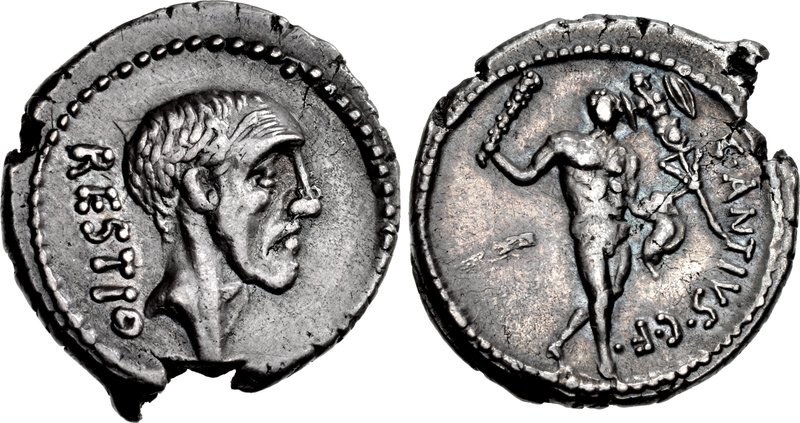
Denarius of C. Antius Restio
Silver Roman Republican denarius struck at Rome in 47 BC by the moneyer C. Antius Restio, pairing an ancestor's portrait with a striding figure and trophy.
- Country
- Roman Republic
- Denomination
- Denarius
- Metal
- Silver
Got a coin like this?
Identify any coin from a photo, free.
Overview
This is a silver denarius of the Roman Republic, struck at Rome in 47 BC under the moneyer C. Antius C.f. Restio. It belongs to the late-Republican series in which the annually appointed coinage officials (the tresviri monetales) advertised their own families through the imagery on the coins they issued. The type is catalogued as Crawford 455 in the standard reference on Roman Republican coinage.
The obverse shows a right-facing male portrait identified as an ancestor of the moneyer, C. Antius Restio, accompanied by the legend RESTIO. The reverse carries a striding figure holding a club and a trophy of captured arms, with the moneyer's name inscribed in the field or exergue. As a hand-struck ancient silver coin, each example is slightly different in centering, flan shape, and surface, and the piece shown here is one such individually struck survivor.
History & Background
By the middle of the first century BC the moneyers of the Roman Republic routinely used the coinage to honor their own ancestors and family traditions rather than only the traditional deities of earlier issues. C. Antius Restio's denarius fits squarely in this pattern: it was produced in 47 BC, during the turbulent period of civil war and Julius Caesar's rise, when the mint at Rome continued to strike silver denarii to pay soldiers and fund the state.
The portrait honors an earlier member of the Antia family bearing the cognomen Restio. Placing a named ancestor on the obverse was a way for the moneyer to claim political and moral prestige, associating his name with a respected forebear at a moment when public reputation carried real weight in Roman elections and factional politics.
The denarius had been the backbone of Roman silver coinage since the late third century BC, and issues like this circulated widely across the Republic's territories. Coins of this general period survive in reasonable numbers today because large quantities were minted and many were later buried in hoards during the unrest of the era.
How to Identify
Look for a small, hand-struck silver coin roughly the diameter of a modern small coin, typically weighing on the order of a late-Republican denarius (broadly around 3.5 to 4 grams). The flan is often slightly irregular or oval rather than perfectly round, which is normal for ancient hammered coinage.
The obverse bears a bare right-facing male portrait with the legend RESTIO, naming the ancestor being commemorated. The reverse shows a standing or striding figure holding attributes associated with victory, most commonly described as a club together with a trophy of captured arms, alongside the moneyer's name in the form C ANTIVS C F (Gaius Antius, son of Gaius). The combination of the RESTIO portrait and the trophy-bearing figure is the key diagnostic that identifies the type.
Because each coin was struck by hand from individually engraved dies, expect variation in centering, strike sharpness, and the exact position of the legends. Genuine examples show the toned surfaces and wear consistent with ancient silver rather than the crisp uniformity of machine-made modern coins.
Value & Collectibility
Values for this denarius depend heavily on condition, strike quality, and eye appeal. Well-worn or off-center examples of common late-Republican denarii generally trade in the modest tens of dollars, while attractive, well-centered pieces with clear portraits and good silver surfaces bring meaningfully more, often into the low or mid hundreds of dollars.
Exceptional coins with sharp detail, pleasing toning, and strong provenance can sell for higher sums at specialist ancient-coin auctions. Conversely, damaged, cleaned, holed, or heavily corroded examples sell for much less. Because exact figures move with the market and each ancient coin is unique, treat any single price as a data point rather than a fixed value.
Provenance and authentication matter: coins with documented collection histories and, where relevant, export documentation are generally more desirable and command a premium over anonymous pieces of equal grade.
Frequently asked questions
Who was C. Antius Restio?
C. Antius C.f. Restio was a Roman moneyer who struck this denarius in 47 BC. The portrait on the coin honors an earlier ancestor of his family who bore the cognomen Restio, a common practice for late-Republican moneyers advertising their lineage.
What does the reverse of the coin show?
The reverse depicts a striding figure holding attributes associated with military victory, commonly described as a club and a trophy of captured arms, together with the moneyer's name inscribed in the field or exergue.
Is this coin made of real silver?
Yes. Roman Republican denarii of the mid-first century BC were struck in silver of generally high fineness, and this type is a silver issue, not a base-metal or plated coin, though rare ancient plated counterfeits do exist.
How old is this denarius?
It was struck in 47 BC at the mint of Rome, making it a coin of the late Roman Republic, over two thousand years old.
Denarius of C. Antius Restio guides
In-depth guides for identifying, valuing, and collecting Denarius of C. Antius Restio.
Other coins you may enjoy
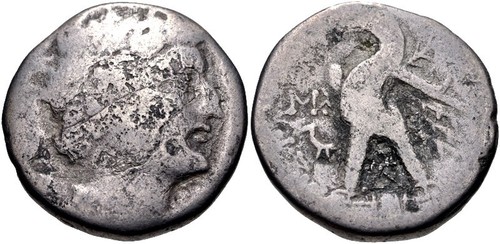
Tetradrachm of Ptolemy XII
80-51 BC
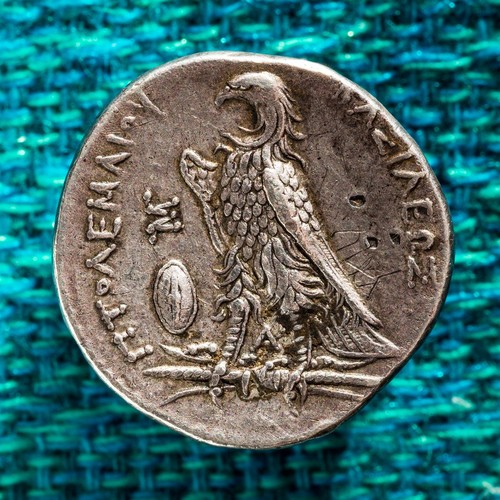
Tetradrachm of Ptolemy I
305-283 BC
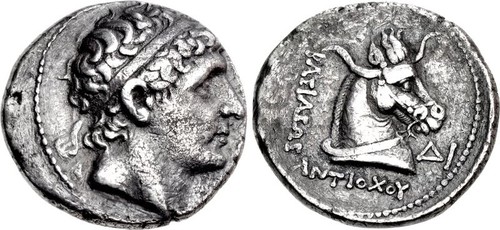
Tetradrachm of Antiochos I Soter
281-261 BC
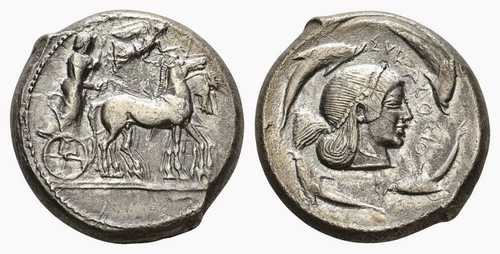
Syracuse Tetradrachm
c. 5th-4th century BC (Classical period)
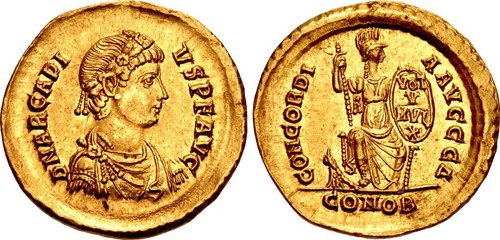
Solidus of Arcadius
AD 395-402
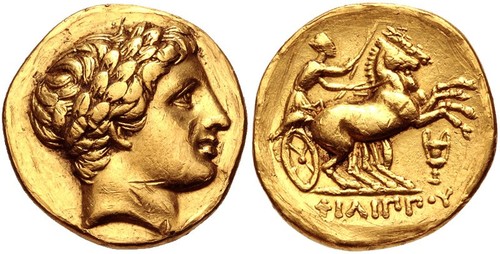
Philip III Gold Stater
323-317 BC
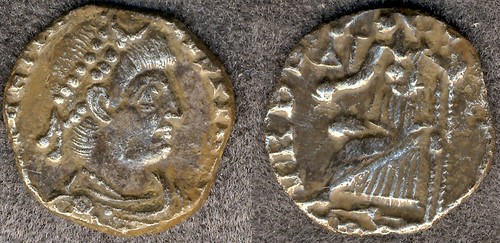
Siliqua of Gratian
AD 367-383
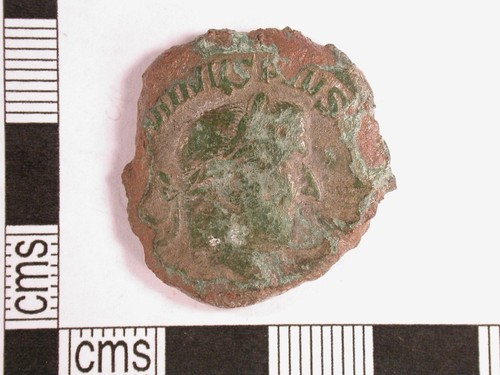
Sestertius of Maximinus Thrax
235-238 AD
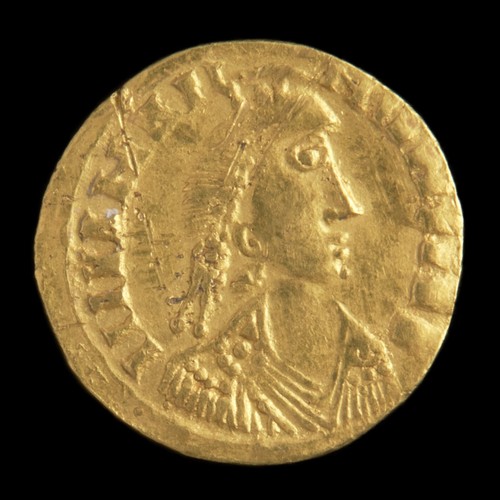
Solidus of Valentinian III
AD 425-455
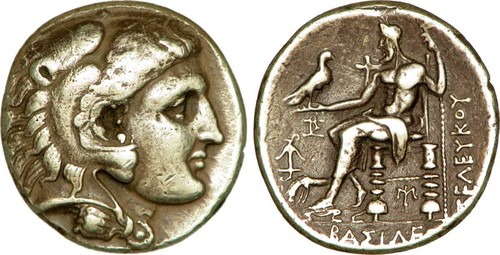
Seleucus I Nicator Tetradrachm
Late 4th-3rd century BC
Nummus of Magnentius
AD 350-353
Follis of Galerius
AD 308-310