
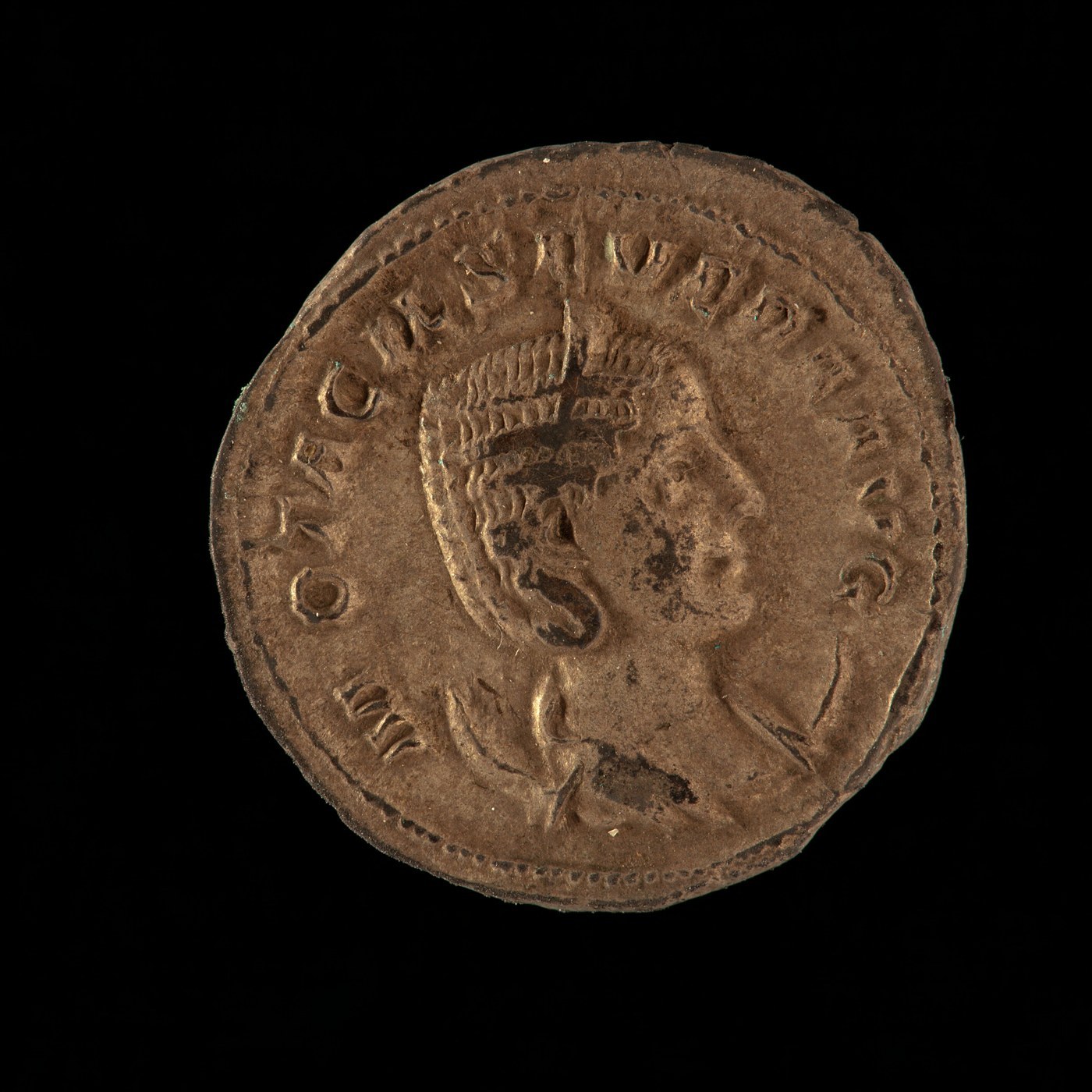
Antoninianus of Otacilia Severa
Roman double-denarius of the empress Otacilia Severa, wife of Philip I (246-248 AD), with her draped bust and a standing personification on the reverse.
- Country
- Roman Empire
- Denomination
- Antoninianus
- Metal
- Bronze
Got a coin like this?
Identify any coin from a photo, free.
Overview
The antoninianus of Otacilia Severa is a Roman coin struck in the name of Marcia Otacilia Severa, the empress-consort of Philip I (Philip the Arab), who reigned from 244 to 249 AD. The antoninianus, valued at two denarii and introduced by Caracalla in 215 AD, was by this date the principal larger coin of the Roman silver system, though the metal had been heavily debased into a billon alloy that often tones to a brown or bronze-like surface.
The example shown here follows the standard empress format of the period: a draped female bust on the obverse paired with a single standing personification on the reverse. Coins issued for Otacilia Severa were struck at Rome and at eastern mints during her husband's reign and are among the more accessible imperial-women issues of the mid-third century.
History & Background
Otacilia Severa became Augusta when her husband, Philip the Arab, seized power in 244 AD after the death of Gordian III on the eastern frontier. As empress she was honoured on the coinage alongside Philip and their son, Philip II, a family trio that appears together on many issues of the reign.
Her coins fall within a reign remembered above all for the Saecular Games of 248 AD, the lavish celebration of Rome's thousandth anniversary. The antoninianus remained the workhorse denomination for paying soldiers and funding this expenditure, but the third-century debasement of the silver continued: pieces of this period contain only a modest fraction of silver, which is why many surviving examples look dull grey, brown, or coppery rather than bright white. The dynasty ended in 249 AD when Philip I fell in battle against the usurper Decius.
How to Identify
On the obverse, look for a draped female bust facing right with the empress's hair drawn back in waves and gathered at the neck. The antoninianus struck for an empress is conventionally marked not by a radiate crown but by a crescent moon set beneath the bust, the female counterpart to the emperor's radiate crown; the encircling Latin legend typically reads a form of M OTACIL SEVERA AVG or OTACIL SEVERA AVG.
The reverse commonly shows a single standing female personification such as Concordia, Pietas, or Pudicitia, identified by her attributes (a patera, sceptre, cornucopia, or veil) and named in the surrounding legend, for example CONCORDIA AVGG or PIETAS AVGVSTAE. Typical coins measure roughly 21-23 mm across and weigh about 3.5-4.5 grams.
Value & Collectibility
The antoninianus of Otacilia Severa is a collectable but generally affordable ancient coin. As an empress issue it is scarcer than the antoniniani of her husband Philip I, yet common reverse types survive in sufficient numbers that well-worn, clearly identifiable examples trade at modest prices.
Value rises with condition, the sharpness of the portrait, full legibility of both legends, and pleasing surfaces or old-cabinet toning. Scarcer reverse types, unusually high grade, or coins tied to the Saecular Games celebrations of 248 AD command a premium over ordinary circulated specimens. As always, eye appeal and clear attribution matter more than raw rarity for this issue.
Frequently asked questions
Who was Otacilia Severa?
She was Marcia Otacilia Severa, the wife of the emperor Philip I (Philip the Arab) and mother of Philip II. She held the title Augusta during his reign, from 244 to 249 AD.
Why does an empress coin count as an antoninianus?
For empresses the antoninianus is marked by a crescent moon beneath the draped bust rather than a radiate crown. That crescent is the denomination signal, the female equivalent of the emperor's spiked crown.
Is the coin real silver?
It was struck as a silver denomination, but by this period the metal is a heavily debased billon alloy. That reduced silver content is why many surviving coins look grey, brown, or bronze-toned.
Who is the standing figure on the reverse?
It is usually a Roman personification such as Concordia, Pietas, or Pudicitia, identified by the objects she holds and by the Latin legend around her, for example CONCORDIA AVGG or PIETAS AVGVSTAE.
Antoninianus of Otacilia Severa guides
In-depth guides for identifying, valuing, and collecting Antoninianus of Otacilia Severa.
Other coins you may enjoy
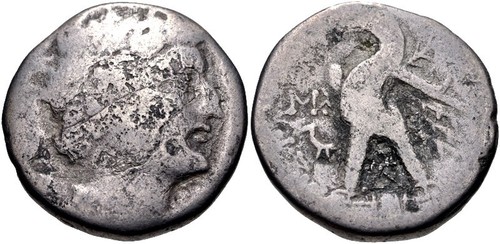
Tetradrachm of Ptolemy XII
80-51 BC
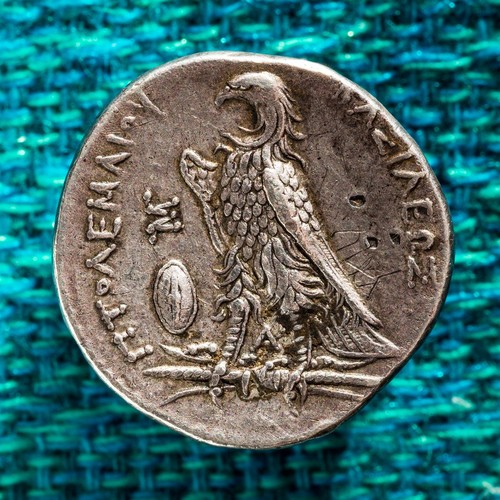
Tetradrachm of Ptolemy I
305-283 BC
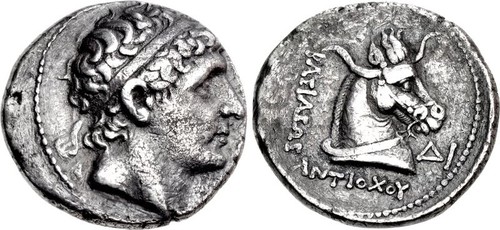
Tetradrachm of Antiochos I Soter
281-261 BC
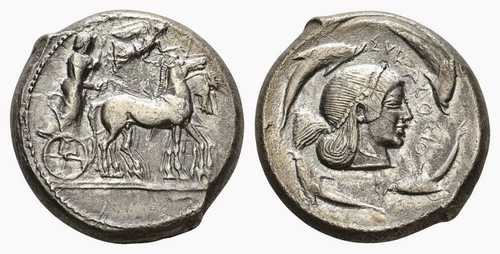
Syracuse Tetradrachm
c. 5th-4th century BC (Classical period)
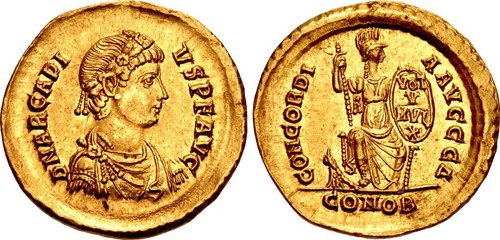
Solidus of Arcadius
AD 395-402
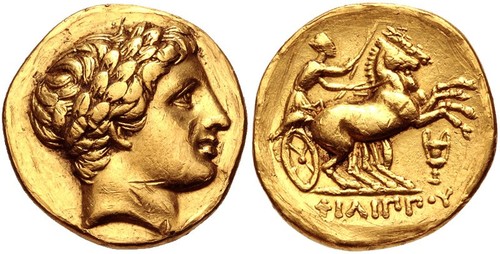
Philip III Gold Stater
323-317 BC
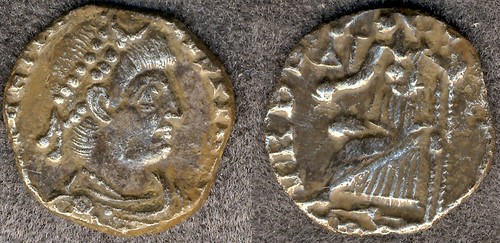
Siliqua of Gratian
AD 367-383
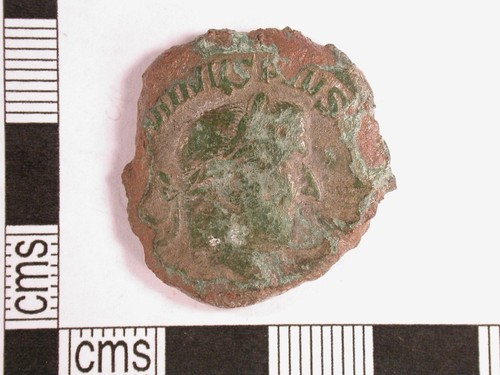
Sestertius of Maximinus Thrax
235-238 AD
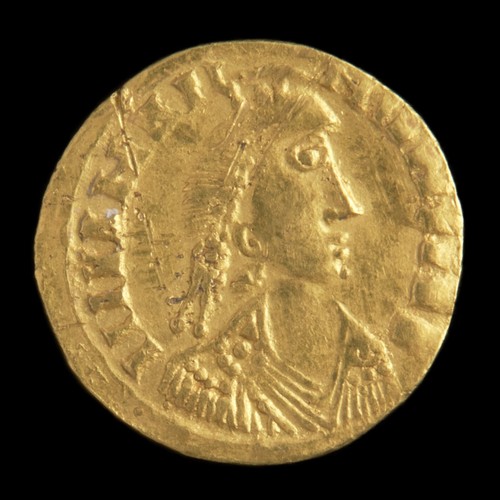
Solidus of Valentinian III
AD 425-455
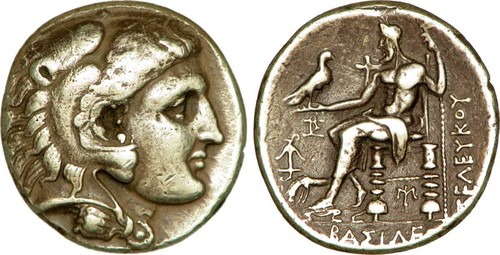
Seleucus I Nicator Tetradrachm
Late 4th-3rd century BC
Nummus of Magnentius
AD 350-353
Follis of Galerius
AD 308-310