
How to Identify the Antoninianus of Otacilia Severa
A collector's guide to attributing an Otacilia Severa antoninianus by its draped bust, crescent, reverse personification, size, and metal.
Read the full Antoninianus of Otacilia Severa encyclopedia entry →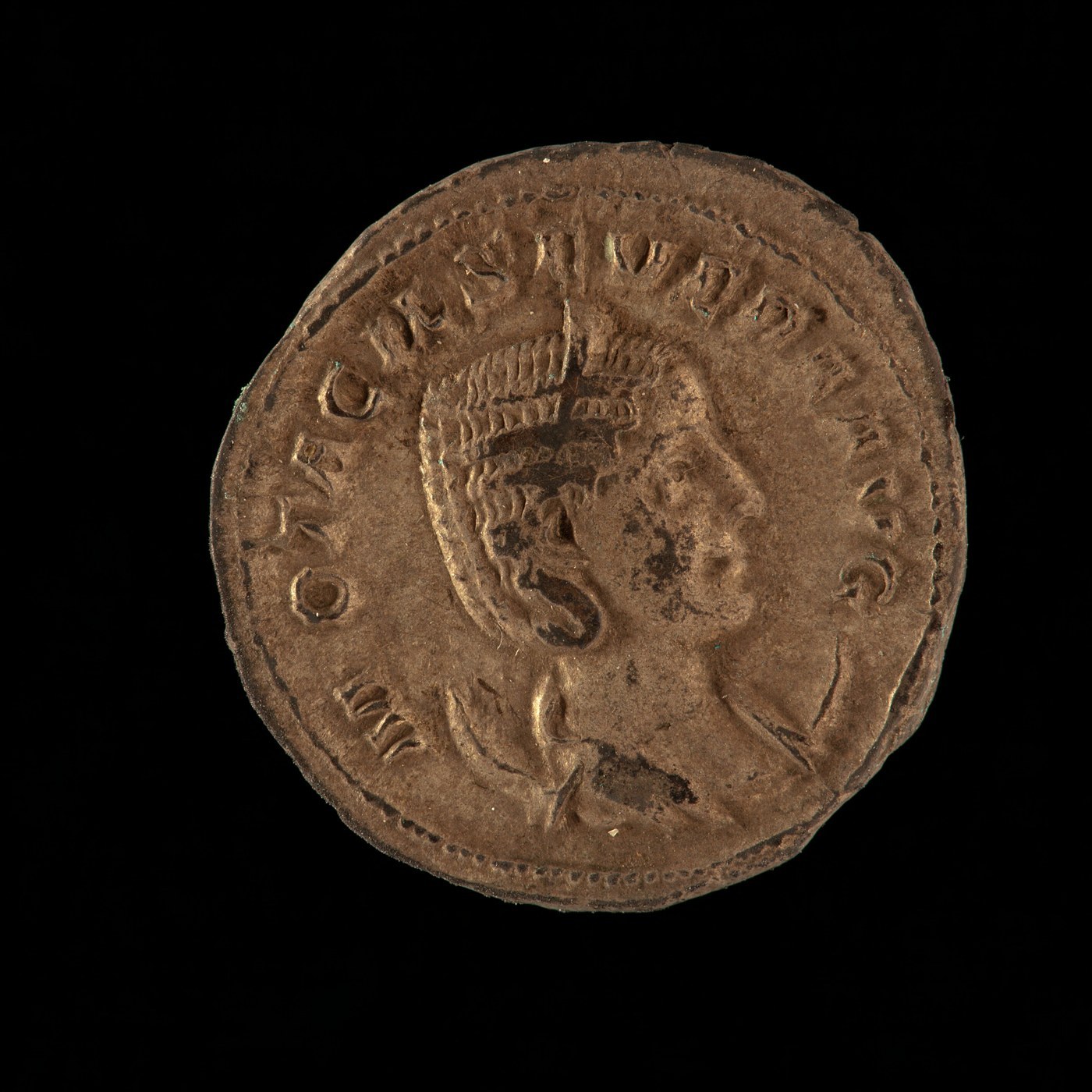
Begin with the obverse legend, because the name is the surest attribution. A genuine piece carries an imperial titulature built around the empress's name, most often M OTACIL SEVERA AVG or OTACIL SEVERA AVG, running clockwise around a draped female bust facing right. The hairstyle, waved and gathered low at the back of the head, is characteristic of mid-third-century empresses and helps separate her from earlier Severan women.
Confirm the denomination from the bust, not a crown. Empress antoniniani are marked by a crescent moon placed beneath the shoulders of the bust; this crescent is the female signal that the coin is a double-denarius rather than a denarius. If the drapery sits on a visible crescent, you are looking at an antoninianus.
Read the reverse next. Expect a single standing personification, commonly Concordia, Pietas, or Pudicitia, holding identifying attributes such as a patera and cornucopia, a sceptre, or a raised veil. Match the figure's attributes to the reverse legend (for example CONCORDIA AVGG or PIETAS AVGVSTAE); that pairing, not the figure alone, fixes the exact type. Check the fabric too: diameter should fall near 21-23 mm with a weight around 3.5-4.5 grams, and a dull grey, brown, or coppery billon surface is normal and expected for the period.
Watch for look-alikes and fakes. Antoniniani of other third-century empresses, such as Herennia Etruscilla or Salonina, share the crescent-bust format and standing-personification reverses, so always verify the OTACIL name before attributing. Cast copies betray themselves with a raised seam around the edge, small surface pits or bubbles, and soft, mushy lettering, whereas genuine coins are struck with crisp high points. When authenticity or value matters, compare the exact obverse and reverse legends against a standard reference such as RIC rather than relying on the portrait style alone.
Frequently asked questions
What is the fastest way to attribute this coin?
Read the obverse legend for OTACIL SEVERA and confirm the draped bust sits on a crescent. That combination identifies an Otacilia Severa antoninianus; then use the reverse legend to name the exact type.
How do I tell it apart from another empress's coin?
Several third-century empresses used the same crescent-bust and standing-figure format, so the deciding factor is the obverse name. Look specifically for OTACIL or OTACILIA in the legend before attributing.
My coin looks bronze, not silver. Is it fake?
Not necessarily. Antoniniani of this period are debased billon with low silver content, so a brown, grey, or coppery tone is normal and is not by itself a sign of a forgery.
How can I spot a cast forgery?
Genuine coins are struck and show sharp detail on the high points. Casts often reveal a seam around the edge, tiny surface bubbles, and blurry, soft lettering.