
Brutus Aureus
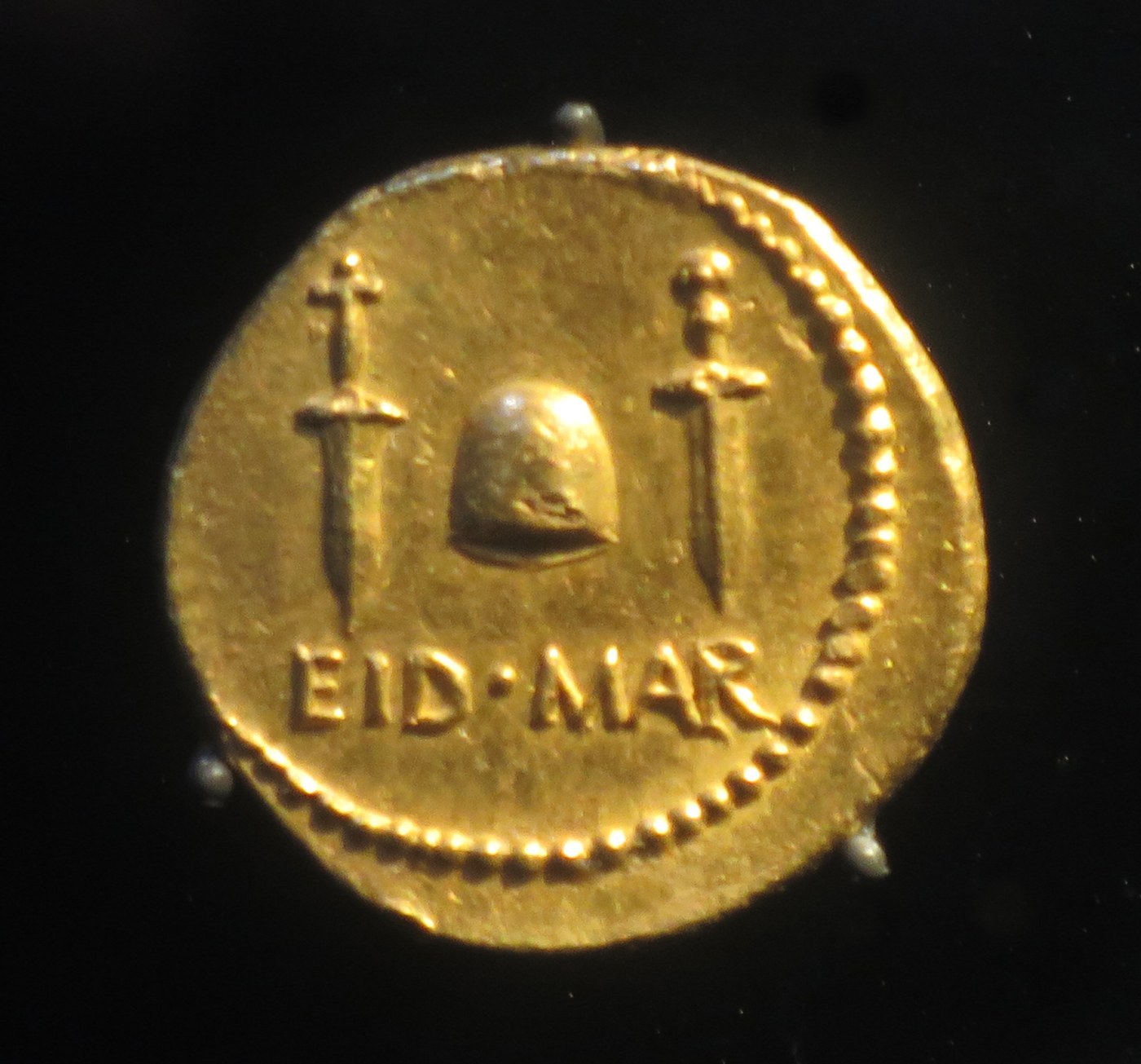
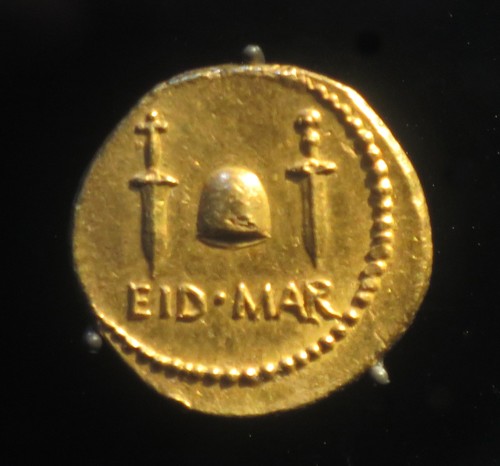
The gold aureus of Marcus Junius Brutus, struck 42 BC, whose reverse celebrates Caesar's assassination with EID MAR, a cap of liberty, and two daggers.
- Country
- Roman Republic
- Denomination
- Aureus
- Metal
- Gold
Got a coin like this?
Identify any coin from a photo, free.
Overview
The Brutus Aureus is a gold coin struck in 42 BC for Marcus Junius Brutus, one of the leaders of the conspiracy that assassinated Julius Caesar. Its obverse carries a portrait of Brutus himself, and its reverse bears the legend EID MAR beneath a Phrygian cap of liberty flanked by two daggers, a direct reference to the killing of Caesar on the Ides of March (15 March) 44 BC. The example shown here follows this classic obverse-portrait, EID-MAR-reverse arrangement.
It is among the most historically charged and celebrated of all ancient coins. The gold version is far rarer than the better-known silver denarius of the same design, and only a small number of genuine gold specimens are recorded. Because of its subject matter and extreme scarcity, the type is treated as one of the great trophy coins of ancient numismatics.
History & Background
Following Caesar's assassination in 44 BC, Brutus and his fellow conspirators fought a civil war against Mark Antony and Octavian (the future emperor Augustus). To pay and reward the legions he raised in the eastern provinces, Brutus issued coinage from military mints traveling with his army, most likely in northern Greece or Asia Minor during 43-42 BC.
The EID MAR design was an extraordinary act of political messaging: rather than hide the killing, Brutus advertised it, presenting the assassination as an act of liberation from tyranny symbolized by the freedman's cap and the daggers. The coinage was cut short by defeat. Brutus and Cassius lost the twin battles of Philippi in 42 BC, after which Brutus took his own life, and the surviving coins became relics of the losing side of the Roman civil wars.
The ancient writer Cassius Dio specifically described these coins centuries later, noting the daggers and the cap and the reference to the Ides, which is rare literary confirmation of a specific ancient coin type. Genuine gold aurei of this issue are counted in single digits among known specimens, and their appearances at auction are landmark events.
How to Identify
The defining feature is the reverse: the abbreviated Latin legend EID MAR (for Eidibus Martiis, the Ides of March) placed below a Phrygian cap, the pileus or cap of liberty, set between two downward-pointing daggers or short swords. The two daggers are often shown as slightly different types, and the cap sits centered above the inscription.
The obverse shows a bare, diademed, or lightly draped male portrait of Brutus facing right, usually accompanied by his name and a moneyer or military title in the surrounding legend. On the gold aureus the flan is small, thick, and heavy for its size, consistent with a Roman aureus of the late Republic weighing on the order of roughly eight grams.
Because the identical design exists in silver as a denarius, metal and weight are the first thing to confirm: a genuine gold piece is the aureus, while the great majority of surviving EID MAR coins, and the overwhelming majority of pieces offered for sale, are silver or are later copies. Any EID MAR coin should be approached with the assumption that it needs expert verification.
Value & Collectibility
This is one of the highest-value ancient coins in existence. Authenticated silver EID MAR denarii already sell for six-figure sums, and the gold aureus is dramatically rarer still, with only a handful of genuine examples known. When a verified gold specimen has come to market it has realized among the highest prices ever paid for an ancient coin, well into the millions.
Given those stakes, valuation is not a matter of a price guide but of provenance, third-party authentication, and auction competition among a tiny group of elite collectors and institutions. Condition matters, but rarity and ironclad pedigree dominate the price.
Just as important: the type is very heavily counterfeited and reproduced. The vast majority of items described as a Brutus or EID MAR gold coin, especially those offered cheaply or without documented history, are modern copies, replicas, or forgeries with no numismatic value beyond novelty.
Frequently asked questions
What does EID MAR mean?
EID MAR is an abbreviation of the Latin Eidibus Martiis, meaning the Ides of March, the date (15 March 44 BC) on which Julius Caesar was assassinated. The cap of liberty and two daggers beside it symbolize freeing Rome from tyranny.
Who was Brutus and why is he on this coin?
Marcus Junius Brutus was a Roman senator and a leader of the conspiracy that killed Julius Caesar. He struck this coinage in 42 BC to pay the army he led against Mark Antony and Octavian, putting his own portrait on the obverse and advertising the assassination on the reverse.
How rare is the gold Brutus aureus?
Extremely rare. Only a very small number of genuine gold aurei of this type are known, far fewer than the silver denarii of the same design. Authenticated specimens are among the most valuable ancient coins ever sold.
Is my Brutus coin real?
Almost certainly not without expert confirmation. The EID MAR design is one of the most copied in history, so the great majority of pieces in circulation are replicas or forgeries. Only professional authentication and documented provenance can establish a genuine example.
What is the cap between the daggers?
It is a pileus, the Phrygian cap of liberty. In Roman culture this cap was given to freed slaves, so it stood for freedom, here symbolizing liberation from what the conspirators portrayed as Caesar's tyranny.
Brutus Aureus guides
In-depth guides for identifying, valuing, and collecting Brutus Aureus.
Other coins you may enjoy
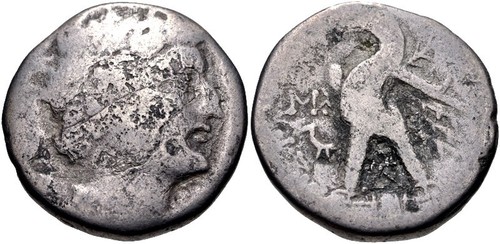
Tetradrachm of Ptolemy XII
80-51 BC
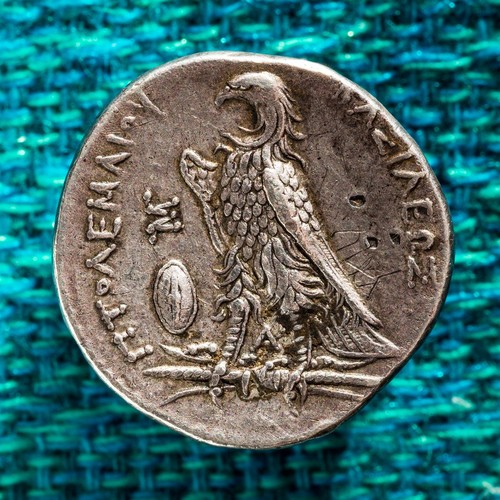
Tetradrachm of Ptolemy I
305-283 BC
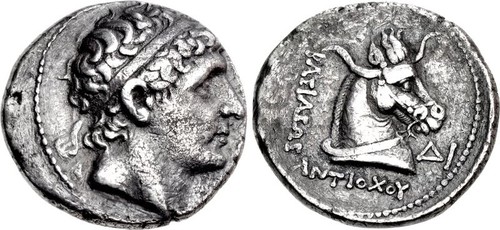
Tetradrachm of Antiochos I Soter
281-261 BC
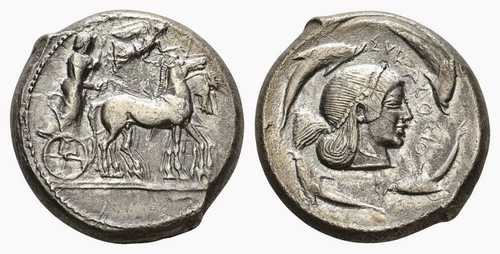
Syracuse Tetradrachm
c. 5th-4th century BC (Classical period)
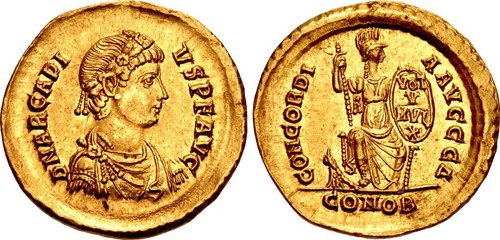
Solidus of Arcadius
AD 395-402
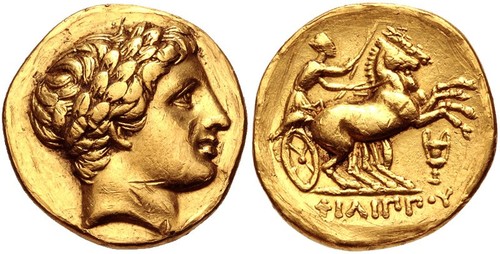
Philip III Gold Stater
323-317 BC
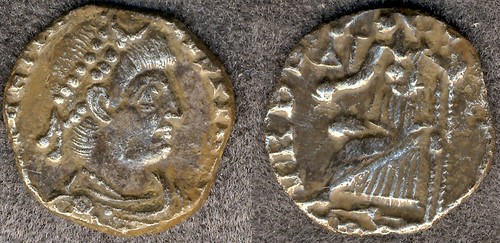
Siliqua of Gratian
AD 367-383
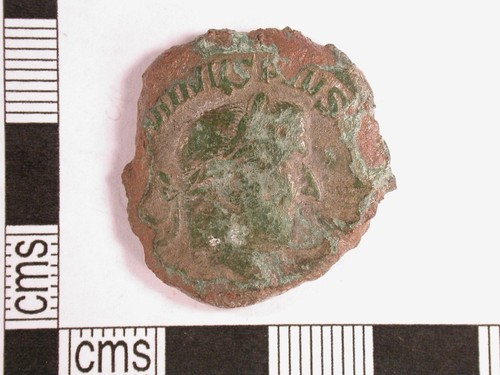
Sestertius of Maximinus Thrax
235-238 AD
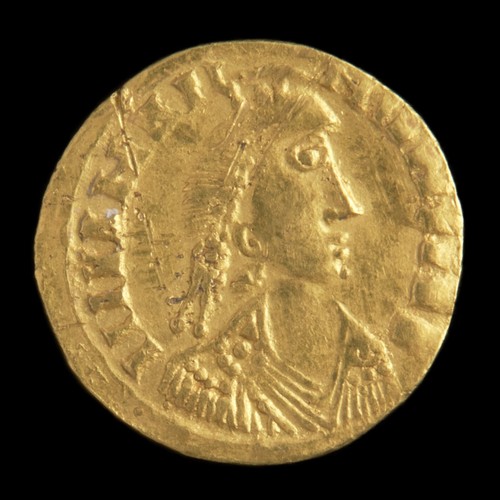
Solidus of Valentinian III
AD 425-455
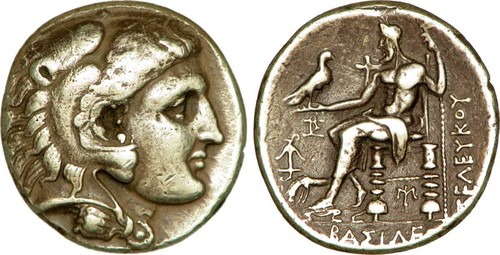
Seleucus I Nicator Tetradrachm
Late 4th-3rd century BC
Nummus of Magnentius
AD 350-353
Follis of Galerius
AD 308-310