
Antoninianus of Salonina
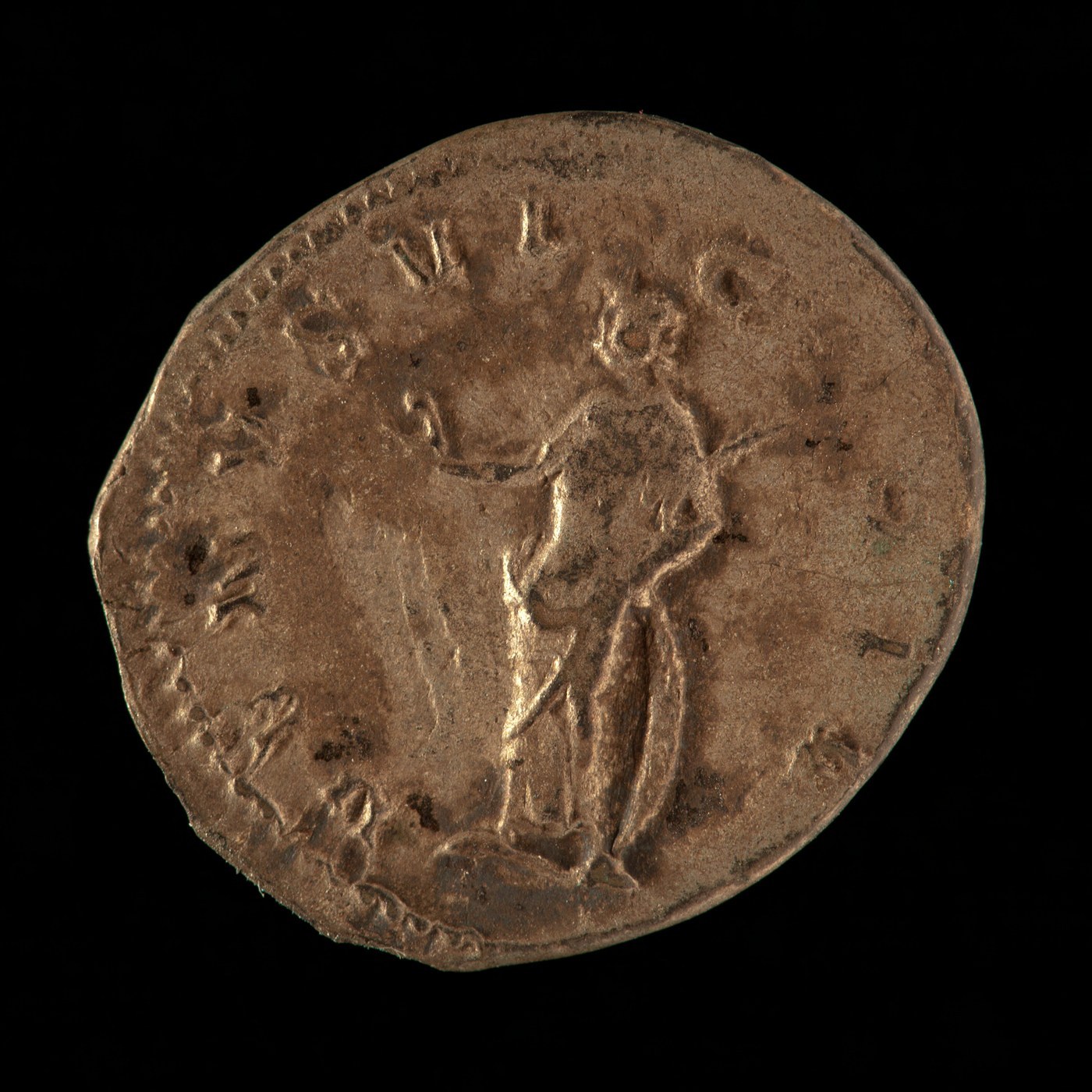
Billon antoninianus of the empress Salonina, wife of Gallienus, showing her draped bust and a standing deity on the reverse (256-257 AD).
- Country
- Roman Empire
- Denomination
- Antoninianus
- Metal
- Billon
Got a coin like this?
Identify any coin from a photo, free.
Overview
The antoninianus of Salonina is a Roman billon coin struck for Cornelia Salonina, wife of the emperor Gallienus and mother of his heirs. As an empress (Augusta), her portrait appears on the standard silver-denomination antoninianus of the mid-third century, valued at two denarii and produced in large quantities to pay soldiers and fund the state.
The example shown here follows the usual pattern for an imperial woman's antoninianus: a draped female bust wearing a diadem on the obverse, paired with a single standing draped figure, a deity or personification, on the reverse. By the 250s AD the coin's silver had been heavily debased, so surviving pieces are best described as billon rather than good silver.
History & Background
Salonina was married to Gallienus, who ruled jointly with his father Valerian from 253 AD and then alone until 268 AD. She was raised to the rank of Augusta and appears on the coinage throughout the reign, her issues emphasizing dynastic virtues such as concord, piety, fertility, and the security of the imperial house.
The years around 256-257 AD fell within a period of severe military and financial pressure on the empire, with frontier wars and mounting inflation. To meet the cost, the antoninianus was struck in enormous numbers from an increasingly base alloy, so coins of this era typically carry only a thin surface silvering over a copper-rich core. Salonina's coinage was issued from several mints active under Gallienus and continued until her death near the end of his reign.
How to Identify
Look first for a female portrait on the obverse: a draped bust facing right wearing a diadem or stephane, with the hair drawn back. On antoniniani of empresses the bust characteristically rests on a crescent, and the encircling Latin legend commonly reads a form of SALONINA AVG or CORNELIA SALONINA AVG. This female titulature, rather than an emperor's name, is the key attribution point.
The reverse typically shows a single standing draped figure, a deity or personification such as Venus, Juno, Pietas, Concordia, or Fecunditas, identified by attributes (a scepter, patera, apple, or child) and named in the surrounding legend. Typical coins measure roughly 20-23 mm in diameter and weigh about 2.5-4 grams, and the surface often shows patchy or worn silvering over a darker core.
Value & Collectibility
The antoninianus of Salonina is a relatively common and affordable ancient Roman coin. Worn but clearly identifiable examples trade at modest prices, while pieces with a sharp portrait, complete legends, and surviving original silvering command a premium.
Value is driven mainly by condition, the clarity and appeal of the reverse type, and eye appeal rather than outright rarity, since most of her reverse types survive in quantity. Scarcer reverse legends, unusually high grade, or attractive intact silvering can lift the price well above that of ordinary circulated specimens.
Frequently asked questions
Who was Salonina?
Cornelia Salonina was the wife of the emperor Gallienus (reigned 253-268 AD) and held the rank of Augusta, which is why her portrait appears on Roman coinage of the period.
Why is this coin called billon rather than silver?
By the mid-250s AD the antoninianus was heavily debased. It was struck from a copper-rich alloy with only a little silver, often applied as a thin surface coating, so numismatists describe it as billon.
Who is the standing figure on the reverse?
It is usually a Roman deity or personification such as Venus, Juno, Pietas, or Concordia, identified by the objects it holds and by the Latin legend around it.
Are these coins rare?
No. Salonina's antoniniani were struck in large numbers and are among the more commonly available coins of imperial women from the third century.
Antoninianus of Salonina guides
In-depth guides for identifying, valuing, and collecting Antoninianus of Salonina.
Other coins you may enjoy
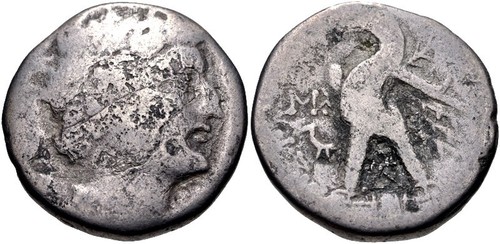
Tetradrachm of Ptolemy XII
80-51 BC
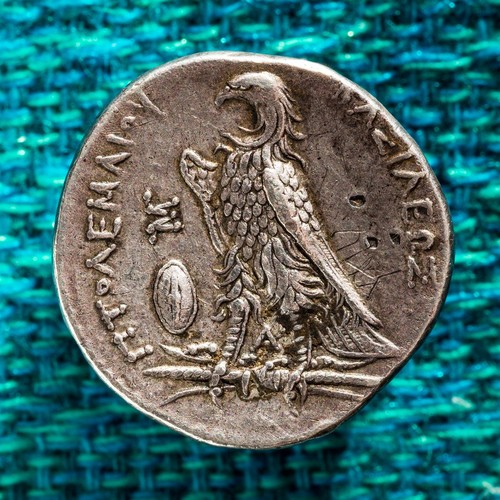
Tetradrachm of Ptolemy I
305-283 BC
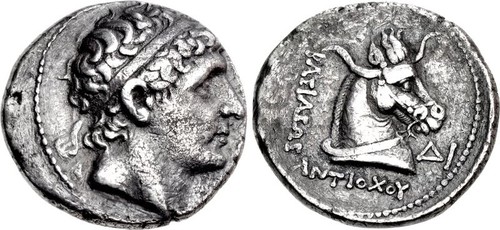
Tetradrachm of Antiochos I Soter
281-261 BC
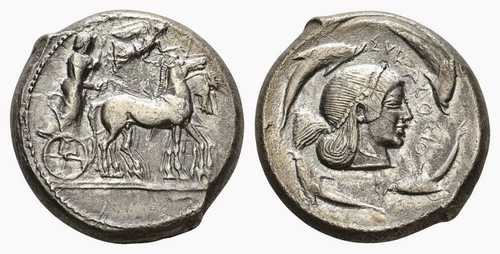
Syracuse Tetradrachm
c. 5th-4th century BC (Classical period)
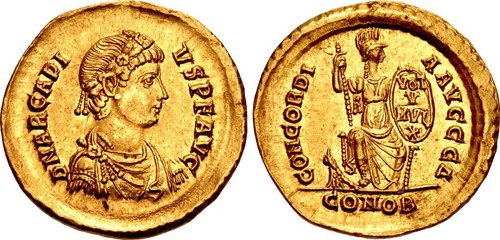
Solidus of Arcadius
AD 395-402
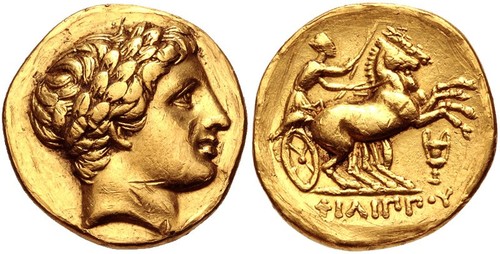
Philip III Gold Stater
323-317 BC
Siliqua of Gratian
AD 367-383
Sestertius of Maximinus Thrax
235-238 AD
Solidus of Valentinian III
AD 425-455
Seleucus I Nicator Tetradrachm
Late 4th-3rd century BC
Nummus of Magnentius
AD 350-353
Follis of Galerius
AD 308-310