
How to Identify the Antoninianus of Salonina
A collector's guide to spotting a Salonina antoninianus by its diademed female portrait, reverse deity, size, and billon fabric.
Read the full Antoninianus of Salonina encyclopedia entry →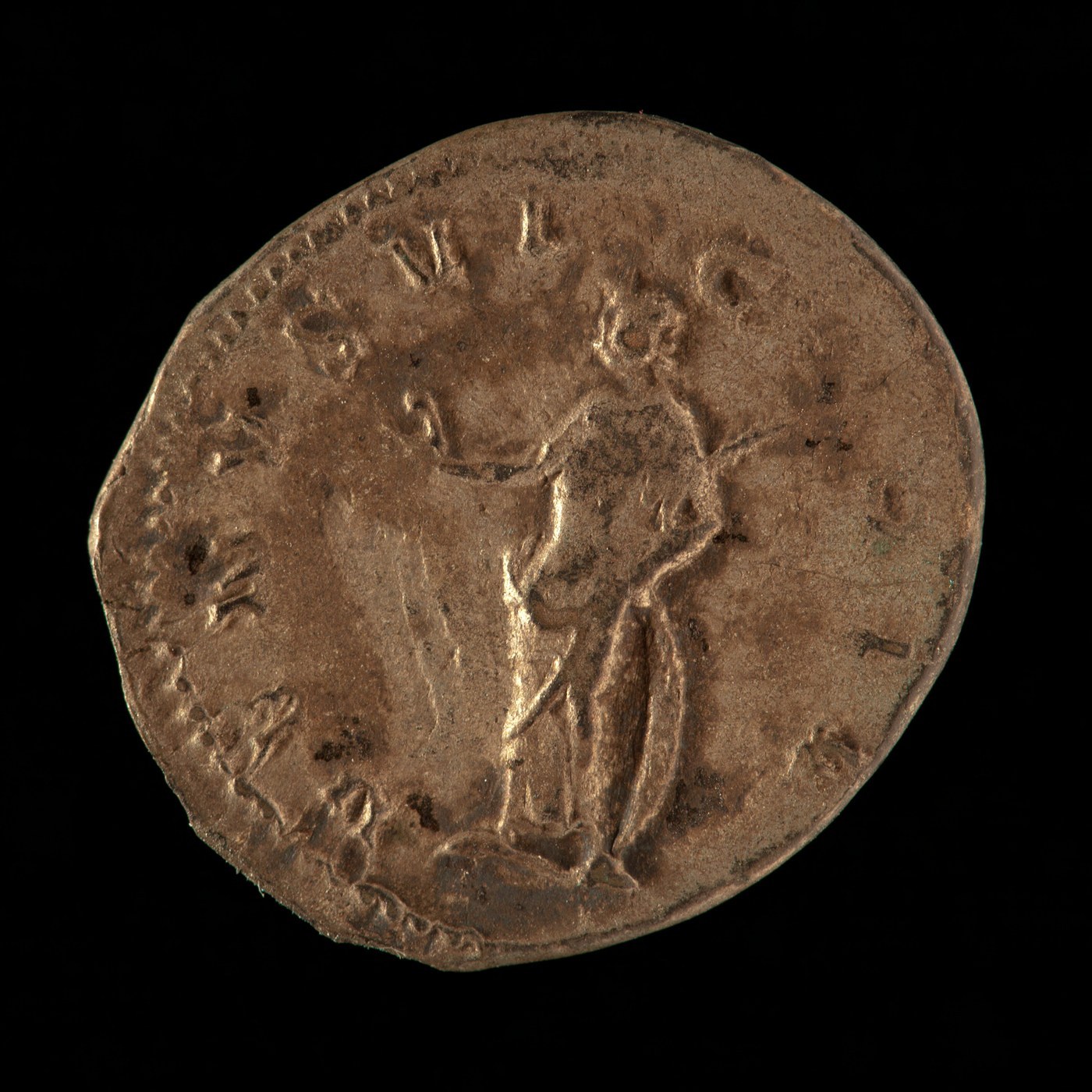
Start with the obverse portrait. An antoninianus of Salonina shows a draped female bust facing right wearing a diadem or stephane, with the hair pulled back into a bun or braid. Unlike an emperor's radiate crown of spikes, an empress's bust on this denomination usually rests on a crescent, a strong signal that you are looking at the coinage of an imperial woman rather than a ruling emperor.
Read the encircling legend. A titulature built around SALONINA, most often SALONINA AVG or CORNELIA SALONINA AVG, confirms the identity. Because the portrait alone can resemble other third-century empresses, the name in the obverse legend is the decisive attribution step; do not rely on the face or hairstyle by itself.
Examine the reverse. Expect a single standing draped figure holding identifying attributes: Venus with an apple or helmet, Juno with a scepter and patera, Pietas at an altar, or Concordia with a cornucopia. The reverse legend names the type, so matching the figure's attributes to that legend is how you pin down the exact variety.
Check the physical coin. Diameter should fall roughly in the 20-23 mm range with a weight near 2.5-4 grams. The fabric is base billon, so a dark brown or grey surface, patchy silvering, or a copper-toned core is entirely normal for the period and is not by itself a sign of a fake.
Beware of look-alikes and cast copies. Antoniniani of other imperial women, and of Salonina from different mints, share the same format, so always confirm the obverse name. Genuine coins are struck with crisp detail on the high points, while casts often reveal an edge seam, tiny surface bubbles, and soft, mushy lettering. When authenticity or value matters, compare the exact obverse and reverse legends against a standard reference such as RIC.
Frequently asked questions
What is the single fastest way to attribute this coin?
Read the obverse legend for SALONINA and note the draped female bust on a crescent; that identifies the empress, then use the reverse legend to name the specific type.
How do I tell Salonina apart from another empress?
The portraits of third-century empresses look similar, so rely on the obverse legend. Only a name built around SALONINA confirms the coin belongs to her.
Why does my coin look brown or grey instead of silver?
Antoniniani of this date are debased billon with only thin silvering. A dark, patchy, or copper-toned surface is normal and is not by itself evidence of a forgery.
How can I spot a cast fake?
Genuine coins are struck and show sharp detail; casts often reveal a seam around the edge, small surface bubbles, and blurry, soft lettering.