
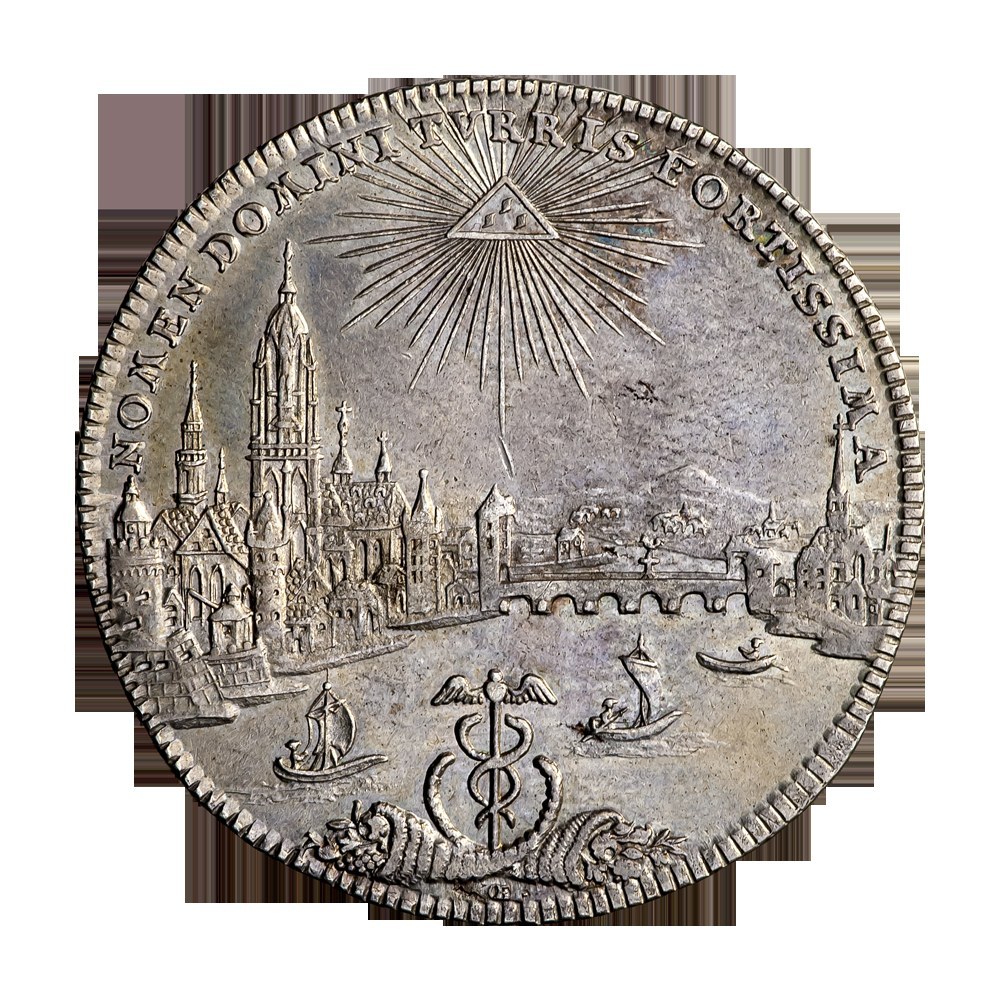
Frankfurt am Main Taler
A 1772 silver Taler of the Free Imperial City of Frankfurt am Main, famed for its detailed city-view reverse with walls, towers and radiant sun.
- Country
- Holy Roman Empire
- Denomination
- Taler
- Metal
- Silver
Got a coin like this?
Identify any coin from a photo, free.
Overview
The Frankfurt am Main Taler is a large silver coin struck by the Free Imperial City of Frankfurt, one of the self-governing city-states of the Holy Roman Empire. The example shown is dated 1772 and displays the celebrated city-view reverse: a panorama of Frankfurt behind its fortification walls and towers, crowned by a burst of radiant sun rays above the skyline.
This type is widely known as the Stadtansichtstaler, or city-view Taler, because the townscape itself is the design's centerpiece. The obverse, not visible on this photograph, conventionally carries the crowned double-headed imperial eagle with the city's coat of arms. As a full Taler it was the largest everyday silver denomination the city issued.
History & Background
Frankfurt am Main was a Free Imperial City and one of the most important trading and fair towns in the Holy Roman Empire, with the right to strike its own coinage under imperial privilege rather than under a ruling prince. It was also the traditional city of the imperial elections and coronations, which lent its money added prestige.
By the 1770s Frankfurt struck its Talers to the Convention standard (Konventionstaler) adopted across much of the Empire after 1753, giving the coin a consistent silver weight and fineness recognized in trade. The 1772 date places this piece firmly in that late-imperial period, when the city-view design had become a signature of Frankfurt's silver coinage and a point of civic pride.
The Free City continued to issue coinage into the 19th century until the Empire dissolved in 1806 and, later, German unification brought the old city denominations to an end. The 18th-century city-view Talers remain among the most recognizable of all German States coins.
How to Identify
Reverse (shown): a detailed view of Frankfurt am Main, the city set behind its fortification walls and towers, with sun rays radiating above the skyline. This townscape is the type's defining feature and its clearest identifier. Surrounding legends typically name the city as a republic or free city in Latin.
Obverse (not shown): most Frankfurt Talers of this era carry the crowned double-headed imperial eagle (Reichsadler) bearing the Frankfurt arms, together with Latin legends and the date.
Physical clues: this is a large silver coin of Taler module, roughly 40–42 mm across and about 28 grams, struck to the Convention fineness of the day. Genuine pieces show silver-grey or gently toned surfaces, crisp architectural detail in the cityscape, and mid-18th-century lettering. The metal should be non-magnetic with a solid heft.
Value & Collectibility
Value depends on grade, the sharpness of the city-view strike, and silver content. As a full Convention Taler the coin carries meaningful bullion value in silver, while its status as a sought-after city-view type adds a collector premium on top. Well-worn examples trade closer to their silver and historic-interest level, whereas sharp, high-grade pieces with a clean, detailed skyline command substantially more.
Frankfurt city-view Talers are actively collected both by German States specialists and by those drawn to architectural coin designs, so prices span a wide range by date and condition. For a specific figure, compare recent auction results for the same date and grade and treat any single online listing as a guide rather than a fixed price.
Frequently asked questions
What is the Frankfurt am Main Taler?
It is a large silver Taler struck by the Free Imperial City of Frankfurt am Main in the Holy Roman Empire. The 1772 example shown features the city's famous cityscape reverse with walls, towers and radiant sun rays.
Why is there a city view on the coin?
Frankfurt was a proud Free Imperial City, and it used a detailed panorama of its own skyline behind its walls as a civic emblem. Collectors call this the Stadtansichtstaler, or city-view Taler.
What is on the obverse?
The obverse, not shown here, typically carries the crowned double-headed imperial eagle with the Frankfurt coat of arms and Latin legends, marking the coin as an issue of the imperial free city.
Is the Frankfurt Taler made of silver?
Yes. It is a silver coin struck to the Convention Taler standard, roughly 28 grams and about 40 to 42 mm across, and its silver content is part of its value today.
Is the 1772 Frankfurt Taler rare?
City-view Talers were struck as circulating silver, so the type is collectible rather than extremely rare. Condition and a sharp, detailed cityscape strike matter most for value.
Frankfurt am Main Taler guides
In-depth guides for identifying, valuing, and collecting Frankfurt am Main Taler.
Other coins you may enjoy
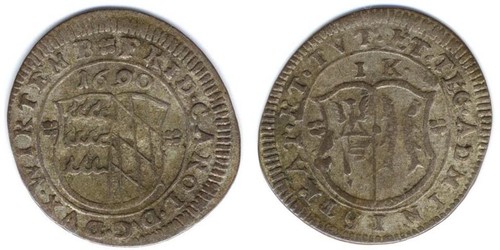
Württemberg Kreuzer
17th century (example dated 1690)
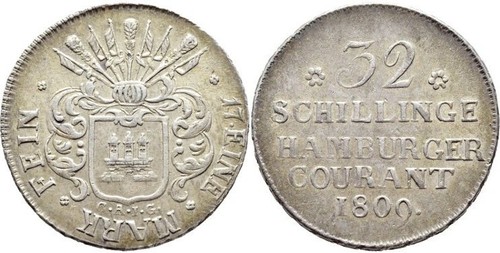
Hamburg 32 Schilling
1800
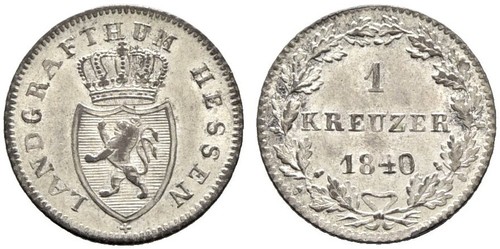
Hessen-Homburg Kreuzer
1840
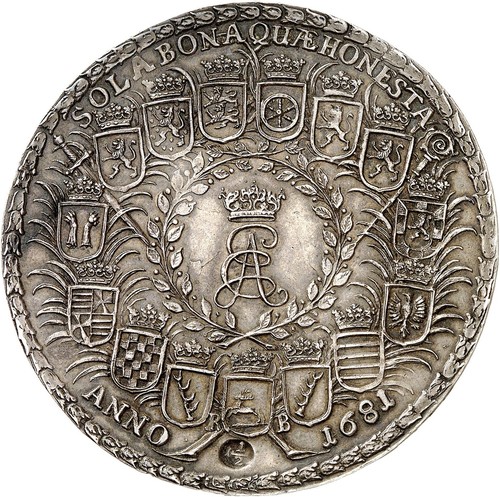
Hanover-Luneburg 1.5 Thaler
1681 (dated example)
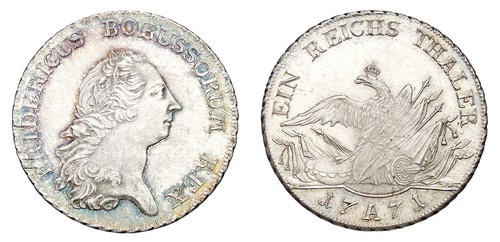
Prussian Taler
1750s–1786 (reign of Frederick II)
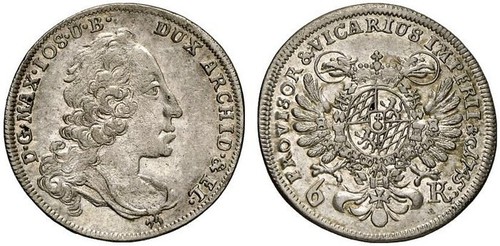
Bavaria 6 Kreuzer
1745 (issue shown)
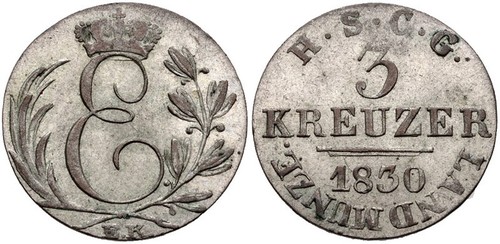
Gotha 3 Kreuzer
1830
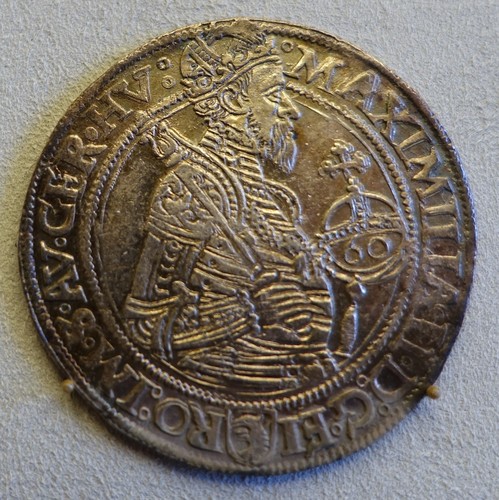
60 Kreuzer Guldiner
1568
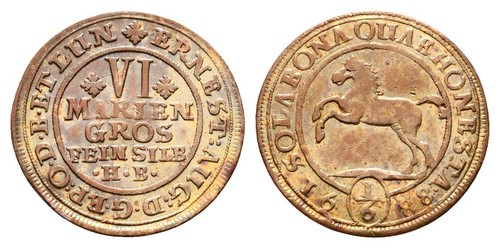
Hanover 1/6 Thaler
1688
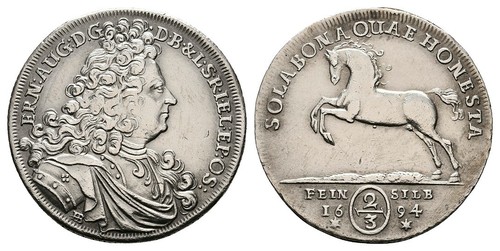
Hanover 2/3 Thaler
1694
Braunschweig-Lüneburg Thaler
17th–18th century
Braunschweig-Lüneburg 3 Thaler
1685 (late 17th century)