
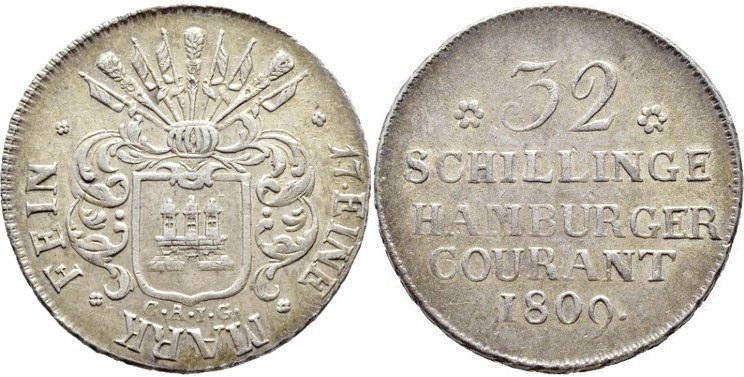
Hamburg 32 Schilling
A 1800 silver 32 Schilling of the Free City of Hamburg, with the city coat of arms and a 'HAMBURGER COURANT' reverse.
- Country
- Germany (Hamburg)
- Denomination
- 32 Schilling
- Metal
- Silver
Got a coin like this?
Identify any coin from a photo, free.
Overview
The Hamburg 32 Schilling is a silver coin issued by the Free and Hanseatic City of Hamburg, one of the many self-governing states that made up the German lands before unification. The example shown is dated 1800 and carries the value of 32 Schilling, with the city's coat of arms on the obverse and the inscription HAMBURGER COURANT with the denomination and date on the reverse.
The word Courant marks it as current, circulating money rather than a trade or commemorative piece. At 32 Schilling it functioned as a substantial mid-size silver denomination in Hamburg's local money-of-account system, and its heraldic design ties it firmly to the city-state that struck it.
History & Background
Hamburg was a free imperial city and a leading Hanseatic trading port, and it minted its own coinage for centuries under its own authority rather than that of a prince. Its money was reckoned in Mark, Schilling and Pfennig, with the Courant system providing the everyday circulating silver.
An issue dated 1800 places this coin at the very end of the 18th century, during a period when Hamburg's commerce made its coinage widely handled across northern Germany and the Baltic. The 32 Schilling sat below the larger Thaler-sized pieces and above the small change, serving trade and daily transactions in and around the port.
Hamburg continued to strike its own coins through the 19th century until German unification and the adoption of the mark under the new German Empire brought the old city denominations to an end.
How to Identify
Obverse: the coat of arms of Hamburg, a fortified gate or castle with towers, typically shown on a shield and often flanked or supported by heraldic figures. This civic arms is the coin's defining image and its clearest link to the city.
Reverse: the inscription HAMBURGER COURANT together with the value 32 Schilling and the date 1800. Reading this legend is the surest way to confirm both the issuing city and the denomination.
Physical clues: this is a silver coin of mid-size Courant module, smaller than a full Thaler. Genuine pieces show a silver-grey or gently toned surface, crisp heraldic detail, and lettering rendered in the style of around 1800. Check for a non-magnetic metal and even, hand-struck-era detail.
Value & Collectibility
Value depends on grade, the crispness of the strike, and the coin's silver content. As a circulating Courant piece from around 1800, worn examples are valued largely for their silver and their age, while sharp, well-preserved coins with clear heraldic detail carry a stronger collector premium.
German States coins vary widely in price by city and date, and Hamburg Courant issues are collected both by German-states specialists and by those who like Hanseatic and city-arms designs. For a specific figure, compare recent sales of the same denomination, date and grade, and treat any single online price as a guide rather than a fixed value.
Frequently asked questions
What is the Hamburg 32 Schilling?
It is a silver circulating coin of the Free City of Hamburg valued at 32 Schilling. The example shown is dated 1800 and reads HAMBURGER COURANT on the reverse.
What does 'Hamburger Courant' mean?
Courant means current or circulating money. The legend marks the coin as everyday silver currency of Hamburg rather than a trade or commemorative issue.
What is on the obverse?
The obverse shows the coat of arms of Hamburg, a fortified castle or gate with towers, the civic emblem of the city-state that struck the coin.
Is the Hamburg 32 Schilling made of silver?
Yes. It is a silver Courant coin, and its silver content is part of what gives worn examples value today alongside their age and collector interest.
Is this coin rare?
Hamburg struck circulating silver in quantity, so the type is collectible rather than extremely rare; condition and a clean, sharp strike matter most for value.
Hamburg 32 Schilling guides
In-depth guides for identifying, valuing, and collecting Hamburg 32 Schilling.
Other coins you may enjoy
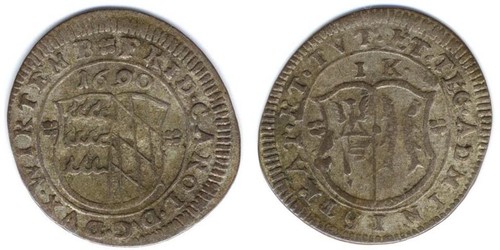
Württemberg Kreuzer
17th century (example dated 1690)
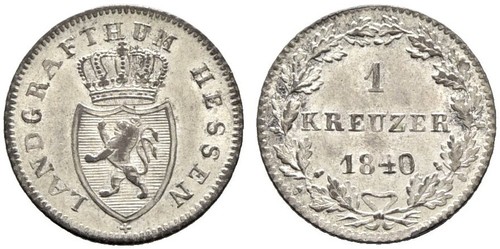
Hessen-Homburg Kreuzer
1840
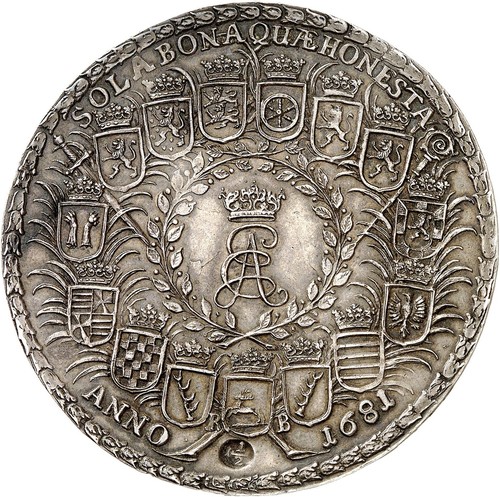
Hanover-Luneburg 1.5 Thaler
1681 (dated example)
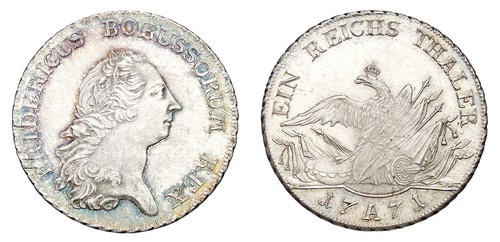
Prussian Taler
1750s–1786 (reign of Frederick II)
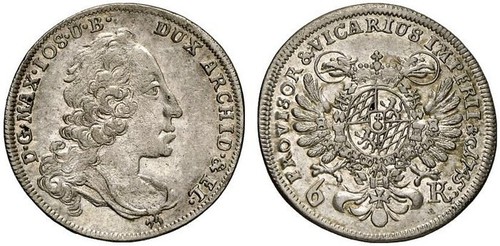
Bavaria 6 Kreuzer
1745 (issue shown)
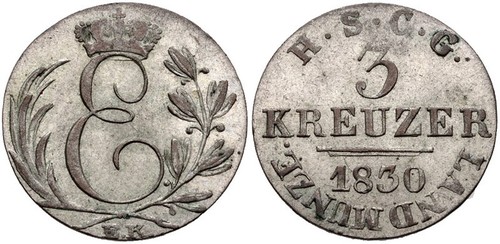
Gotha 3 Kreuzer
1830
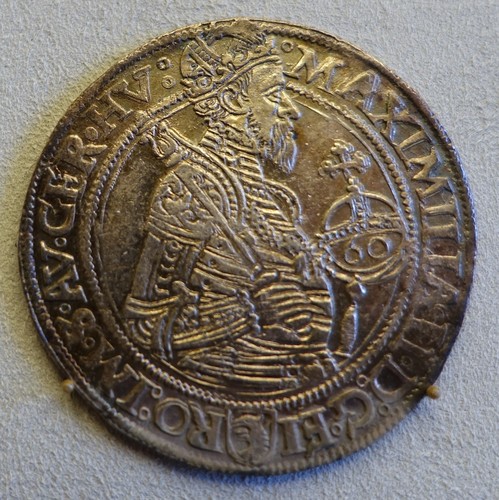
60 Kreuzer Guldiner
1568
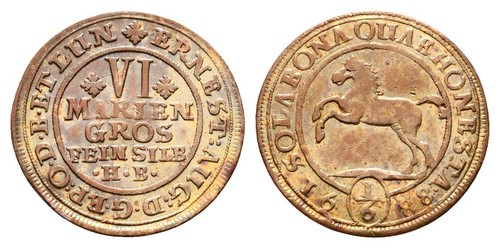
Hanover 1/6 Thaler
1688
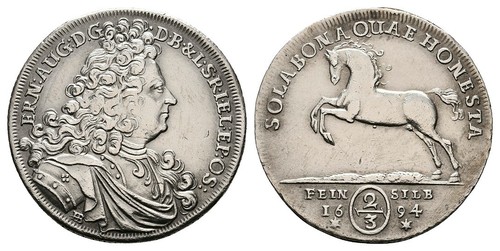
Hanover 2/3 Thaler
1694
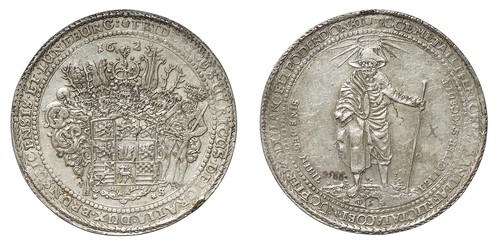
Braunschweig-Lüneburg Thaler
17th–18th century
Braunschweig-Lüneburg 3 Thaler
1685 (late 17th century)
Frankfurt am Main Taler
1772