
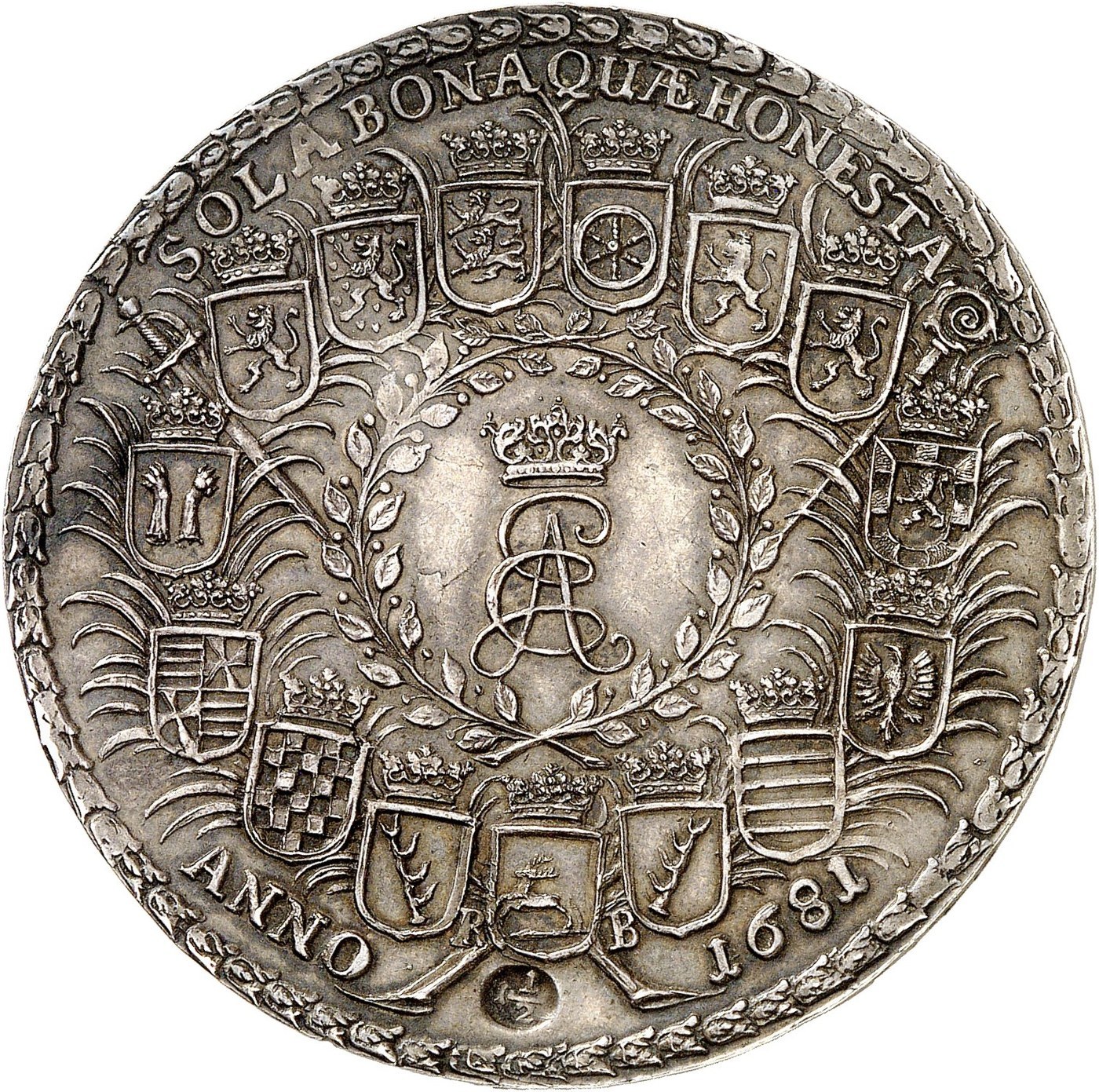
Hanover-Luneburg 1.5 Thaler
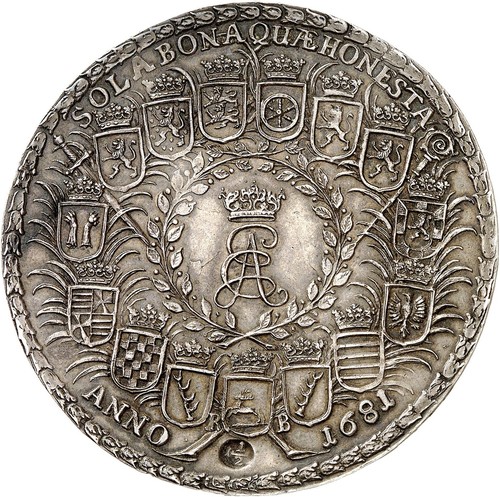
A large silver 1.5 Thaler of Brunswick-Luneburg (Hanover), dated 1681, with a busy multi-shield heraldic design and the motto SOL BONA QUE HONESTA.
- Country
- Hanover/Luneburg
- Denomination
- 1.5 Thaler
- Metal
- Silver
Got a coin like this?
Identify any coin from a photo, free.
Overview
The Hanover-Luneburg 1.5 Thaler is a large silver coin of the Duchy of Brunswick-Luneburg, one of the many territories of the House of Welf (Guelph) in what is now northern Germany. The 1.5 Thaler (German Anderthalbtaler) was a heavy multiple denomination, larger than the standard Thaler, struck in the German states during the late 17th century.
The example shown is dated 1681 and carries a complex heraldic design featuring multiple coats of arms together with the Latin motto SOL BONA QUE HONESTA. Coins of this weight were prestige and store-of-value pieces as much as circulating money, and their crowded armorial dies reflect the dynastic claims and territories of the Brunswick-Luneburg dukes.
History & Background
The Duchy of Brunswick-Luneburg was divided among branches of the House of Welf, and the Luneburg (Celle) and Calenberg-Hanover lines were among the most important. During the 17th century these dukes drew wealth from their lands and, notably, from the silver mines of the Harz Mountains, which supplied metal for a prolific coinage of Thalers and Thaler multiples.
In 1681, the date on this piece, the Brunswick-Luneburg territories were ruled by dukes of the Welf house whose Hanover line would rise dramatically over the following decades — being raised to an Electorate in 1692 and, in 1714, providing Great Britain with King George I. Heavy silver denominations such as the 1.5 Thaler were struck partly to display this dynastic prestige, and the abundant Harz silver made larger-than-Thaler pieces practical to produce.
The motto SOL BONA QUE HONESTA and the array of heraldic shields are typical of the elaborate, message-laden coinage of the German states in this era, where each duchy asserted its titles and lands through the arms displayed on its money.
How to Identify
Obverse (as observed): a complex heraldic design with multiple coats of arms, surrounded by the legend including the Latin motto SOL BONA QUE HONESTA and the date 1681. The crowding of several shields together is a key diagnostic of Brunswick-Luneburg armorial Thaler-family coinage.
Reverse: not visible in the photographed example. On related Brunswick-Luneburg pieces of this period the second face commonly carries additional heraldry, a leaping Saxon horse (the Welf/Lower Saxony Ross), a wildman (the Wilder Mann), or the ducal titulature — but the reverse of this specific coin should be confirmed directly rather than assumed.
Physical clues: the piece is silver and, as a 1.5 Thaler, is notably heavier and larger than an ordinary Thaler. Expect a broad, thick flan with deeply engraved detail. Confirm the denomination by weight and diameter, since the same designs can appear on the standard Thaler and other multiples.
Value & Collectibility
The value of a Brunswick-Luneburg 1.5 Thaler depends heavily on the exact ruler, mint, die variety, and above all condition. As a large, less common Thaler multiple in silver, it generally commands more than a standard single Thaler of the same period, and well-preserved or rare varieties can reach substantial sums at specialist auction.
Because 17th-century German states coinage exists in many closely related types and varieties, precise attribution matters a great deal to price. Wear, cleaning, mount marks, and edge damage all reduce value. For any specific piece, compare recent auction results for the same duke, date, and denomination and, for a valuable example, seek a professional numismatic opinion or third-party grading rather than relying on bullion weight alone.
Frequently asked questions
What is a Hanover-Luneburg 1.5 Thaler?
It is a large silver coin of the Duchy of Brunswick-Luneburg (the Hanover/Luneburg Welf lands), worth one and a half Thalers. This example is dated 1681 and carries a busy heraldic design with the motto SOL BONA QUE HONESTA.
What does SOL BONA QUE HONESTA mean?
It is a Latin motto appearing in the coin's legend. Such Latin mottoes were common on German states coinage of the period, expressing themes of virtue and good repute alongside the ruler's heraldry.
Why does it have so many coats of arms?
The multiple shields display the various titles and territories claimed by the Brunswick-Luneburg dukes of the House of Welf. Crowded armorial designs were a way for German states to assert dynastic prestige on their coinage.
How is it different from a regular Thaler?
A 1.5 Thaler (Anderthalbtaler) is a Thaler multiple, so it is heavier and larger than a standard single Thaler. Confirm the denomination by weighing and measuring the coin rather than by design alone.
Is a 1681 Brunswick-Luneburg 1.5 Thaler valuable?
As a large, comparatively scarce silver multiple it typically sells for more than a single Thaler of the same era, with value driven by ruler, variety, and condition. Have any significant example authenticated and compare recent auction results.
Hanover-Luneburg 1.5 Thaler guides
In-depth guides for identifying, valuing, and collecting Hanover-Luneburg 1.5 Thaler.
Other coins you may enjoy
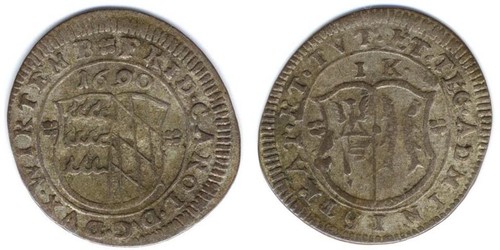
Württemberg Kreuzer
17th century (example dated 1690)
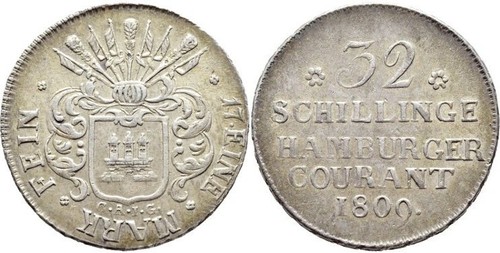
Hamburg 32 Schilling
1800
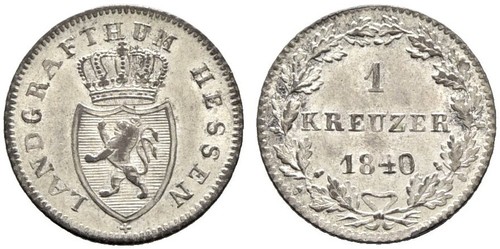
Hessen-Homburg Kreuzer
1840
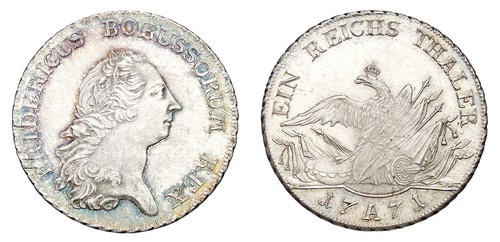
Prussian Taler
1750s–1786 (reign of Frederick II)
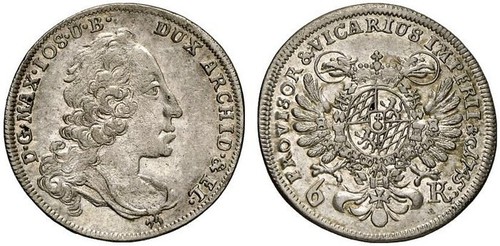
Bavaria 6 Kreuzer
1745 (issue shown)
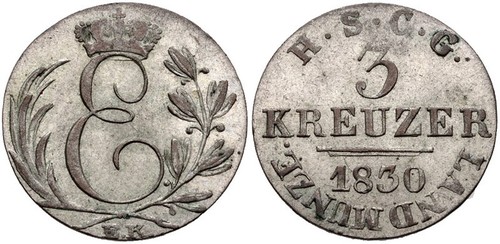
Gotha 3 Kreuzer
1830
60 Kreuzer Guldiner
1568
Hanover 1/6 Thaler
1688
Hanover 2/3 Thaler
1694
Braunschweig-Lüneburg Thaler
17th–18th century
Braunschweig-Lüneburg 3 Thaler
1685 (late 17th century)
Frankfurt am Main Taler
1772