
How to Identify the Hanover-Luneburg 1.5 Thaler
Identify this coin by its 1681 date, the motto SOL BONA QUE HONESTA, a crowded multi-shield heraldic obverse, silver metal, and heavy 1.5-Thaler size.
Read the full Hanover-Luneburg 1.5 Thaler encyclopedia entry →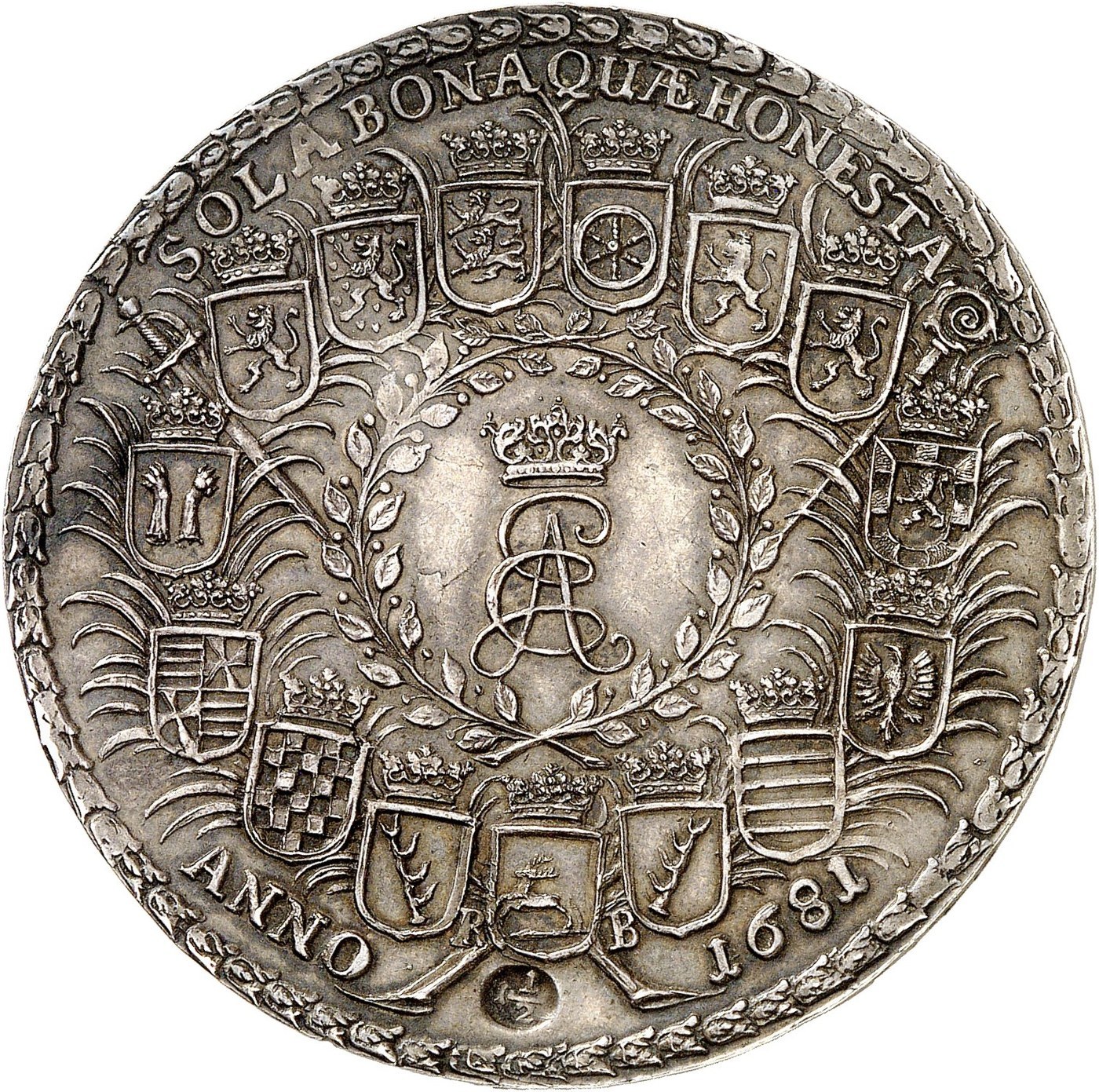
Read the legend and date first. The photographed coin shows the Latin motto SOL BONA QUE HONESTA and the year 1681 in the obverse legend. Locating this motto and date is the quickest way to separate this piece from the many other Brunswick-Luneburg Thaler-family coins, which use different mottoes, dates, and titulature.
Study the heraldry. The obverse is a dense arrangement of multiple coats of arms. Count the shields and note their contents and layout, then compare them against catalogued Brunswick-Luneburg (Welf) types. The Lower Saxony/Welf horse (Ross) and other family arms frequently appear in this coinage, and the precise combination of shields helps pin down the ruler and variety.
Confirm the denomination by size and weight. This is a 1.5 Thaler, so it is distinctly heavier and broader than a standard Thaler struck in the same silver standard. Weigh and measure the coin and compare to reference figures for the type; do not judge the denomination from the design alone, because the same or similar dies can appear on Thalers and other multiples.
Check the reverse before concluding. The reverse is not shown in this image, so identify it directly on the coin in hand. Expect additional heraldry, ducal titles, or a figural device such as a wildman or the Saxon horse on related issues, but verify what is actually present rather than assuming a standard reverse.
Watch for look-alikes and fakes. Many German states struck heavy silver Thaler multiples with crowded armorial designs, so a busy heraldic coin is not automatically Brunswick-Luneburg. Confirm the metal is genuine silver (dense, non-magnetic, correct weight), inspect the edge and surfaces for casting seams, tooling, or an added mount, and be cautious with high-grade or unusually clean examples. Large, valuable silver coins of this era are targets for casts and forgeries, so seek a specialist opinion or third-party grading for any significant piece.
Frequently asked questions
How do I confirm this is a 1.5 Thaler and not a Thaler?
Weigh and measure the coin. A 1.5 Thaler is markedly heavier and broader than a single Thaler in the same silver standard, so the physical measurements, not the design, settle the denomination.
Which features tie the coin to Brunswick-Luneburg?
The combination of the crowded multi-shield heraldry, the House of Welf arms (such as the Lower Saxony horse), and the specific legend and titulature identify it. Match the exact shield layout to a catalogued Brunswick-Luneburg type.
The reverse isn't shown here. How should I identify it?
Examine the actual reverse of your coin rather than assuming. Related issues carry extra heraldry, ducal titles, or figures like a wildman or the Saxon horse, but you should confirm what is genuinely present.
How can I tell a genuine example from a cast copy?
Verify the metal is true silver of the correct weight and non-magnetic, inspect the edge and fields for casting seams, softness, or tooling, and check for signs of a removed mount. For valuable pieces, obtain professional authentication or grading.