
Hessen-Homburg Kreuzer
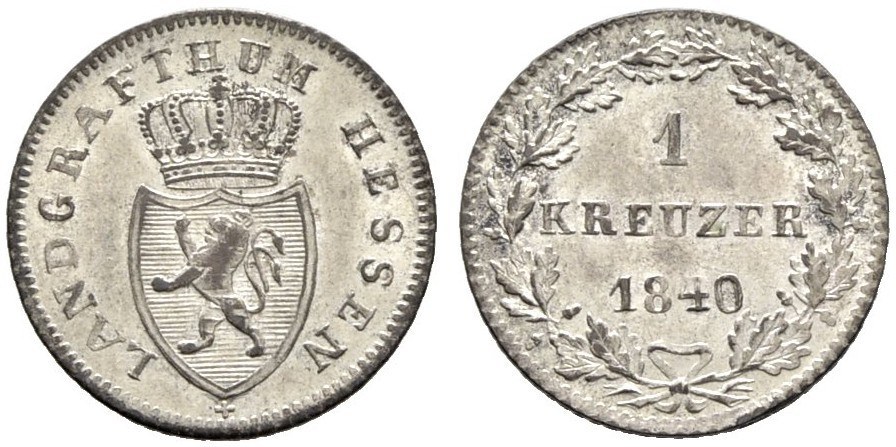
A small silver 1 Kreuzer of the Landgraviate of Hessen-Homburg, with a crowned arms shield and a dated 1 KREUZER value in a laurel wreath.
- Country
- Hessen-Homburg
- Denomination
- 1 Kreuzer
- Metal
- Silver
Got a coin like this?
Identify any coin from a photo, free.
Overview
The Hessen-Homburg Kreuzer is a small silver 1 Kreuzer coin struck for the Landgraviate of Hessen-Homburg, a tiny German state north of Frankfurt. The example shown is dated 1840 and pairs a crowned coat-of-arms shield on the obverse with a value-and-date design inside a laurel wreath on the reverse.
The kreuzer was a low-denomination unit used across much of southern and central Germany before unification. As a minor everyday coin, this piece would have circulated for small purchases, and its billon-to-silver fabric and modest size are typical of the fractional currency of the German states in the first half of the 19th century.
History & Background
Hessen-Homburg was one of the smallest of the German states, a landgraviate centered on the town of Homburg vor der Höhe. It regained independence in 1815 after the Napoleonic era and existed as a separate principality until 1866, when it passed to Hesse-Darmstadt and shortly afterward, with it, to Prussia.
Because the state was so small, its coinage was issued only in limited quantity and for short periods, generally following the monetary standards of the larger neighbors it traded with. A dated silver kreuzer such as the 1840 piece belongs to this modest output of a minor landgraviate rather than to a large national mintage.
After Hessen-Homburg lost its independence, no further coins were struck in its name, which makes its surviving coinage a compact and finite series prized by collectors of German states material.
How to Identify
Obverse: a crown above a coat-of-arms shield bearing heraldic elements, the arms of the Landgraviate of Hessen-Homburg. Look for the crowned shield as the central device, usually with the state name or ruler's titles in the surrounding legend.
Reverse: the denomination 1 KREUZER together with the date 1840, enclosed within a laurel wreath. The wreath-framed value is the quickest way to read the denomination and confirm the year.
Physical clues: this is a small, thin silver (or low-grade silver/billon) coin of minor-denomination size, in line with other German-states kreuzers of the period. The combination of a crowned Hessen-Homburg shield with a wreathed "1 KREUZER" and an 1840 date is the defining signature of the type.
Value & Collectibility
As a minor silver coin from a small state, the Hessen-Homburg Kreuzer draws interest mainly from collectors of German states rather than for precious-metal content, which is slight. Values depend heavily on condition, with well-worn examples being affordable and sharp, high-grade or lustrous pieces commanding a clear premium.
Because the landgraviate's coinage was issued in limited amounts and only until 1866, genuine pieces have a natural scarcity that supports collector demand. Grade, eye appeal, and originality of surfaces matter more than any single catalog figure, so compare recent sales of the same date and denomination before assigning a value, and be cautious of cleaned or damaged coins.
Frequently asked questions
What is a Hessen-Homburg Kreuzer?
It is a small silver 1 Kreuzer coin struck for the Landgraviate of Hessen-Homburg, a tiny German state. The example shown is dated 1840.
What is shown on the coin?
The obverse has a crown above the Hessen-Homburg coat-of-arms shield; the reverse shows the value 1 KREUZER with the date 1840 inside a laurel wreath.
Is it made of silver?
Yes, though as a low-denomination kreuzer it is a small, thin coin of relatively low silver content typical of German-states minor coinage of the era.
Why is Hessen-Homburg coinage relatively scarce?
Hessen-Homburg was a very small landgraviate that issued limited coinage and lost its independence in 1866, after which no further coins were struck in its name.
Is a Hessen-Homburg Kreuzer valuable?
Value comes mainly from collector interest in German states, not bullion. Condition is decisive; worn coins are modest while sharp, original high-grade examples command a premium.
Hessen-Homburg Kreuzer guides
In-depth guides for identifying, valuing, and collecting Hessen-Homburg Kreuzer.
Other coins you may enjoy
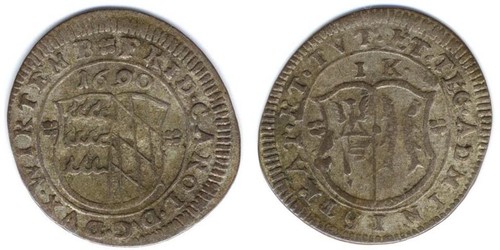
Württemberg Kreuzer
17th century (example dated 1690)
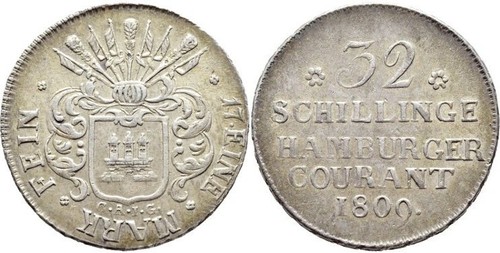
Hamburg 32 Schilling
1800
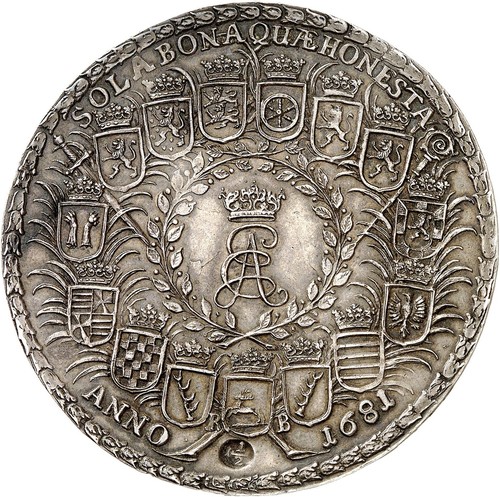
Hanover-Luneburg 1.5 Thaler
1681 (dated example)
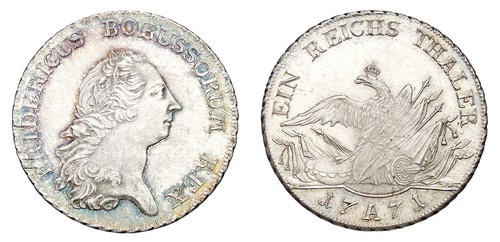
Prussian Taler
1750s–1786 (reign of Frederick II)
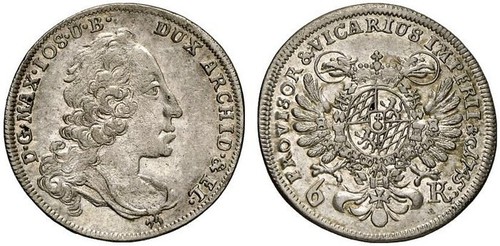
Bavaria 6 Kreuzer
1745 (issue shown)
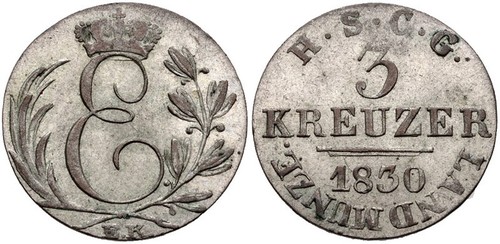
Gotha 3 Kreuzer
1830
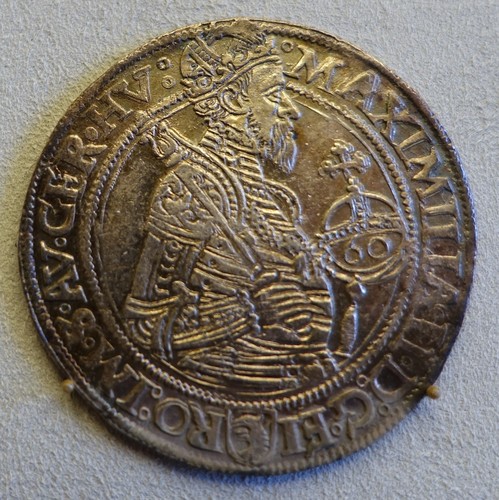
60 Kreuzer Guldiner
1568
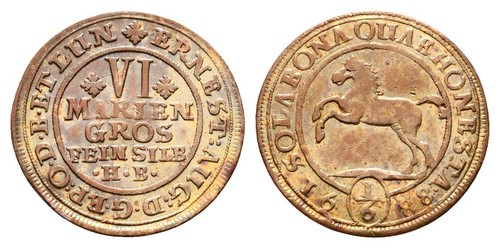
Hanover 1/6 Thaler
1688
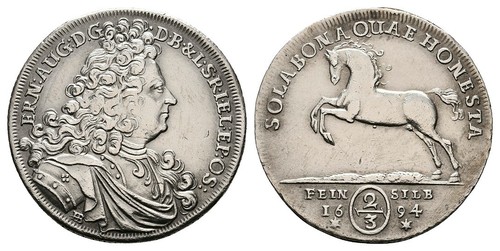
Hanover 2/3 Thaler
1694
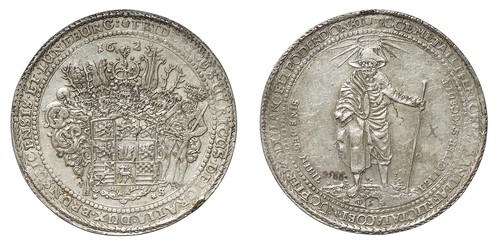
Braunschweig-Lüneburg Thaler
17th–18th century
Braunschweig-Lüneburg 3 Thaler
1685 (late 17th century)
Frankfurt am Main Taler
1772