
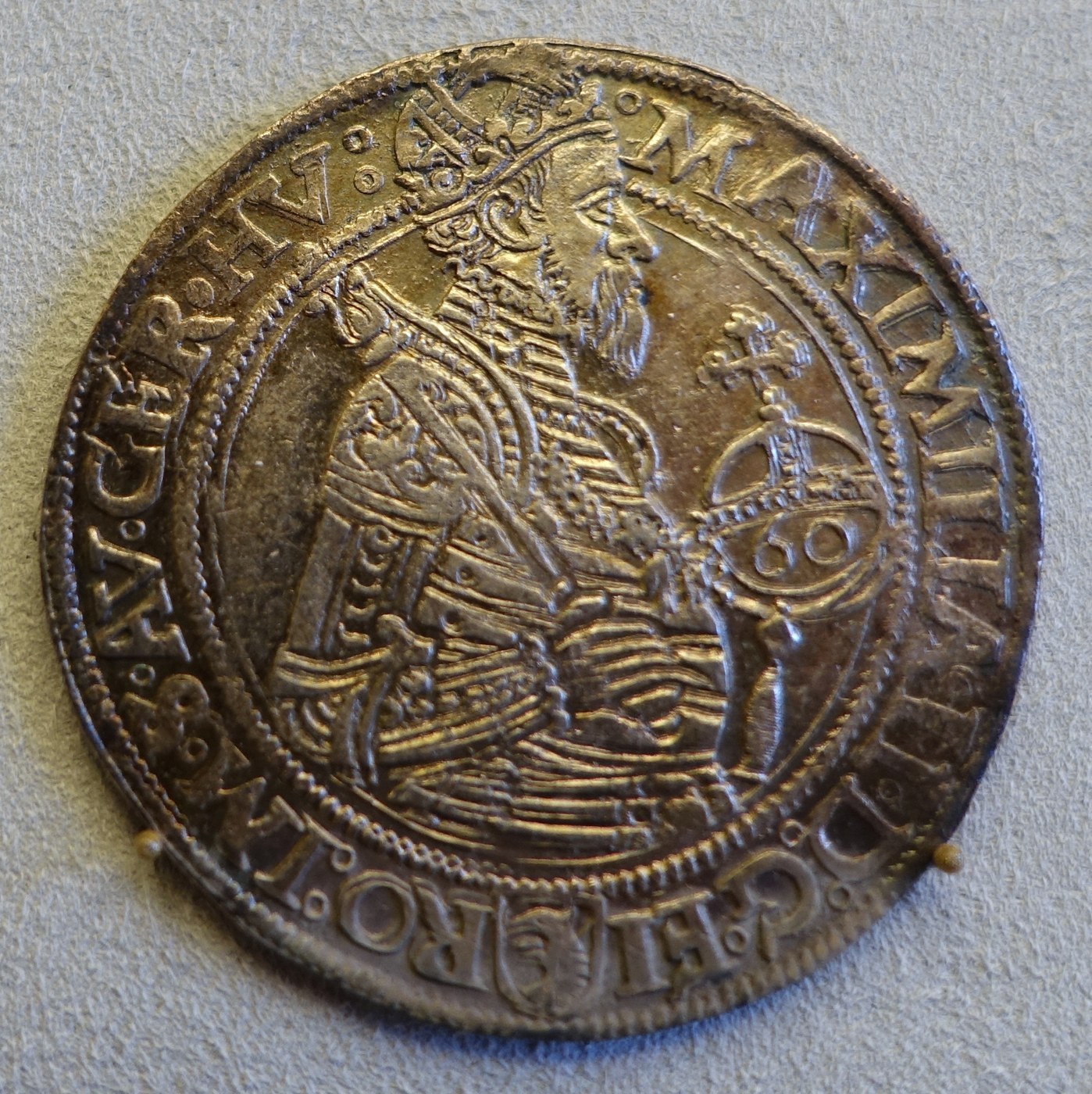
60 Kreuzer Guldiner
A gold 60 Kreuzer Guldiner of the Holy Roman Empire dated 1568, showing Emperor Maximilian II in plumed armor in right profile.
- Country
- Holy Roman Empire
- Denomination
- 60 Kreuzer
- Metal
- Gold
Got a coin like this?
Identify any coin from a photo, free.
Overview
The 60 Kreuzer Guldiner is a large imperial piece of the Holy Roman Empire valued at one gulden, or 60 Kreuzer. The example shown is gold and dated 1568, struck in the reign of Emperor Maximilian II (reigned 1564–1576).
The obverse carries a profile portrait of Maximilian II facing right, rendered in elaborate plumed armor and surrounded by a Latin titular inscription. The reverse is filled with text around the rim and prominently displays the date 1568. The name Guldiner (also Guldengroschen) marks it as the coin set equal in value to the gold gulden — a denomination fixed at 60 Kreuzer under the imperial coinage standards of the era.
History & Background
Maximilian II of Habsburg was elected King of the Romans and succeeded his father Ferdinand I as Holy Roman Emperor in 1564, ruling until his death in 1576. His reign fell within the framework of the Imperial Mint Ordinances (Reichsmünzordnungen), the standardization efforts — notably that of 1559 — that defined the Guldiner as a full-value piece worth 60 Kreuzer, or one gulden.
The Guldiner had emerged in the German lands and the Habsburg territories from the late 15th and early 16th centuries as a large-module coin meant to equal the long-established gold gulden. Portrait coinage of this scale let rulers project authority across the many mints of the Empire, and Maximilian's coins circulated among the imperial and princely issues of the German states.
Because the Empire was a patchwork of many mints and standards, dated portrait pieces such as this 1568 issue are valued today as tangible records of Habsburg imperial coinage and of the mid-16th-century monetary reforms that tied the everyday Kreuzer system to the gulden.
How to Identify
Obverse: a right-facing profile bust of Maximilian II in ornate, plumed armor, ringed by a Latin legend giving his name and imperial titles. The plume and decorated armor are strong visual cues for this ruler's portrait coinage.
Reverse: inscriptions arranged around the rim with the clearly readable date 1568. Reverses of this denomination typically carry additional titles, a crowned imperial eagle or coat of arms, and elements indicating the value of 60 Kreuzer.
Physical clues: the piece is gold and struck as a large-module Guldiner (one gulden / 60 Kreuzer). Confirm the ruler's name in the legend, the 1568 date, and the profile-in-armor portrait together — the combination, rather than any single feature, identifies the type. Legends are in Latin and abbreviated in the period style.
Value & Collectibility
Value depends on the exact mint and variety, the metal and weight, the sharpness of the portrait and legends, and overall condition. As a gold imperial piece of a named 16th-century emperor, it draws interest both for its precious-metal content and for its historical significance, and desirable examples can trade well above bullion value.
Exact prices vary widely with grade and rarity, so treat any single figure with caution. Because early gold portrait coins are frequently copied, restruck, or faked, compare recent auction results for closely matching Maximilian II Guldiner examples and obtain a specialist or third-party authentication before buying or selling.
Frequently asked questions
What is a 60 Kreuzer Guldiner?
It is a large imperial coin of the Holy Roman Empire worth one gulden, equal to 60 Kreuzer. The example shown is a gold piece dated 1568 bearing the portrait of Emperor Maximilian II.
Who is on the coin?
The obverse shows Emperor Maximilian II of the House of Habsburg, in right-facing profile wearing elaborate plumed armor, with his name and titles in a surrounding Latin legend.
What does 'Guldiner' mean?
Guldiner (also Guldengroschen) is the name for the large-module piece set equal in value to the gold gulden. Under the imperial standards of the period that value was fixed at 60 Kreuzer.
What year is this coin?
This example is dated 1568, which appears in the inscription around the reverse. It falls within Maximilian II's reign as Holy Roman Emperor from 1564 to 1576.
Is it valuable?
As a gold imperial portrait coin its metal sets a floor, and condition, mint, and rarity can raise the value well beyond bullion. Have any gold example authenticated, since early gold coins are often copied.
60 Kreuzer Guldiner guides
In-depth guides for identifying, valuing, and collecting 60 Kreuzer Guldiner.
Other coins you may enjoy
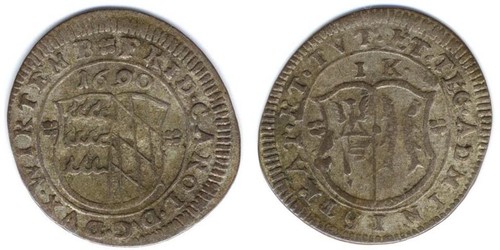
Württemberg Kreuzer
17th century (example dated 1690)
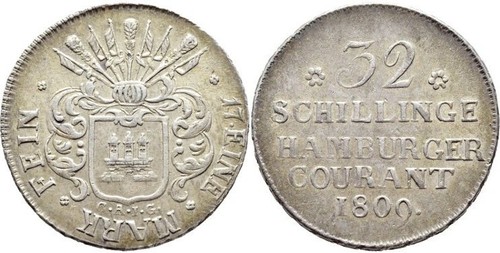
Hamburg 32 Schilling
1800
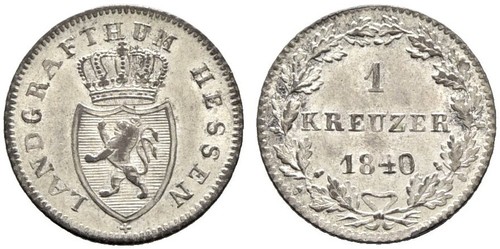
Hessen-Homburg Kreuzer
1840
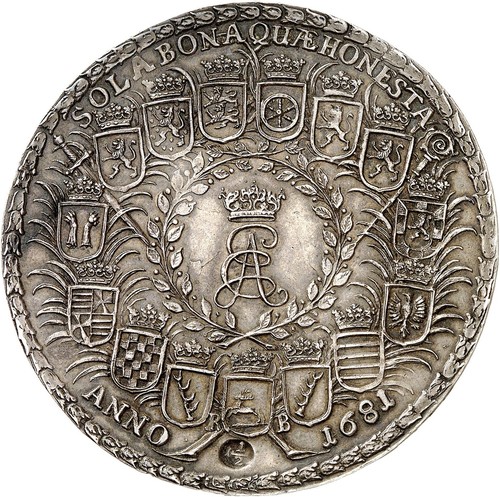
Hanover-Luneburg 1.5 Thaler
1681 (dated example)
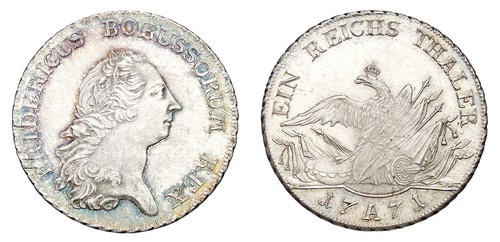
Prussian Taler
1750s–1786 (reign of Frederick II)
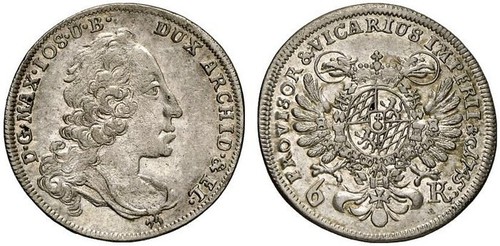
Bavaria 6 Kreuzer
1745 (issue shown)
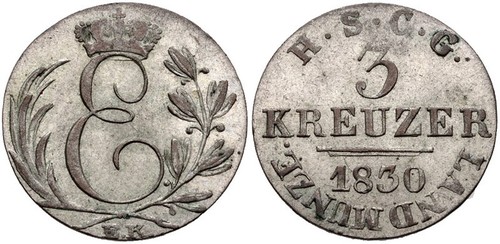
Gotha 3 Kreuzer
1830
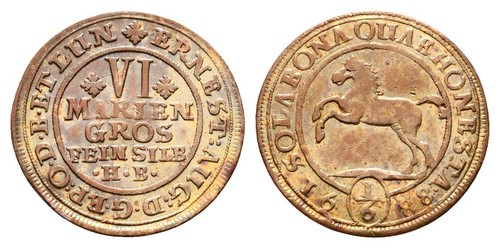
Hanover 1/6 Thaler
1688
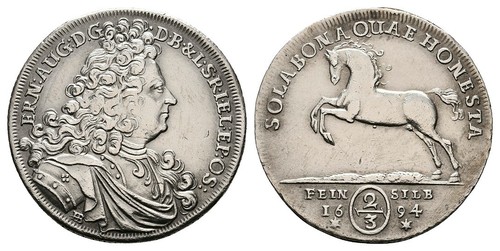
Hanover 2/3 Thaler
1694
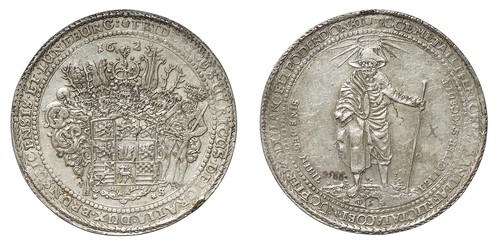
Braunschweig-Lüneburg Thaler
17th–18th century
Braunschweig-Lüneburg 3 Thaler
1685 (late 17th century)
Frankfurt am Main Taler
1772