
How to Identify the 60 Kreuzer Guldiner
Identify a Maximilian II Guldiner by its right-facing plumed-armor portrait, Latin titles, the 1568 date on the reverse, and its large gold gulden module.
Read the full 60 Kreuzer Guldiner encyclopedia entry →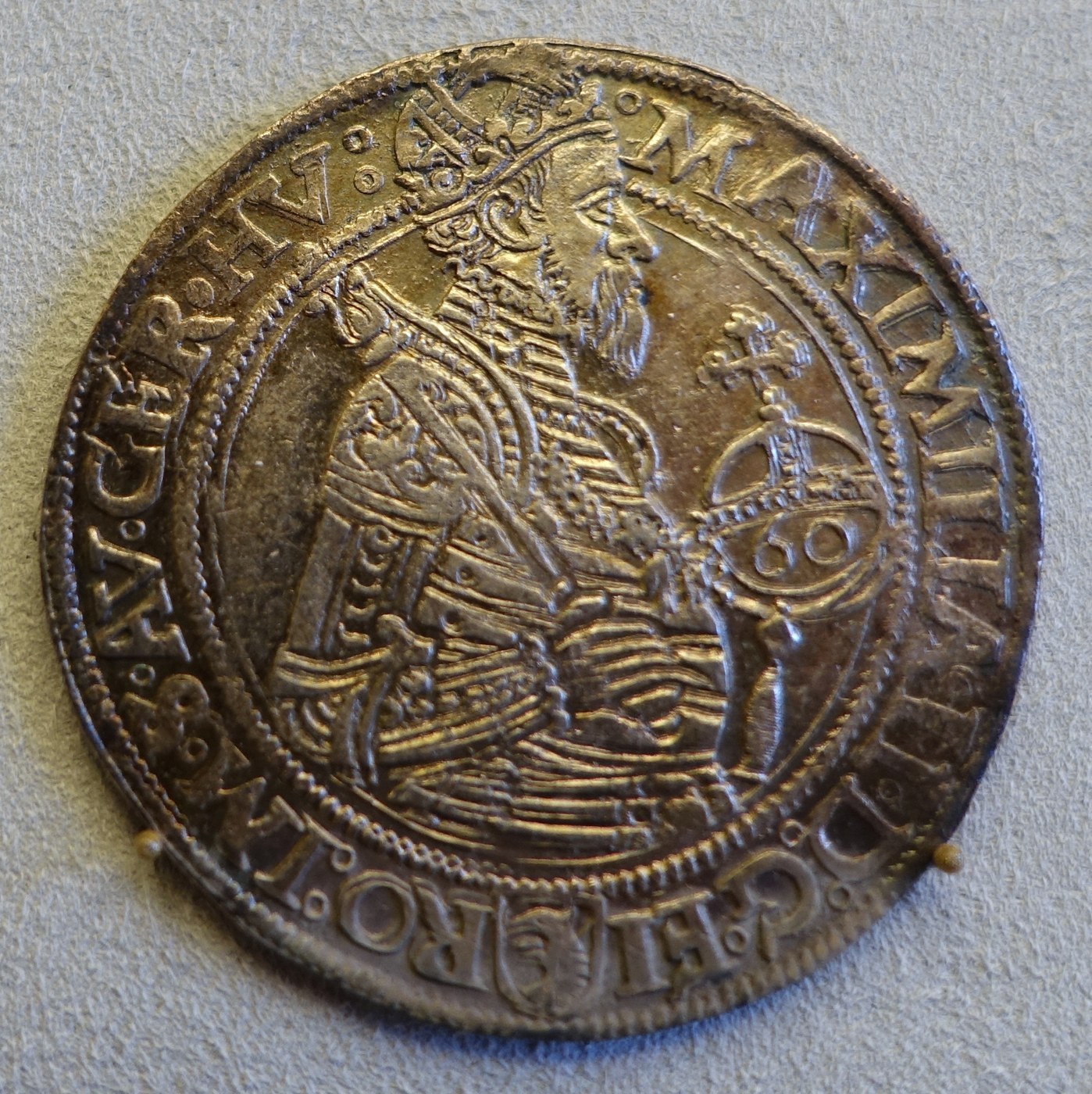
Start with the portrait. The defining feature is a right-facing profile bust of Maximilian II in ornate, plumed armor. Read the surrounding Latin legend, which abbreviates his name and imperial titles; confirming the ruler's name in the inscription is the surest way to attribute the portrait rather than judging the face alone.
Read the reverse and the date. Look for inscriptions running around the rim and the date 1568. The reverse of this denomination usually adds further titles and imperial devices such as a crowned eagle or coat of arms and indicates the 60-Kreuzer (one-gulden) value. Matching a legible 1568 date to the Maximilian portrait links the two faces to the correct issue.
Check size, metal, and module. The Guldiner is a large-module piece struck to the gulden standard, and this example is gold. Weigh and measure it and compare against published specifications for the type; genuine gold is dense, warm-toned, and non-magnetic. A weight or diameter well off the expected range is a warning sign.
Watch for look-alikes. The Holy Roman Empire had many mints and rulers issuing portrait Guldiner and Taler-sized coins, so confirm both the Maximilian II legend and the 1568 date before settling on this type — a similar armored profile of Ferdinand I, Rudolf II, or a German-states prince can look alike at a glance. Silver Guldengroschen of the same value also exist, so verify the metal.
Authenticate carefully. Early gold portrait coins are among the most copied and restruck pieces in the market. Inspect the edge for casting seams, judge whether the portrait and letters are crisp rather than soft or mushy, and be wary of gilt base-metal fakes. For any valuable gold example, seek a specialist opinion or third-party certification and compare recent auction records for matching coins.
Frequently asked questions
How do I confirm the ruler is Maximilian II?
Read the Latin legend around the portrait; it abbreviates his name and imperial titles. Do not rely on the armored profile alone, since several Habsburg emperors and German princes used similar portrait styles.
Where is the date and what should it read?
The date appears in the inscription around the reverse rim and reads 1568 on this example, placing it within Maximilian II's reign of 1564 to 1576.
How can I tell this gold piece from a silver Guldengroschen?
Both share the 60-Kreuzer value, but check the metal directly: gold is denser, warm-toned, and non-magnetic. Weigh and measure the coin against published specifications rather than judging by color alone.
What are the main authentication risks?
Copies, restrikes, and gilt base-metal fakes are common for early gold coins. Inspect the edge for casting seams, look for crisp portrait and lettering detail, and get valuable examples professionally authenticated.