
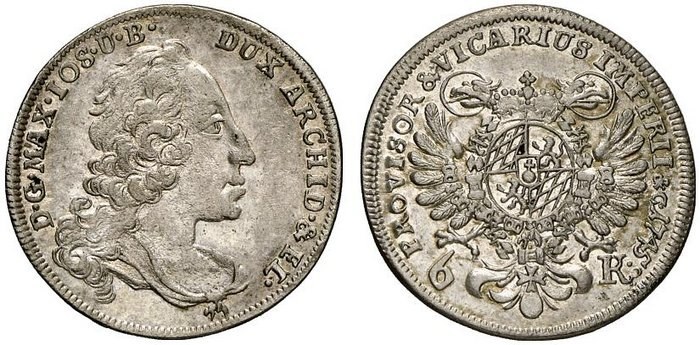
Bavaria 6 Kreuzer
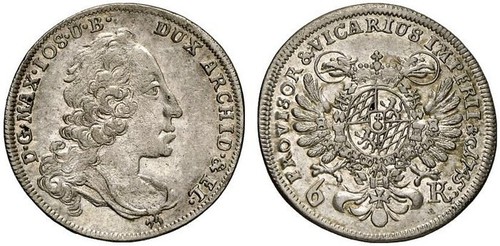
A small silver 6 Kreuzer of the Electorate of Bavaria, showing the profile of Charles VII and a crowned double-headed imperial eagle marking the value.
- Country
- Bavaria
- Denomination
- 6 Kreuzer
- Metal
- Silver
Got a coin like this?
Identify any coin from a photo, free.
Overview
The Bavaria 6 Kreuzer is a small silver coin of the Electorate of Bavaria, one of the states of the Holy Roman Empire. The example shown is dated 1745 and pairs an ornate profile portrait of Charles VII on the obverse with a crowned double-headed imperial eagle and a mark of value on the reverse.
The 6 Kreuzer was a middling everyday denomination in the south-German Kreuzer system, worth six Kreuzer and sitting between the tiny billon coins and the larger silver Thaler and Gulden. Its combination of a named ruler's bust and the imperial eagle reflects Charles VII's dual role as Elector of Bavaria and, at the time, Holy Roman Emperor.
As a period silver piece from the mid-18th century, it is collected today as a German States type and as a coin tied to a specific and short-lived emperor rather than as a modern commemorative.
History & Background
Charles VII (Karl Albrecht), Elector of Bavaria, was elected Holy Roman Emperor in 1742, briefly interrupting Habsburg control of the imperial title during the War of the Austrian Succession. His reign as emperor was troubled and short: he died in January 1745, the same year borne by this coin, and the imperial crown returned to the House of Habsburg-Lorraine soon after.
During his rule Bavaria struck coins that advertised his imperial standing. The double-headed eagle on the reverse is the emblem of the Holy Roman Empire, and its appearance on a Bavarian Kreuzer piece signals that the Elector who issued it also wore the imperial crown. Coins of the Kreuzer system circulated widely across Bavaria, Austria, and neighbouring south-German lands, which shared broadly compatible small-change denominations.
Bavarian silver of this era was produced chiefly at the Munich mint. Because Charles VII's imperial period was so brief, coins bearing his portrait cover only a narrow span of years, making dated issues like the 1745 6 Kreuzer a compact and historically pointed slice of German States coinage.
How to Identify
Obverse: an ornate profile bust of Charles VII, typically draped or armoured, surrounded by a Latin legend giving his name and titles. Look for a portrait facing to the side with elaborate detailing of the hair and drapery, the hallmark of mid-18th-century Bavarian engraving.
Reverse: a crowned double-headed imperial eagle, the arms of the Holy Roman Empire, with the value mark for 6 — here read as a "6 R" style denomination indicator — placed on or beside the eagle, together with the date 1745. The eagle plus a numeral six is the key diagnostic that identifies the denomination.
Physical clues: a small, thin silver coin, considerably smaller than a Thaler or Gulden and struck in a modest silver alloy typical of Kreuzer small change. The paired portrait-and-eagle design, the value six, and a Bavarian/imperial Latin legend together separate it from the many other south-German Kreuzer coins of similar size.
Value & Collectibility
Value depends heavily on condition, strike quality, and eye appeal. Well-worn circulated examples of an 18th-century Bavarian 6 Kreuzer are generally affordable and trade as modest German States collectibles, while sharply struck, problem-free, or higher-grade pieces command a clear premium.
Because this issue is tied to the brief reign of Charles VII, collector interest in the ruler can add appeal beyond the coin's small silver content. Even so, the low silver weight of a 6 Kreuzer means bullion value is minor and numismatic factors dominate pricing.
Exact prices vary with the specific date, die variety, and grade, and the German States market shifts over time. Treat any single figure as approximate and compare recent sales of similar-grade Bavarian 6 Kreuzer coins, ideally with expert or third-party grading for better examples.
Frequently asked questions
Who is shown on the Bavaria 6 Kreuzer?
The obverse carries an ornate profile portrait of Charles VII, Elector of Bavaria, who was also Holy Roman Emperor at the time this 1745 coin was struck.
What does the double-headed eagle on the reverse mean?
It is the imperial eagle of the Holy Roman Empire. Its presence signals that the Bavarian Elector who issued the coin also held the imperial crown, and it appears alongside the value mark for 6.
What is a 6 Kreuzer worth as money?
The Kreuzer was a small south-German unit; six Kreuzer was a modest everyday sum, well below the value of larger silver coins like the Gulden or Thaler.
What metal is it made of?
It is silver, struck in the relatively low-grade silver alloy typical of small Kreuzer change, which makes it a small and thin coin rather than a heavy silver piece.
Is the Bavaria 6 Kreuzer rare?
It is a genuine 18th-century type rather than a modern issue, and its link to the short reign of Charles VII gives it interest, but values are driven mainly by condition. Higher grades are scarcer and worth more.
Bavaria 6 Kreuzer guides
In-depth guides for identifying, valuing, and collecting Bavaria 6 Kreuzer.
Other coins you may enjoy
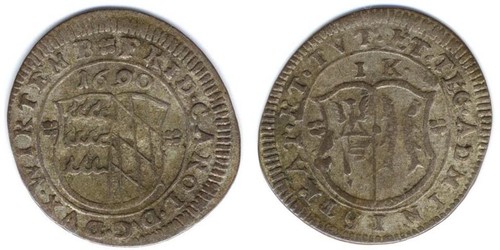
Württemberg Kreuzer
17th century (example dated 1690)
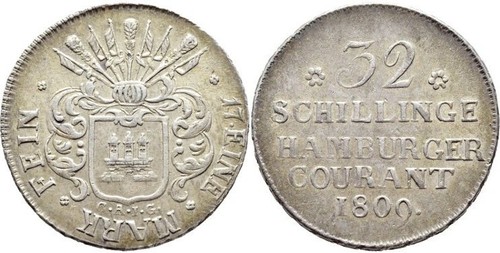
Hamburg 32 Schilling
1800
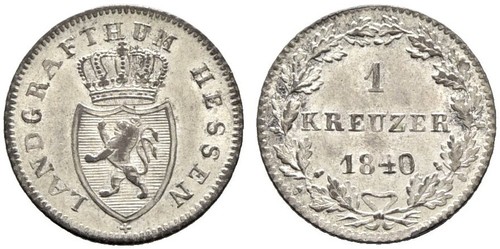
Hessen-Homburg Kreuzer
1840
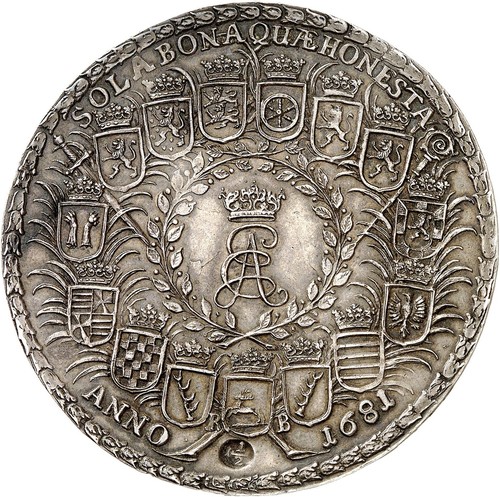
Hanover-Luneburg 1.5 Thaler
1681 (dated example)
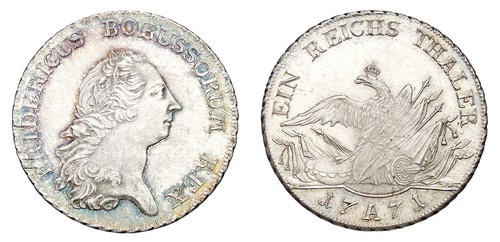
Prussian Taler
1750s–1786 (reign of Frederick II)
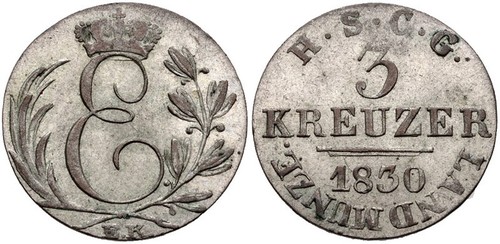
Gotha 3 Kreuzer
1830
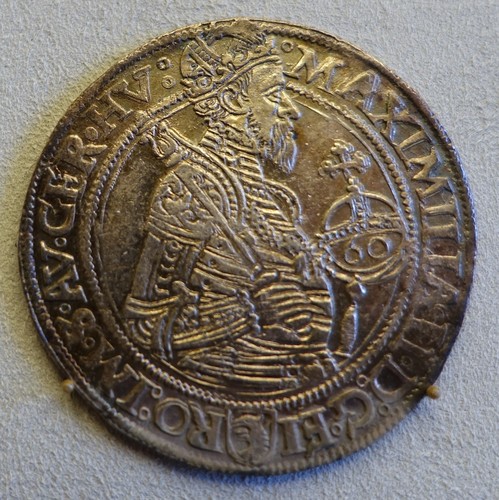
60 Kreuzer Guldiner
1568
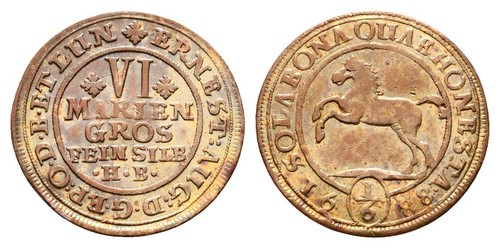
Hanover 1/6 Thaler
1688
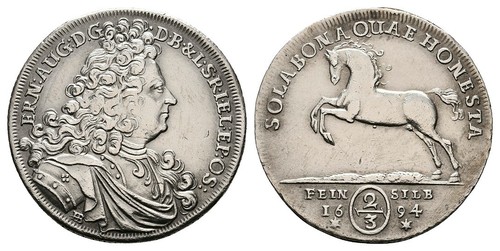
Hanover 2/3 Thaler
1694
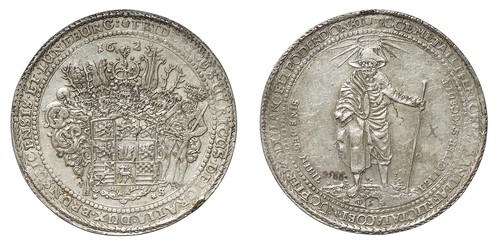
Braunschweig-Lüneburg Thaler
17th–18th century
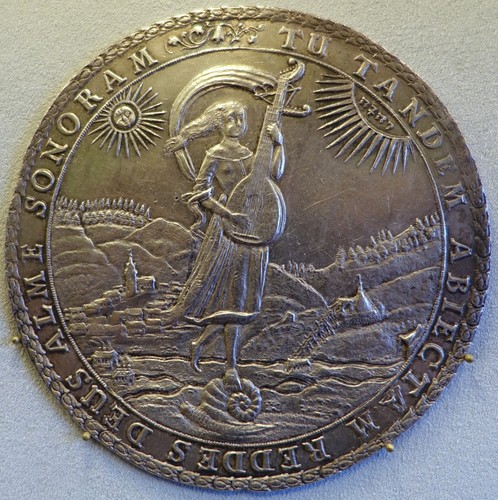
Braunschweig-Lüneburg 3 Thaler
1685 (late 17th century)
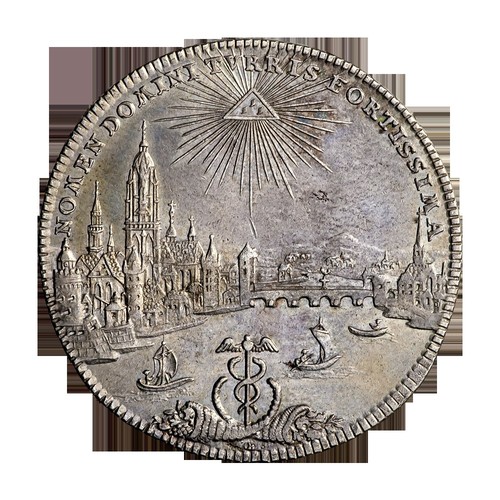
Frankfurt am Main Taler
1772