
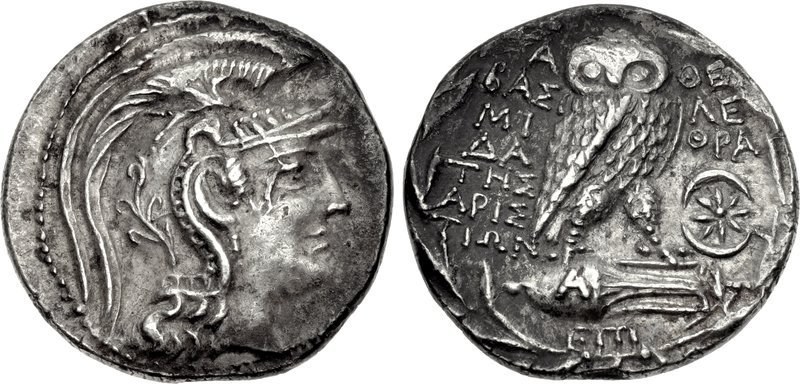
Athens New Style Tetradrachm
Athens' late silver tetradrachm on a broad thin flan: a helmeted Athena obverse and an owl perched on an amphora within an olive wreath.
- Country
- Ancient Greece
- Denomination
- Tetradrachm
- Metal
- Silver
Got a coin like this?
Identify any coin from a photo, free.
Overview
The Athens New Style Tetradrachm is a large silver coin struck by the mint of Athens from roughly the mid-second century BC into the mid-first century BC. It continued the city's famous "owl" coinage but in a redesigned format, which modern scholars call the "New Style" to distinguish it from the older Classical owls.
The obverse carries the helmeted head of Athena, the city's patron goddess, wearing an elaborate triple-crested Attic helmet. The reverse shows an owl standing on a horizontal amphora, the whole design enclosed within a wreath of olive, alongside the abbreviated ethnic and the names of the officials responsible for the issue.
The example photographed here is dated to 86 BC, placing it in the turbulent period of the First Mithridatic War, when Athens was drawn into conflict with Rome. New Style tetradrachms circulated widely across the eastern Mediterranean and are among the most heavily studied Hellenistic silver coinages.
History & Background
After a long pause in large-scale silver production, Athens resumed striking tetradrachms in a new format around the mid-second century BC. The redesigned coins were struck on broad, thin flans and carried far more administrative detail than earlier issues, including the names of two or three annually rotating magistrates and letters or symbols that scholars have used to reconstruct the sequence and dating of the coinage.
The New Style owls became a major trade currency of the Hellenistic world, exported and hoarded well beyond Attica. Their consistent weight on the Attic standard made them a trusted medium for commerce across the Aegean and Near East.
Coins dated to 86 BC belong to a dramatic moment in Athenian history. During the First Mithridatic War, Athens sided with King Mithridates VI of Pontus against Rome, and in 86 BC the Roman general Sulla besieged and sacked the city. New Style issues of these years reflect a mint operating under wartime pressure, and the series as a whole tapered off in the following decades as Roman power over Greece consolidated.
How to Identify
Identify the New Style owl first by its broad, thin fabric. Unlike the compact, dumpy Classical owls, these tetradrachms are struck on wide flans, typically around 28 to 35 mm across, while still holding to the Attic weight standard of roughly 16.5 to 16.8 grams in good silver.
The obverse shows the head of Athena facing right in a triple-crested Attic helmet decorated with foreparts of horses and other ornaments. Note that the helmeted profile, with its flowing crest and hair, can superficially read as a long-haired or bearded head at a glance, but the subject is the goddess Athena, not a male portrait. The reverse is the diagnostic type: an owl standing on a horizontal amphora, all set within a closed wreath of olive leaves, with the abbreviated ethnic (A-Θ-E) and magistrate names arranged around it.
Field details carry a great deal of information. The amphora usually bears a letter indicating a month of issue, additional monogram or symbol control marks appear in the field, and one to three personal names identify the officials. These elements let specialists attribute a coin to a specific year within the series, including the 86 BC date of the photographed piece.
Value & Collectibility
New Style tetradrachms are more available than the earlier Classical owls but remain substantial ancient silver coins in steady demand. Worn or roughly struck examples commonly trade from the low hundreds of dollars, while well-centered coins with a sharp Athena portrait, full owl, and legible magistrate names typically bring the mid-hundreds into the low thousands.
Value is driven by strike quality, centering on the broad flan (which often leaves part of the design off the edge), surface preservation, toning, and the rarity of the particular magistrate combination and dated issue. Coins tied to historically resonant years, such as the Mithridatic War issues around 86 BC, can attract added collector interest.
The figures here are general context rather than appraisals. Condition, the specific issue, and provenance can move any individual coin well outside these ranges, and specialist attribution to a dated magistrate issue can add a premium.
Frequently asked questions
What makes a New Style owl different from a Classical Athenian owl?
The New Style tetradrachm is struck on a broad, thin flan and adds an amphora beneath the owl, an enclosing olive wreath, and the names of rotating magistrates. Classical owls are on smaller, thicker flans with a plain owl and no wreath or magistrate names.
Who is on the obverse of the coin?
The obverse shows Athena, the patron goddess of Athens, in a triple-crested Attic helmet. The elaborate helmet and hair can look like a long-haired head at first glance, but it depicts the goddess, not a male ruler.
What does the 86 BC date signify?
It places the coin during the First Mithridatic War, when Athens allied with Mithridates VI against Rome and was besieged and sacked by the Roman general Sulla in 86 BC. Issues of these years reflect a mint working under wartime conditions.
How much do these coins weigh?
They follow the Attic standard, weighing roughly 16.5 to 16.8 grams in silver, but are spread across a much wider flan of about 28 to 35 mm compared with earlier owls.
Athens New Style Tetradrachm guides
In-depth guides for identifying, valuing, and collecting Athens New Style Tetradrachm.
Other coins you may enjoy
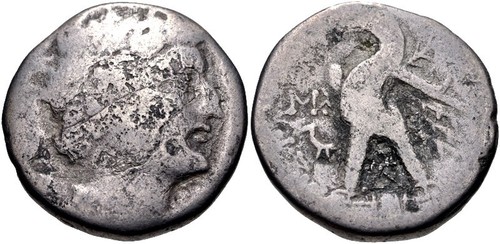
Tetradrachm of Ptolemy XII
80-51 BC
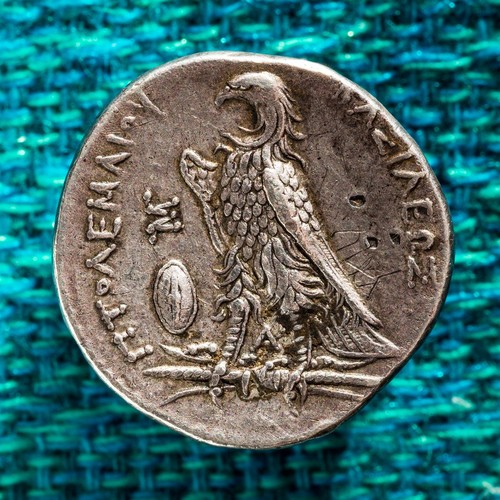
Tetradrachm of Ptolemy I
305-283 BC
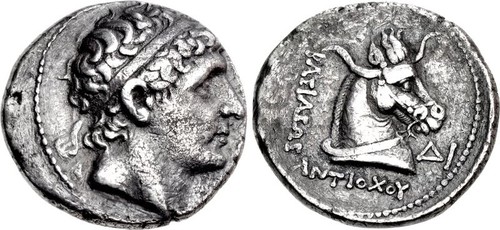
Tetradrachm of Antiochos I Soter
281-261 BC
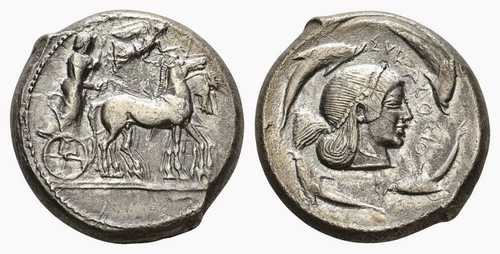
Syracuse Tetradrachm
c. 5th-4th century BC (Classical period)
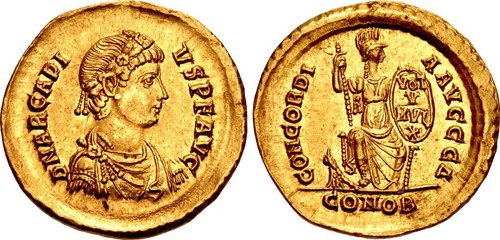
Solidus of Arcadius
AD 395-402
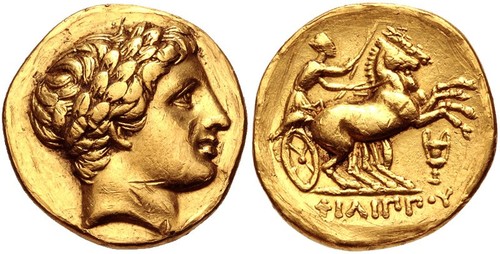
Philip III Gold Stater
323-317 BC
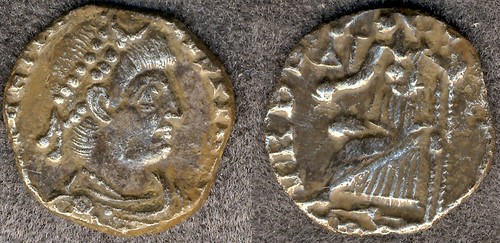
Siliqua of Gratian
AD 367-383
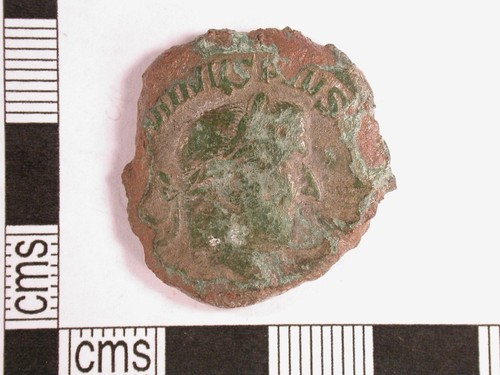
Sestertius of Maximinus Thrax
235-238 AD
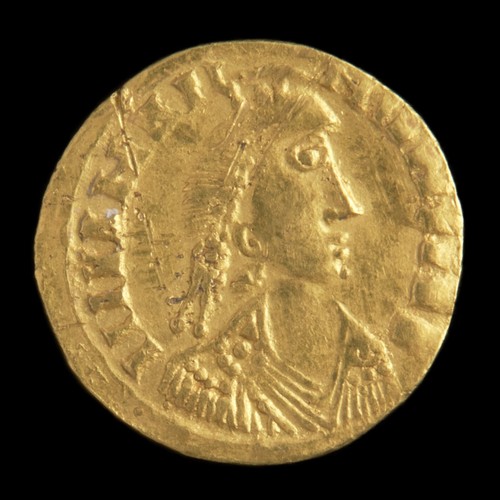
Solidus of Valentinian III
AD 425-455
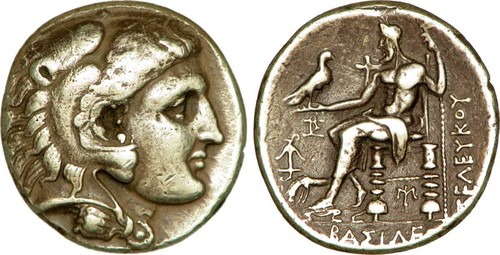
Seleucus I Nicator Tetradrachm
Late 4th-3rd century BC
Nummus of Magnentius
AD 350-353
Follis of Galerius
AD 308-310