
Coin Encyclopedia
Search and identify coins from around the world — with country, denomination, metal, mint, history, and how to tell them apart.
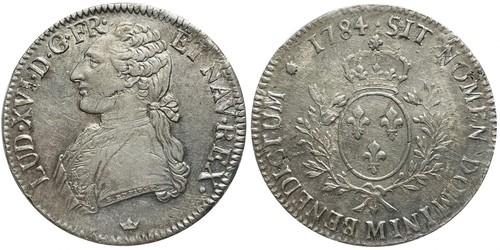
Ecu of Louis XIV
A large silver crown of Louis XIV, the Sun King, showing his laureate or wigged bust facing left and a crowned French shield of fleur-de-lis, dated 1693.
Royal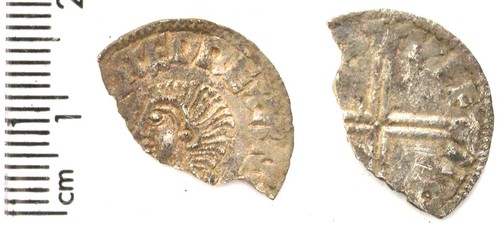
Penny of Aethelred II
Anglo-Saxon silver penny of King Aethelred II showing his diademed bust facing left and a cross with pellets and ornament on the reverse.
Medieval Coins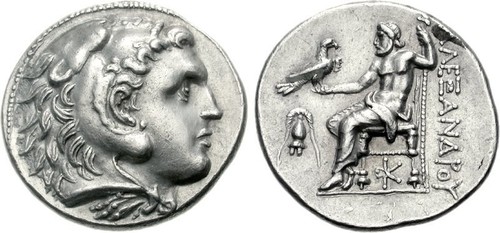
Antigonos II Gonatas Tetradrachm
Silver tetradrachm of the Macedonian king Antigonos II Gonatas, c. 275-270 BC, with a bearded royal head and a seated Nike holding a wreath.
Ancient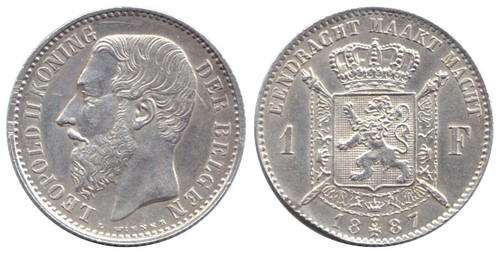
1 Franc (Leopold II)
A late-19th-century Belgian silver franc of King Leopold II, with his left-facing profile on the obverse and a crowned coat of arms on the reverse.
Modern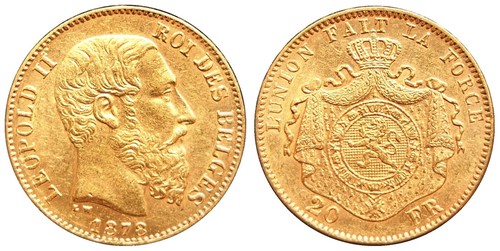
20 Francs (Leopold II)
Belgium's gold 20 francs under King Leopold II, a small Latin Monetary Union coin with the bearded king's profile and the crowned national arms.
Modern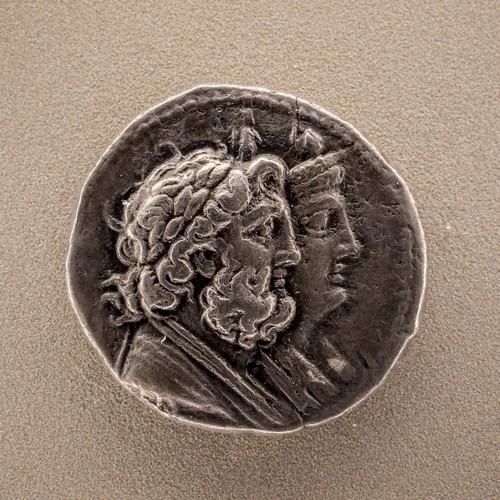
Gold Tetradrachm of Ptolemy II and Arsinoe II
Ptolemaic gold of Egypt, c. 260-240 BC, with paired busts of Ptolemy II and Arsinoe II on one side and Ptolemy I and Berenike I on the other.
Ancient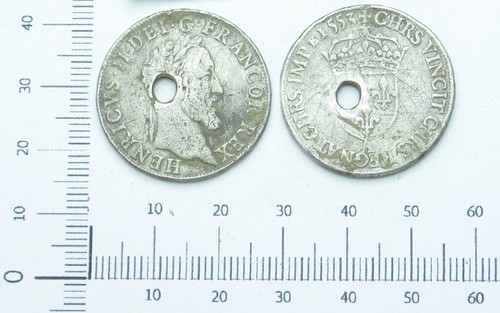
Teston of Henri II
A French Renaissance silver teston of Henri II (1547-1559): the king's realistic profile bust right, a crowned fleur-de-lis coat of arms on the reverse.
Renaissance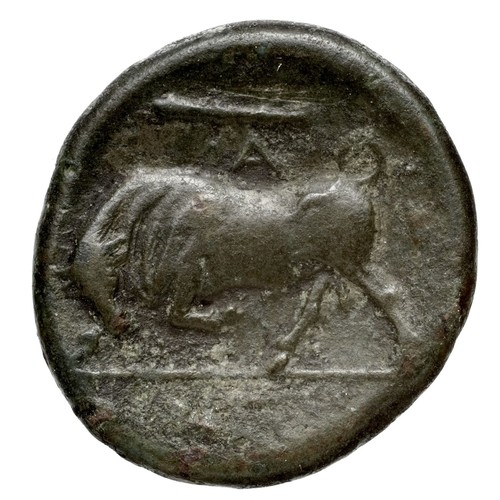
Syracuse Bronze Coin of Hiero II
Ancient Greek bronze of Syracuse struck under King Hieron II, c. 275-215 BC, bearing a Hellenistic profile head; a very common Sicilian city bronze.
Ancient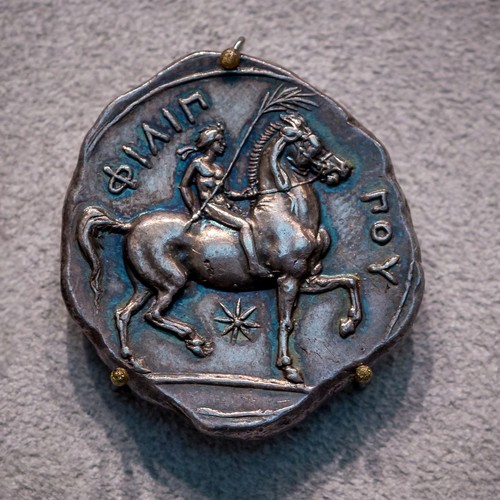
Philip II Tetradrachm
A large silver coin of the Macedonian kingdom showing the laureate head of Zeus and a youthful horseman, struck under and after Philip II.
Ancient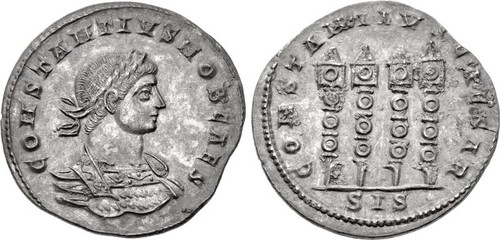
Miliarensis of Constantius II
A late Roman silver miliarensis of Emperor Constantius II (AD 327–361), showing his diademed portrait and a standing reverse figure.
Ancient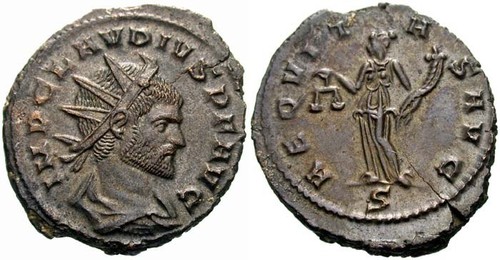
Antoninianus of Claudius II
A billon antoninianus of the Roman emperor Claudius II Gothicus (268–270 AD), showing his radiate bust on one side and a standing deity on the other.
Ancient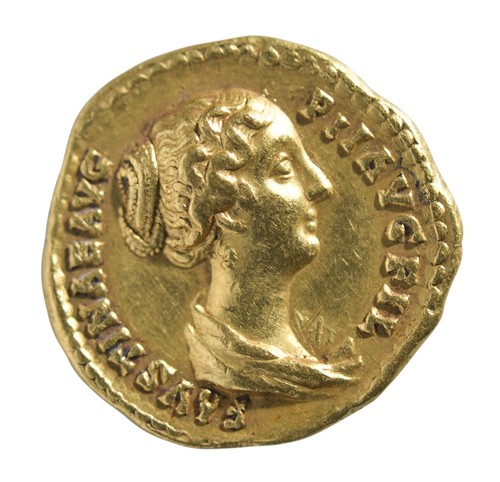
Aureus of Faustina II
Roman imperial gold coin with the draped bust of Faustina II, daughter of Antoninus Pius and wife of Marcus Aurelius, struck around 147-150 AD.
Ancient Coins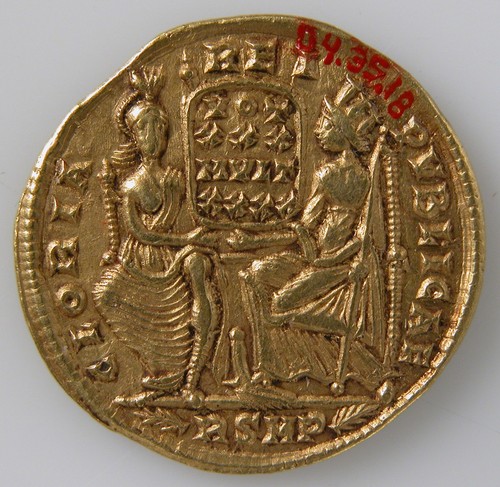
Solidus of Constantine II
Late Roman gold solidus of Constantine II, showing his ornately crowned bust and a seated figural reverse type.
Ancient Coins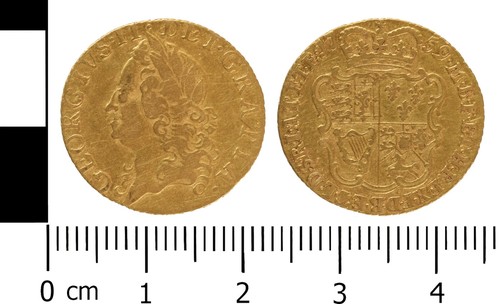
Half Guinea of George II
A small British gold coin of the reign of George II, worth half a guinea, with the king's left-facing bust and a crowned heraldic shield reverse.
Milled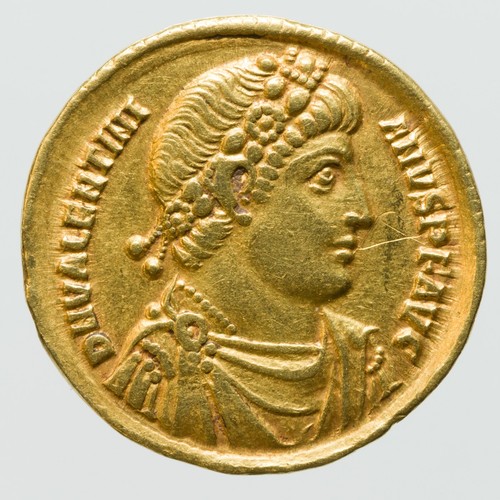
Solidus of Valentinian II
A late Roman gold solidus struck for Valentinian II, showing his diademed profile with the obverse legend D N VALENTINIANVS, from the 380s AD.
Ancient
Antoninianus of Valerian II
Roman radiate coin of Valerian II, the young Caesar (c. 253-260 AD), showing his spiked crown and a standing figure on the reverse.
Ancient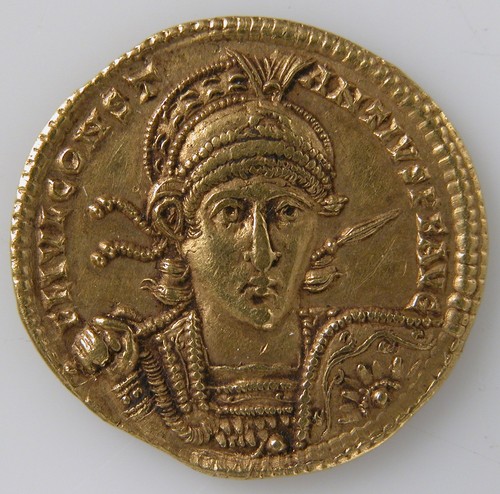
Solidus of Constantius II
Late Roman gold solidus of Emperor Constantius II (337-361 AD), showing his diademed bust facing right paired with a seated-figure reverse.
Ancient Coins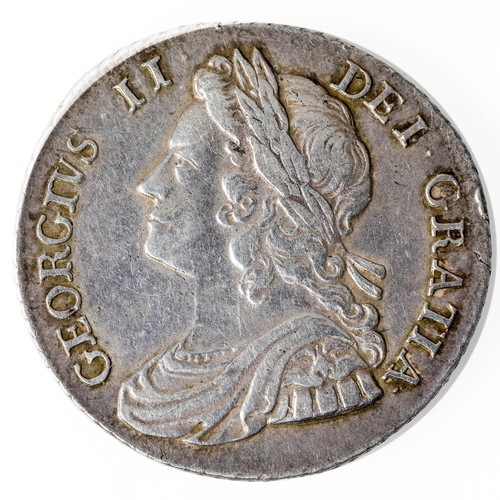
Shilling of George II
A milled silver shilling of George II, with a left-facing bust reading GEORGIVS II DEI GRATIA and a crowned cruciform-shields reverse; this one is a 1736 roses and plumes issue.
Milled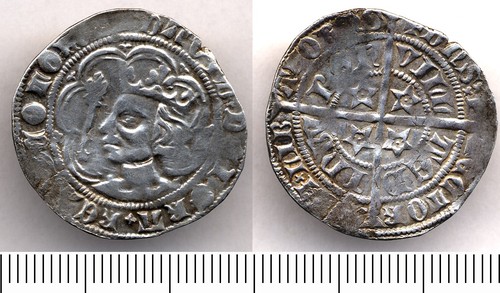
David II Groat
A hammered silver groat of David II of Scotland, showing his crowned portrait on the obverse and a Scottish shield with long-cross reverse.
Hammered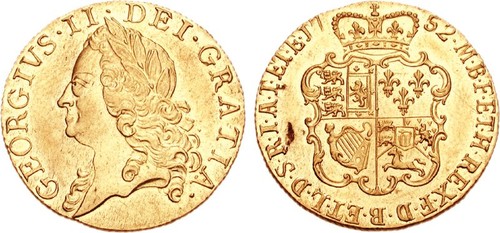
Guinea of George II
A milled gold guinea of Great Britain struck during the reign of George II, with a left-facing royal bust and a crowned heraldic shield reverse.
Milled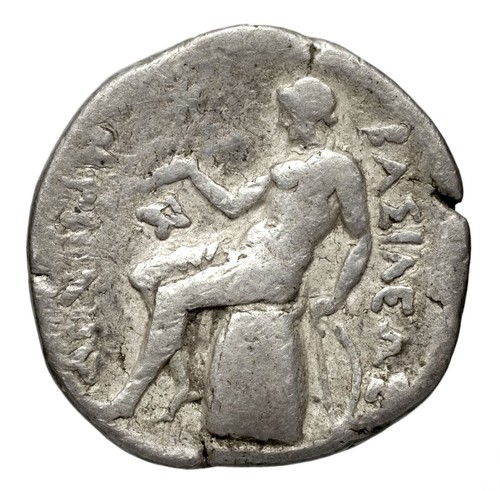
Drachm of Antiochos II Theos
Silver drachm struck under Antiochos II Theos of the Seleukid realm, showing a seated helmeted Athena and, on the reverse, Nike beside an altar.
Ancient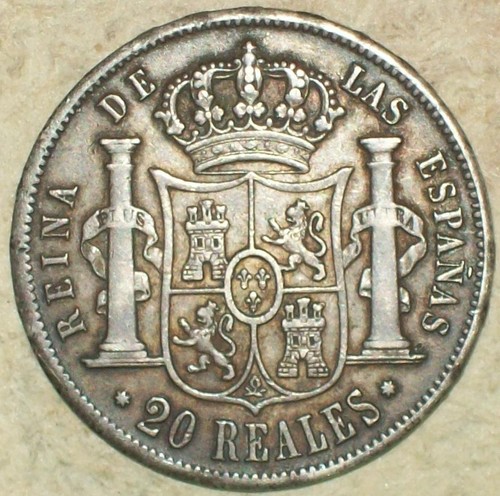
20 Reales (Isabel II)
Crown-sized Spanish silver 20 Reales of Queen Isabel II, with her crowned right-facing profile and a crowned pillared shield, dated 1854.
Modern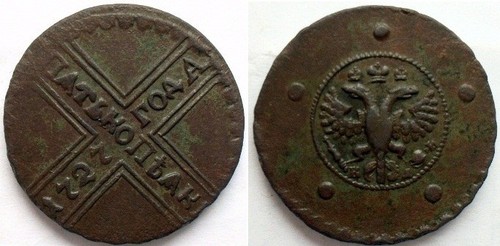
5 Kopecks (Catherine II)
Large copper 5 Kopecks of Catherine the Great, dated 1790 with the EM mint mark, showing a crowned monogram and the imperial double-headed eagle.
Early Modern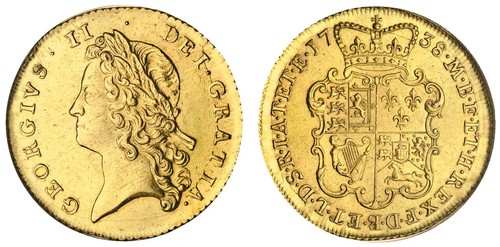
Two Guineas of George II
A large milled gold two-guinea piece of George II, with his left-facing laureate head and a crowned garnished shield of the royal arms; the pictured coin is dated 1738.
Milled