
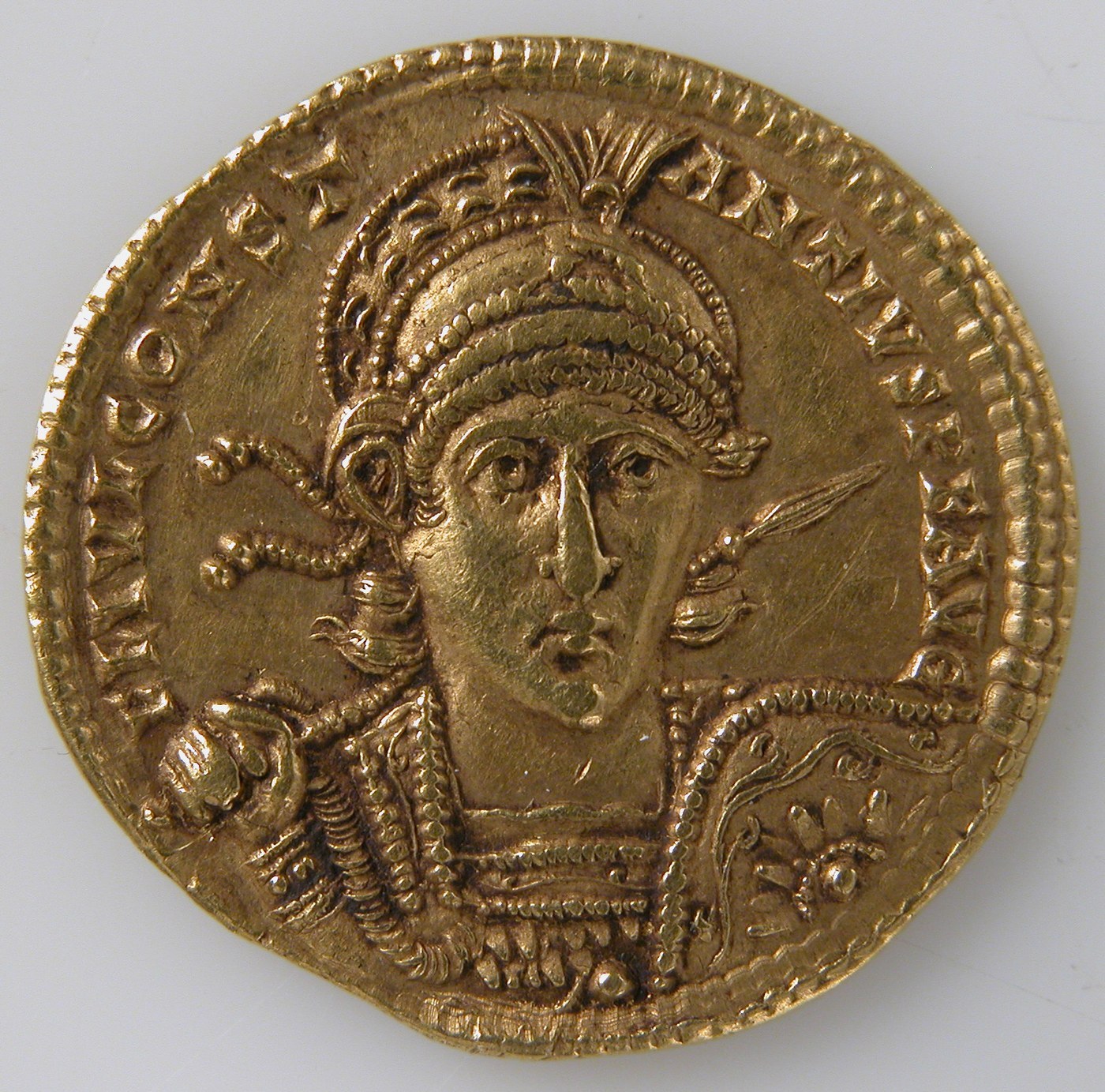
Solidus of Constantius II
Late Roman gold solidus of Emperor Constantius II (337-361 AD), showing his diademed bust facing right paired with a seated-figure reverse.
- Country
- Byzantine/Late Roman
- Denomination
- Solidus
- Metal
- Gold
Got a coin like this?
Identify any coin from a photo, free.
Overview
The Solidus of Constantius II is a late Roman gold coin struck during the reign of Constantius II, a son of Constantine the Great, between 337 and 361 AD. The solidus was the flagship gold denomination of the later empire, introduced by Constantine I to replace the older aureus, and it became the stable gold standard that would anchor Roman and then Byzantine coinage for centuries. The example shown carries the emperor's bust facing right with an ornate diademed headdress, paired with a reverse of seated figures.
As a gold piece of a long-reigning Constantinian emperor, this solidus sits at the transition between the classical Roman and the Byzantine worlds. Its imagery, elaborate diadem, richly draped bust, and enthroned personifications, reflects the more formal, ceremonial style of imperial portraiture that took hold in the fourth century.
History & Background
Constantius II ruled from 337 to 361 AD. On the death of his father Constantine the Great in 337, the empire was divided among Constantine's surviving sons; Constantius took the East and, after the deaths of his brothers Constantine II and Constans and the defeat of the usurper Magnentius, became sole Augustus by 353 AD. His reign was dominated by warfare on the Persian frontier, civil conflict, and intense involvement in the theological disputes of the early Christian church.
The solidus itself was a Constantinian creation. Constantine I established the coin at a standard of 72 to the Roman pound, roughly 4.5 grams of nearly pure gold, and Constantius II continued to strike it to that standard throughout his reign. His gold was produced at a network of imperial mints across the East and the Balkans, including Antioch, Constantinople, Nicomedia, Sirmium, and Thessalonica, among others.
Reverse designs on Constantius II solidi draw on the standard fourth-century repertoire of imperial and civic imagery. Seated-figure reverses are common and typically show enthroned personifications, such as Roma and Constantinopolis seated together holding a shield inscribed with vota numerals, under legends like GLORIA REIPVBLICAE. Because the precise reverse legend is not confirmed from the coin shown here, its exact type cannot be stated, but the seated-figure composition places it firmly within this Constantinian family of designs.
How to Identify
Identify the coin first by its portrait and legend. The obverse shows the head of Constantius II facing right, wearing an elaborate pearl or rosette diadem and richly draped, cuirassed drapery, in the stiff, formal style of fourth-century imperial portraiture. The surrounding legend is in Latin and names the emperor, typically in forms such as FL IVL CONSTANTIVS PERP AVG or DN CONSTANTIVS PF AVG; the exact wording helps place the coin within the reign.
The solidus is a thin, broad gold disc, roughly 20 to 22 mm in diameter and close to 4.4 to 4.5 grams in weight, of high-purity gold. This lighter, wider fabric distinguishes it from the thicker earlier aureus. The coin is hand-struck, so the flan is often slightly irregular and the design may be a little off-center, unlike a modern machine-made coin.
The reverse shows seated figures, a composition typical of Constantinian gold; enthroned personifications such as Roma and Constantinopolis, often holding a shield with vota numerals, appear under legends of the GLORIA REIPVBLICAE type. Small letters in the field or in the exergue below the design usually record the mint and the officina (workshop), and reading these mint marks is the key to pinpointing where a given solidus was struck.
Value & Collectibility
As a high-purity gold coin of a well-documented Constantinian emperor, the Solidus of Constantius II trades well above its metal content. Prices depend heavily on condition, the sharpness and centering of the portrait, the specific reverse type and mint, and whether the coin has been professionally authenticated. Worn or common examples generally sell in the high hundreds to low thousands of dollars, while sharp, well-centered pieces and scarcer mints or reverse types command more, and exceptional examples can reach well into the thousands at auction.
Because ancient gold is widely faked and because the export and ownership of ancient coins are governed by cultural-property laws in many countries, provenance matters as much as grade. Documented collection history and certification by a recognized ancient-coin grading or authentication service both add confidence and value. Any high-value attribution should be confirmed by a specialist rather than by portrait resemblance alone.
Frequently asked questions
What is a solidus?
The solidus was the standard gold coin of the later Roman Empire, introduced by Constantine the Great to replace the aureus. Struck at 72 to the Roman pound in nearly pure gold, it became the stable gold standard that carried on into Byzantine coinage.
How much is a Solidus of Constantius II worth?
As high-purity gold of a famous dynasty it sells well above bullion value. Worn or common examples often bring high hundreds to low thousands of dollars, while sharp, well-centered coins or scarcer mints and reverse types can reach further into the thousands at auction. Condition, reverse type, mint, and provenance drive the price.
How can I tell it is Constantius II on the coin?
Look for a right-facing bust wearing an ornate pearl or rosette diadem with draped, cuirassed shoulders, surrounded by a Latin legend naming CONSTANTIVS. The named legend combined with the formal fourth-century portrait style confirms the identification.
When was it made?
During the reign of Constantius II, from 337 to 361 AD. He ruled the East from 337 and became sole emperor by 353 AD after the deaths of his brothers and the defeat of the usurper Magnentius.
How big and heavy is the solidus?
It is a thin, broad gold coin roughly 20 to 22 mm across and close to 4.4 to 4.5 grams, struck in high-purity gold at a standard of 72 coins to the Roman pound.
Solidus of Constantius II guides
In-depth guides for identifying, valuing, and collecting Solidus of Constantius II.
Other coins you may enjoy
Antoninianus
250-270 AD
Sestertius of Antoninus Pius
138-161 AD
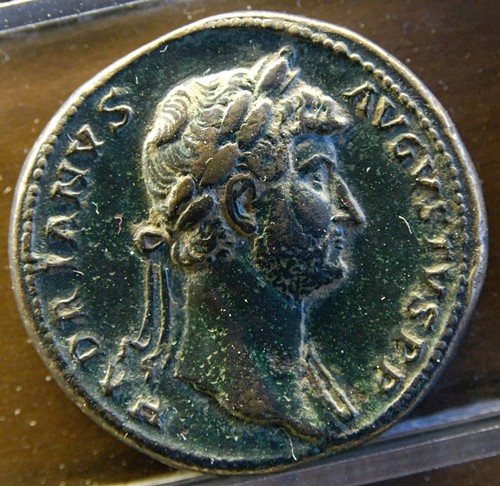
Sestertius of Hadrian
117-138 AD
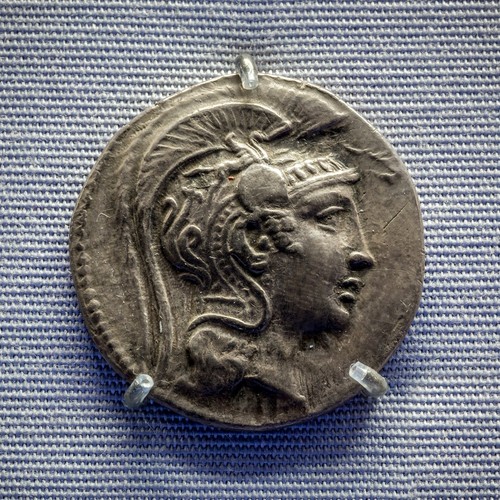
Athenian Owl Tetradrachm
165-42 BC
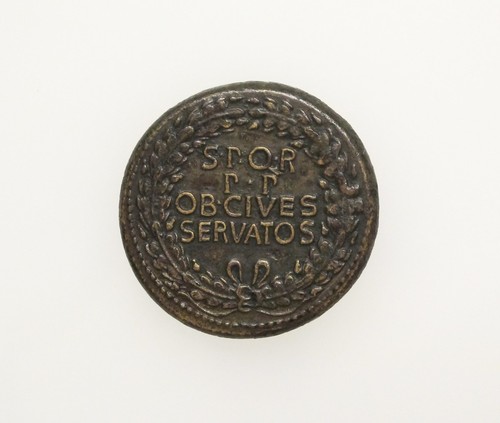
Sestertius of Caligula
37-41 AD
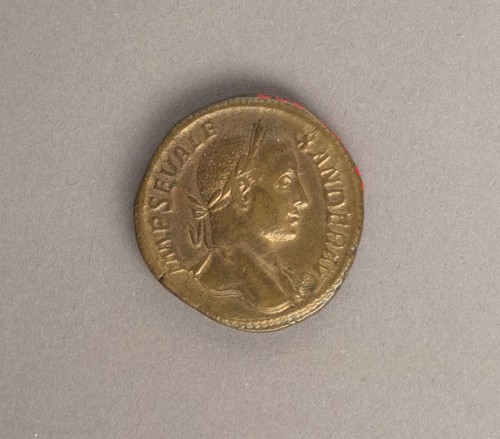
Sestertius of Alexander Severus
222-235 AD
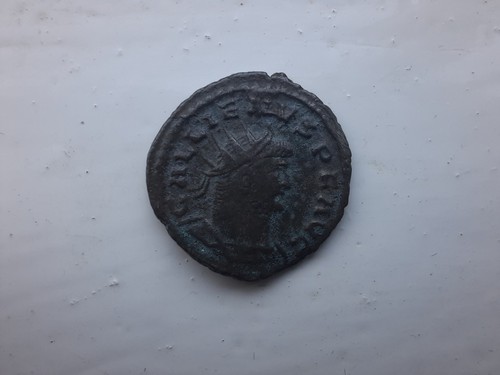
Antoninianus of Gallienus
253-268 AD
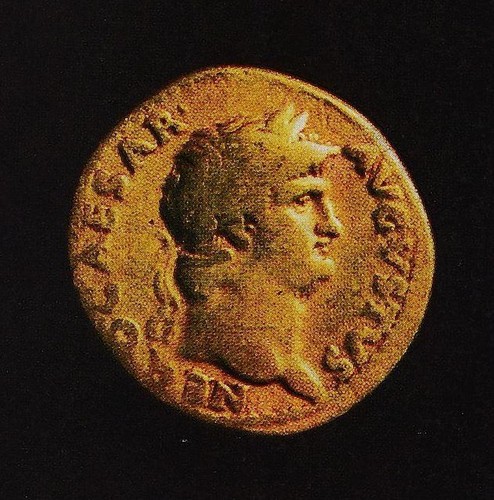
Aureus of Nero
54-68 AD
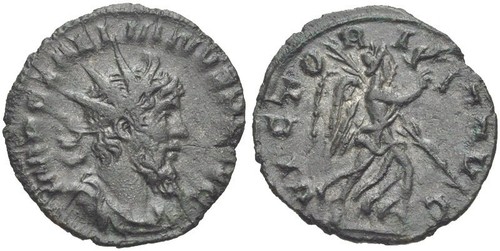
Antoninianus of Laelianus
AD 269
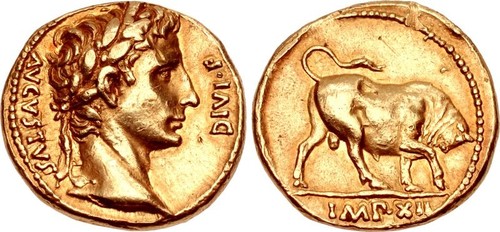
Aureus of Augustus
27 BC-14 AD
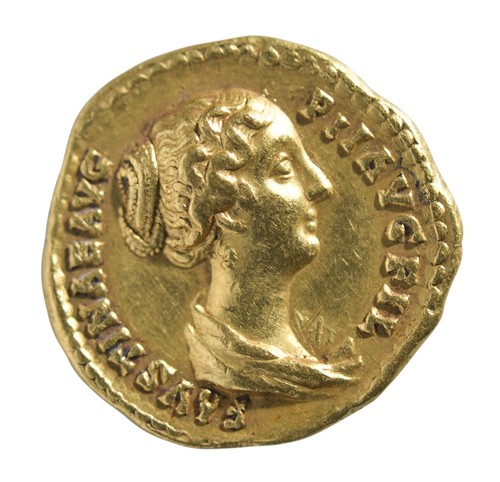
Aureus of Faustina II
147-150 AD
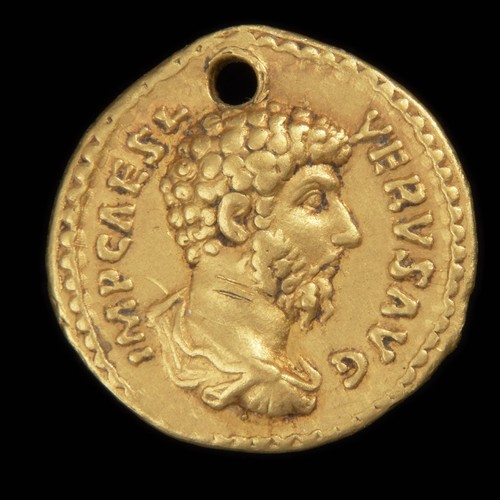
Aureus of Marcus Aurelius
c. 161-180 AD