
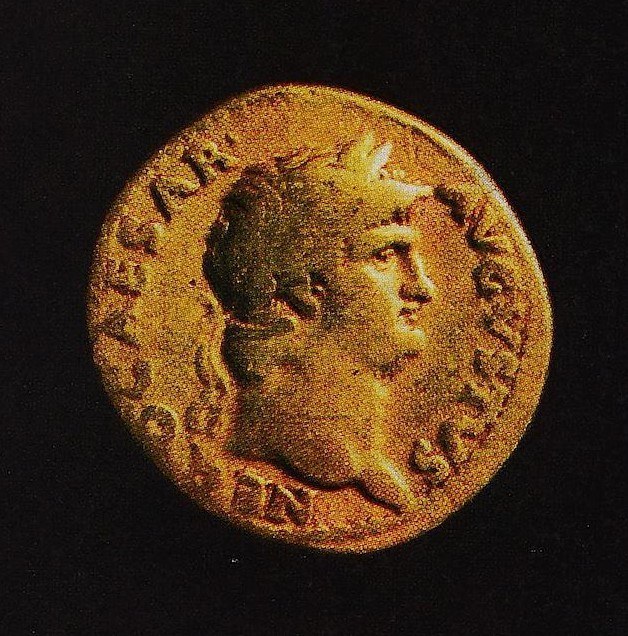
Aureus of Nero
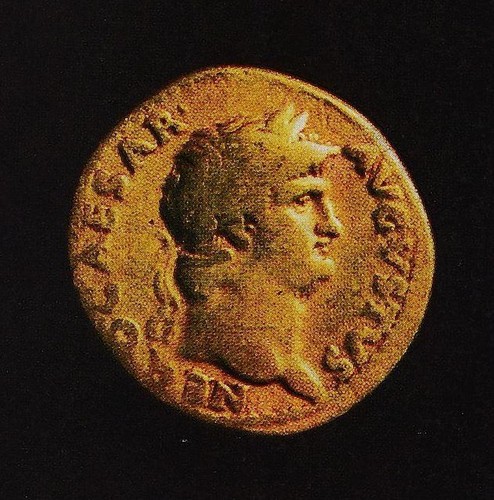
Roman imperial gold aureus of Emperor Nero (54-68 AD), showing his curly-haired portrait facing right with a Latin imperial legend.
- Country
- Roman Empire
- Denomination
- Aureus
- Metal
- Gold
Got a coin like this?
Identify any coin from a photo, free.
Overview
The Aureus of Nero is a Roman imperial gold coin struck during the reign of the emperor Nero, between 54 and 68 AD. The aureus was the highest everyday denomination of the Roman monetary system, worth twenty-five silver denarii, and it was reserved for large payments, imperial gifts, and the pay of soldiers and officials. The example shown carries Nero's bust facing right, rendered with the thick, curly hair for which his portraits are known, encircled by a Latin imperial legend.
As a portrait coin of one of Rome's most notorious rulers, the Neronian aureus is among the most sought-after gold pieces of the early empire. Its imagery ties directly to a well-documented historical figure, and the surviving coins record how Nero's official portrait changed over his fourteen-year reign, from a youthful idealized profile to a heavier, more fleshy likeness in his final years.
History & Background
Nero became emperor in 54 AD at the age of sixteen and ruled until his death in 68 AD, the last of the Julio-Claudian dynasty founded by Augustus. His gold coinage was struck chiefly at the mint of Rome and, in the earlier part of the reign, at Lugdunum (modern Lyon). The earliest aurei of the reign sometimes pair Nero with his mother Agrippina the Younger, reflecting her powerful role in his accession, before her influence faded and his own portrait stood alone.
A landmark event in the history of this coin came with Nero's coinage reform of around 64 AD. Facing the costs of his reign, including rebuilding Rome after the great fire, Nero reduced the weight standard of the aureus from roughly one-fortieth of a Roman pound to about one-forty-fifth, and lowered the fineness of the silver denarius. This makes the aureus of Nero the point at which the Roman gold standard was first trimmed downward, a change that later emperors would continue.
Reverse designs across the reign draw on the standard vocabulary of imperial propaganda: seated deities such as Jupiter, Salus, and Roma, personifications like Ceres and Concordia, and civic emblems including the oak wreath and the legend EX S C. Because the reverse is not visible on the coin shown here, its specific type cannot be stated, but all belong to this repertoire of Neronian gold.
How to Identify
Identify the coin first by its portrait and legend. The obverse shows the head of Nero facing right, with the distinctive dense, curly hair and, on later issues, a laureate wreath and a fuller neck and jaw. The surrounding legend is in Latin and names the emperor, typically in forms such as NERO CAESAR AVGVSTVS or NERO CAESAR AVG IMP; the exact wording helps place the coin within the reign.
The aureus is a small but heavy gold disc, roughly 18 to 20 mm in diameter. Full-weight examples from early in the reign weigh close to 7.7 to 7.8 grams, while pieces struck after the reform of about 64 AD weigh nearer 7.2 to 7.3 grams; weight is therefore a useful clue to dating. The coin is hand-struck, so the flan is often slightly irregular and the design may be off-center, unlike a modern machine-made coin.
Because the reverse type is not visible on the example here, attribution rests on the obverse portrait and legend together with the coin's fabric and weight. The evolving likeness of Nero, from a slim youthful profile to a heavy-featured mature bust, is one of the most reliable ways specialists narrow down when a given aureus was struck.
Value & Collectibility
As a gold coin of a famous emperor, the Aureus of Nero carries value well above its metal content and is one of the more desirable Julio-Claudian gold issues. Prices depend heavily on condition, the clarity and centering of the portrait, the specific reverse type, and whether the coin has been professionally authenticated. Worn or damaged examples generally trade in the low-to-middle thousands of dollars, while sharp, well-centered pieces command substantially more, and exceptional examples with rare reverses can reach into the tens of thousands at auction.
Because ancient gold is widely faked and because export and ownership of ancient coins are governed by cultural-property laws in many countries, provenance matters as much as grade. Documented collection history and certification by a recognized ancient-coin grading service both add confidence and value. Any high-value attribution should be confirmed by a specialist rather than by portrait resemblance alone.
Frequently asked questions
What is an aureus?
The aureus was the standard gold coin of the Roman Empire and its highest everyday denomination, worth twenty-five silver denarii. It was used for large payments, military pay, and imperial gifts rather than daily marketplace transactions.
How much is an Aureus of Nero worth?
As gold coinage of a famous emperor it sells for well above bullion value. Worn examples often bring low-to-middle thousands of dollars, while sharp, well-centered coins or rare reverse types can reach tens of thousands at auction. Condition, reverse type, and provenance drive the price.
How can I tell it is Nero on the coin?
Look for a right-facing male head with thick, curly hair and, on later issues, a laurel wreath, surrounded by a Latin legend naming NERO. Nero's portrait grows heavier and fuller-faced over his reign, which helps confirm the identification.
When was it made?
During Nero's reign, from 54 to 68 AD. A weight reform around 64 AD slightly reduced the coin's weight, so heavier pieces tend to be earlier in the reign and lighter pieces later.
How big and heavy is a Nero aureus?
It is a small gold coin roughly 18 to 20 mm across. Early full-weight pieces weigh about 7.7 to 7.8 grams, while those struck after the reform of about 64 AD weigh closer to 7.2 to 7.3 grams.
Aureus of Nero guides
In-depth guides for identifying, valuing, and collecting Aureus of Nero.
Other coins you may enjoy
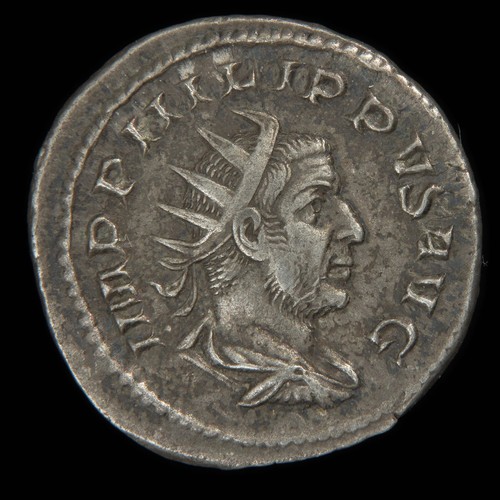
Antoninianus
250-270 AD
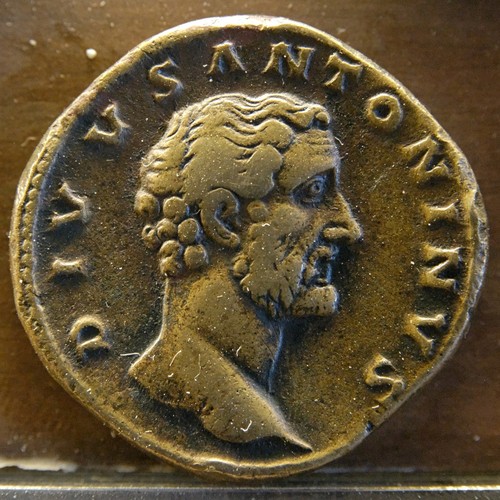
Sestertius of Antoninus Pius
138-161 AD
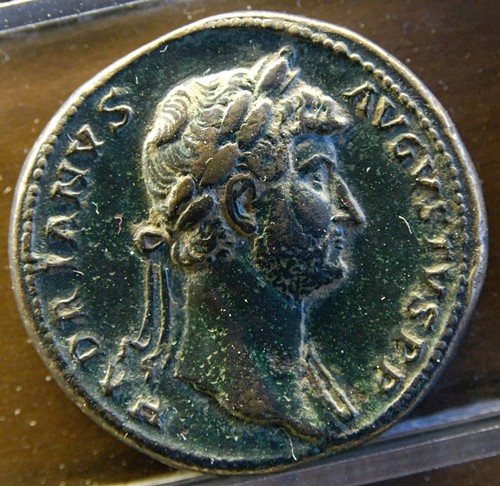
Sestertius of Hadrian
117-138 AD
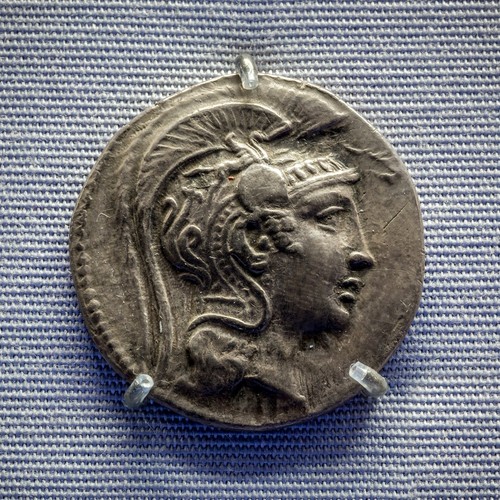
Athenian Owl Tetradrachm
165-42 BC
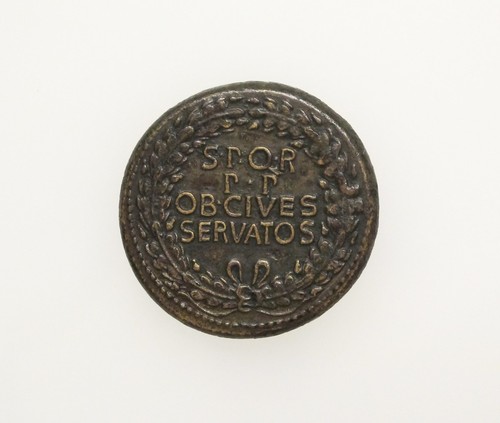
Sestertius of Caligula
37-41 AD
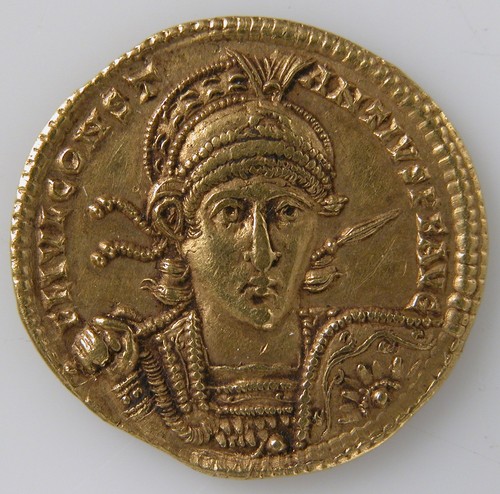
Solidus of Constantius II
337-361 AD
Sestertius of Alexander Severus
222-235 AD
Antoninianus of Gallienus
253-268 AD
Antoninianus of Laelianus
AD 269
Aureus of Augustus
27 BC-14 AD
Aureus of Faustina II
147-150 AD
Aureus of Marcus Aurelius
c. 161-180 AD