
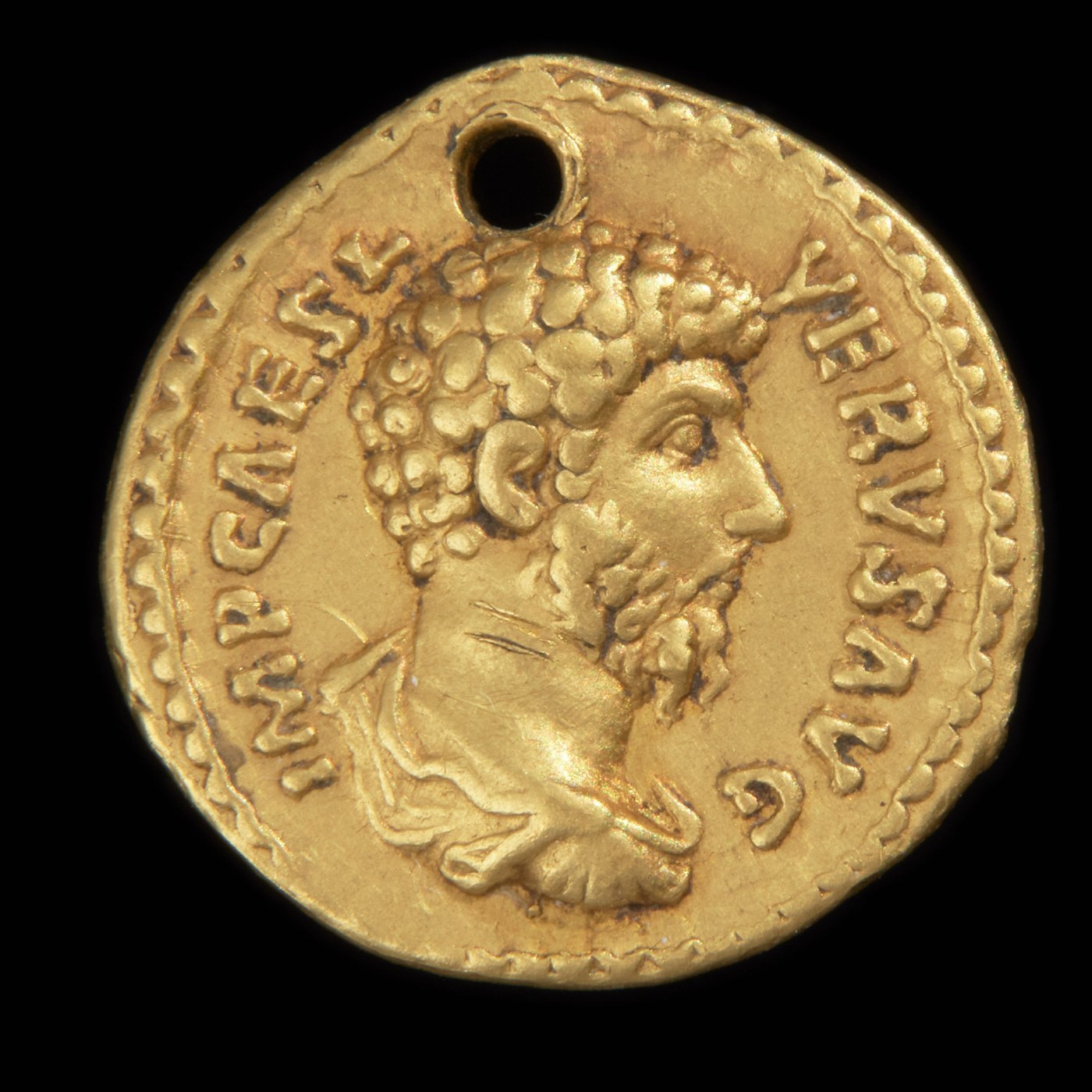
Aureus of Marcus Aurelius
Small Roman gold coin of the reign of Marcus Aurelius; this piece shows a diademed portrait and a standing deity or personification, dated to 163 AD.
- Country
- Roman Empire
- Denomination
- Aureus
- Metal
- Gold
Got a coin like this?
Identify any coin from a photo, free.
Overview
The aureus was the standard gold coin of the Roman Empire, and this example belongs to the reign of Marcus Aurelius (161-180 AD). It is a small but dense gold coin, and the piece shown pairs a laureate or diademed head on the obverse with a standing figure of a deity or personified virtue on the reverse, carrying a date consistent with 163 AD.
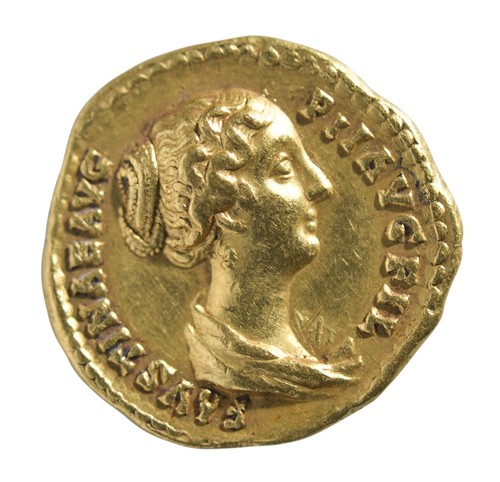
The obverse portrait on this coin reads as a female bust, which is typical of aurei struck for the women of the imperial house during Marcus Aurelius's reign. Emperors of this period issued gold not only in their own name but also for their wives and daughters, so a Marcus Aurelius aureus can bear the likeness of an empress such as Faustina the Younger alongside a reverse type promoting piety, fertility, concord, or a favored deity.
History & Background
Marcus Aurelius ruled Rome from 161 to 180 AD, at first jointly with Lucius Verus, in the era later remembered as the height of the "Five Good Emperors." The 160s were marked by the eastern campaign against Parthia and, near its close, the return of plague to the empire. Gold aurei of these years were struck at the mint of Rome and moved in high-value payments, donatives, and savings rather than everyday retail trade.
Under the Antonine dynasty it was routine for gold and silver to be issued in the names of imperial women, celebrating dynastic continuity and the virtues associated with the household. A female-portrait aureus of 163 AD fits this pattern squarely: the reverse type, a standing deity or personification, would have carried a legend naming the quality or divinity being honored, reinforcing the messaging of a stable and pious ruling family.
How to Identify
This is a small gold coin, generally around 18-21 mm across and light in the hand compared with a modern coin, since the imperial aureus was struck to only a few grams of gold. The obverse shows a head or bust in profile with a Latin legend running around the rim; on this piece the portrait presents as female, pointing to an empress of Marcus Aurelius's house rather than the emperor himself.
The reverse displays a standing figure, a deity or personified virtue, usually holding attributes such as a scepter, patera, cornucopia, or child, with its own encircling legend. Read the legends to confirm the identity: obverse names the portrait subject, reverse names the reverse type. Genuine aurei are hand-struck, so expect slightly irregular flans, off-center centering, and lettering that is crisp but not machine-perfect, with high-purity gold color and no seam around the edge.
Value & Collectibility
Roman gold aurei are intrinsically valuable and historically desirable, so even worn examples sit well above common ancient bronze or silver coins. Value is driven by the emperor or empress named, the specific reverse type, the sharpness of the portrait, centering, surface quality, and above all authenticity, since gold has always attracted both ancient and modern forgeries.
Aurei associated with Marcus Aurelius and the Antonine women are sought after, and prices range widely from strong four figures for modest, worn, or off-center pieces to well into five figures and beyond for well-centered, high-relief examples with attractive surfaces and clear provenance. Because of the sums involved and the prevalence of fakes, any figure should be treated as a broad guide and confirmed against recent auction results and expert authentication.
Frequently asked questions
What is an aureus?
The aureus was the main gold coin of the Roman Empire, worth a fixed number of silver denarii. It was a small, high-value coin used for large payments and savings rather than everyday purchases.
Why does this coin show a woman if it is a Marcus Aurelius aureus?
Roman emperors issued gold in the names of the women of their family as well as themselves. A female portrait on an aureus of this reign typically depicts an empress such as Faustina the Younger. Read the legend to confirm who is shown.
Who is the standing figure on the reverse?
It is a deity or a personified virtue, such as a goddess or a quality like Piety or Concord, identified by the surrounding legend and by attributes like a scepter, patera, cornucopia, or child.
Is it solid gold?
Yes. Aurei were struck in high-purity gold. They are small and only a few grams in weight, so the coin feels dense but is modest in diameter, roughly the size of a small modern coin.
How can I tell if mine is genuine?
Genuine aurei are hand-struck with slightly irregular flans, correct gold color and weight, and no cast seam. Given the value and the number of forgeries, have any aureus authenticated by a specialist or third-party service.
Aureus of Marcus Aurelius guides
In-depth guides for identifying, valuing, and collecting Aureus of Marcus Aurelius.
Other coins you may enjoy
Antoninianus
250-270 AD
Sestertius of Antoninus Pius
138-161 AD
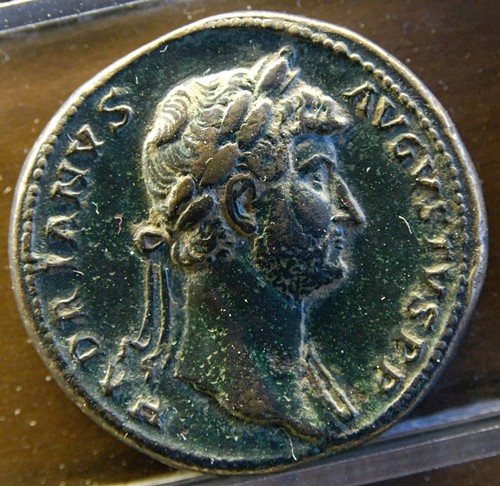
Sestertius of Hadrian
117-138 AD
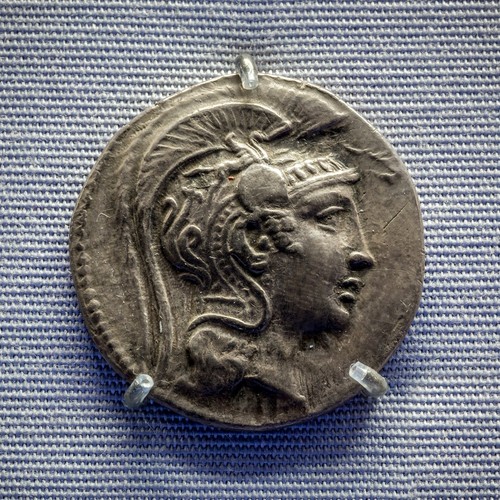
Athenian Owl Tetradrachm
165-42 BC
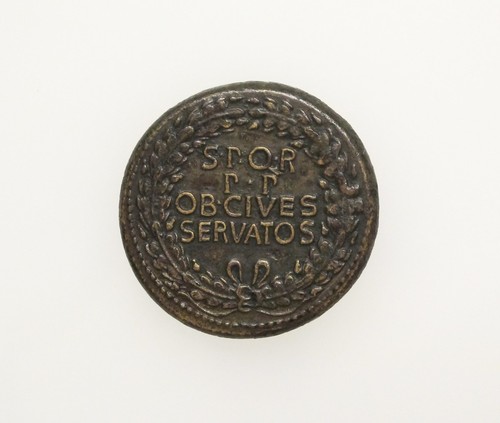
Sestertius of Caligula
37-41 AD
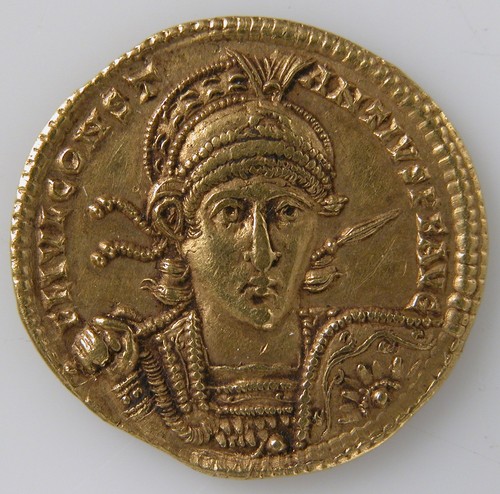
Solidus of Constantius II
337-361 AD
Sestertius of Alexander Severus
222-235 AD
Antoninianus of Gallienus
253-268 AD
Aureus of Nero
54-68 AD
Antoninianus of Laelianus
AD 269
Aureus of Augustus
27 BC-14 AD
Aureus of Faustina II
147-150 AD