
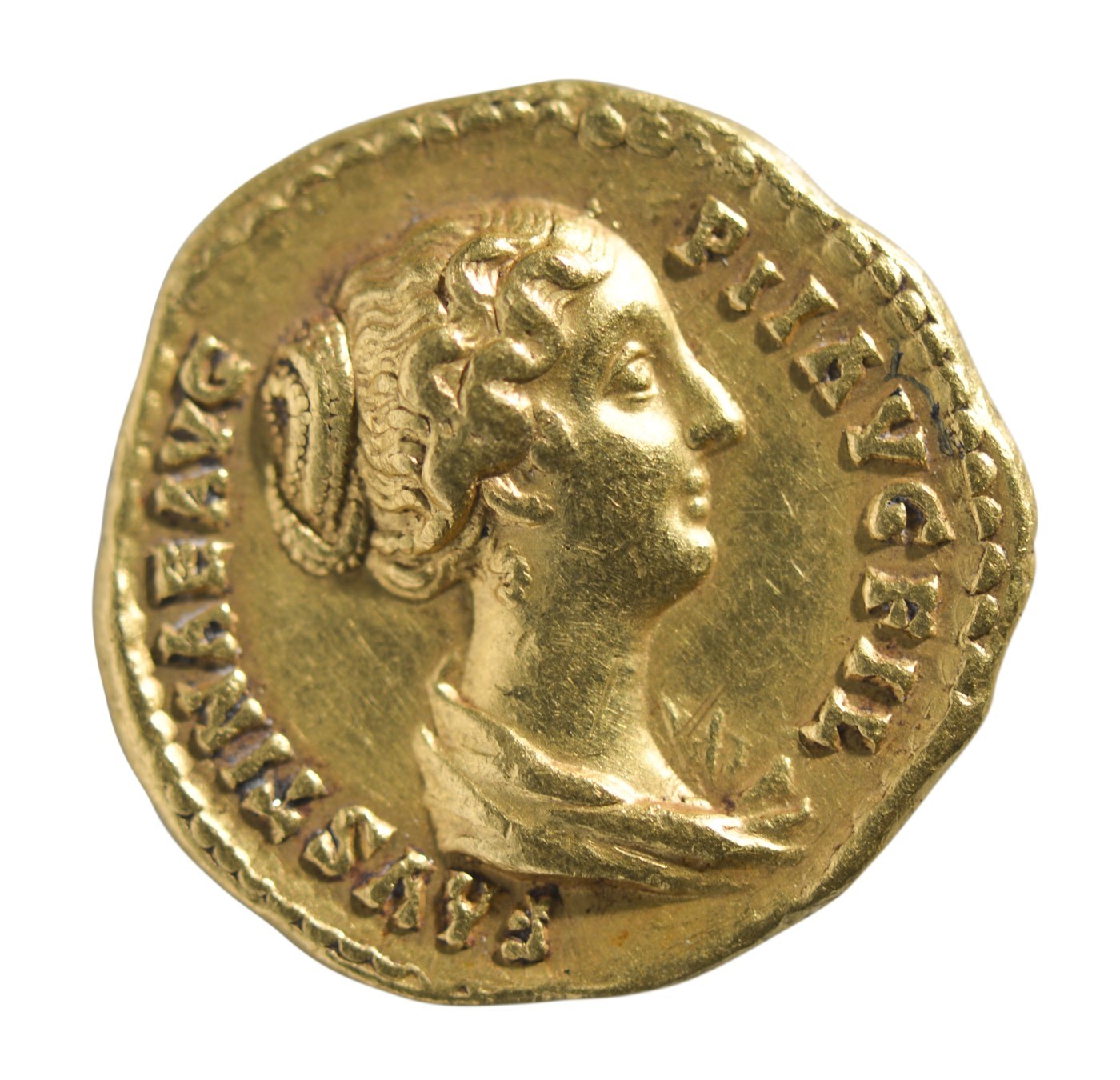
Aureus of Faustina II
Roman imperial gold coin with the draped bust of Faustina II, daughter of Antoninus Pius and wife of Marcus Aurelius, struck around 147-150 AD.
- Country
- Roman Empire
- Denomination
- Aureus
- Metal
- Gold
Got a coin like this?
Identify any coin from a photo, free.
Overview
The Aureus of Faustina II is a Roman imperial gold coin, and the example shown carries the draped bust of Faustina the Younger facing right with an ornate hairstyle, surrounded by a Latin legend. The reverse displays a standing figure holding attributes, of the kind used across her issues to personify a virtue or deity. As the aureus, it was the highest denomination of the Roman system, struck in nearly pure gold.
Faustina II (Annia Galeria Faustina Minor) was the daughter of the emperor Antoninus Pius and became the wife of the future emperor Marcus Aurelius. Coins were issued in her name from the reign of her father onward, spreading her portrait as a member of the imperial family. Gold aurei bearing her likeness are prestige pieces that combine dynastic imagery with the intrinsic value of high-purity gold.
History & Background
Faustina the Younger married Marcus Aurelius around 145 AD, and coinage in her name was struck under her father Antoninus Pius, who ruled from 138 to 161 AD. The years of about 147-150 AD fall within this period, when her obverse legends typically identify her as the daughter of Antoninus Pius (forms such as FAVSTINA AVG PII AVG FIL). After Marcus Aurelius became emperor in 161 AD her titles changed, and coinage continued into her later life until her death in 175/176 AD.
Aurei of Faustina II were produced at the mint of Rome and carried a wide range of reverse designs celebrating imperial virtues, deities, family, fertility, and concord, reflecting her role as an imperial wife and mother. Because gold was reserved for large payments and state and military use rather than daily commerce, these coins circulated among the wealthy and the state. Her extensive coinage makes her one of the more frequently encountered imperial women on Roman coins, though gold aurei remain far scarcer than her bronze and silver issues.
How to Identify
Look for a small, dense gold coin roughly 18-20 mm across and on the order of 7-7.3 grams, showing a draped female bust facing right with a distinctive braided or waved hairstyle, often gathered into a bun. A Latin legend naming Faustina runs around the portrait; issues of this period commonly read as forms of FAVSTINA AVG PII AVG FIL, marking her as the daughter of Antoninus Pius.
The reverse carries a standing or seated figure with attributes such as a spear, patera, cornucopia, or other emblem, personifying a virtue or deity, with an accompanying legend that identifies the specific type. Genuine aurei are struck rather than cast, show crisp hand-engraved die detail, and use high-purity gold that resists tarnish. Because dies were individually cut, small variations in portrait style, hairstyle, and legend spacing between authentic coins are normal.
Value & Collectibility
Gold aurei of Faustina II are scarce, high-value ancient coins, and prices depend on portrait style, reverse type, strike sharpness, centering, and overall preservation. Even a worn but genuine example carries substantial value as a gold coin with dynastic history, while well-struck coins with attractive portraits and desirable reverse types bring considerably more.
Rarer reverse designs, pieces tied to notable imperial themes, and coins with documented provenance command the strongest premiums. Ancient gold is heavily counterfeited, so realized value is closely linked to authentication and pedigree; unattributed or ungraded coins carry more risk. Treat any single price as approximate and rely on specialist auction records and expert opinion rather than a listing's description.
Frequently asked questions
Who is on the coin?
The portrait is Faustina the Younger (Faustina II), daughter of the emperor Antoninus Pius and wife of Marcus Aurelius. She is shown draped, facing right, with an elaborate hairstyle.
Is it real gold?
Yes. The aureus was struck in nearly pure gold and was the highest denomination in the Roman monetary system, well above the silver denarius.
How big is the coin?
It is a small, dense coin about 18-20 mm across and roughly 7-7.3 grams, noticeably heavy for its size because of the high gold content.
What does the reverse show?
Her aurei use many reverse types, typically a standing or seated figure with attributes personifying a virtue or deity. The exact figure and legend identify the specific issue.
Are these coins commonly faked?
Yes. High-value ancient gold is heavily counterfeited, so provenance and expert authentication are essential before buying or selling one.
Aureus of Faustina II guides
In-depth guides for identifying, valuing, and collecting Aureus of Faustina II.
Other coins you may enjoy
Antoninianus
250-270 AD
Sestertius of Antoninus Pius
138-161 AD
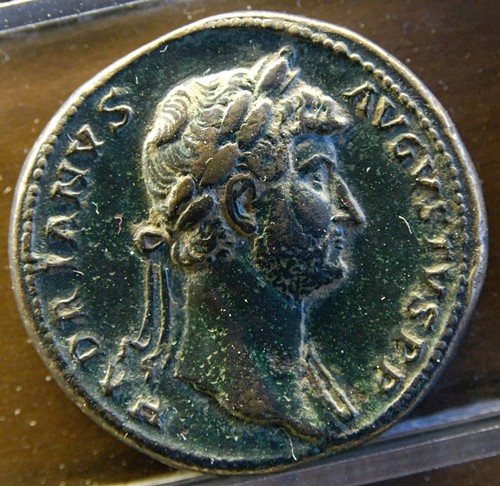
Sestertius of Hadrian
117-138 AD
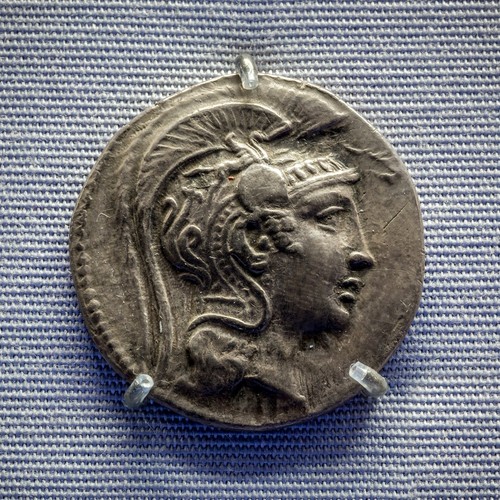
Athenian Owl Tetradrachm
165-42 BC
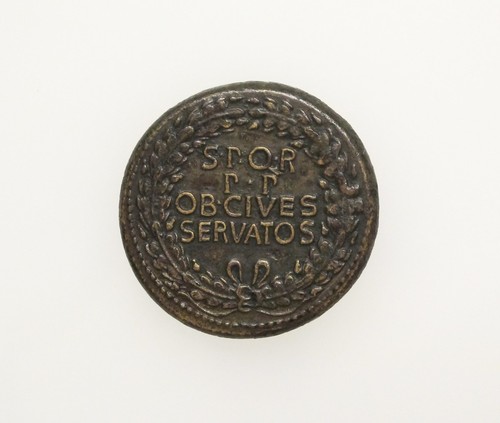
Sestertius of Caligula
37-41 AD
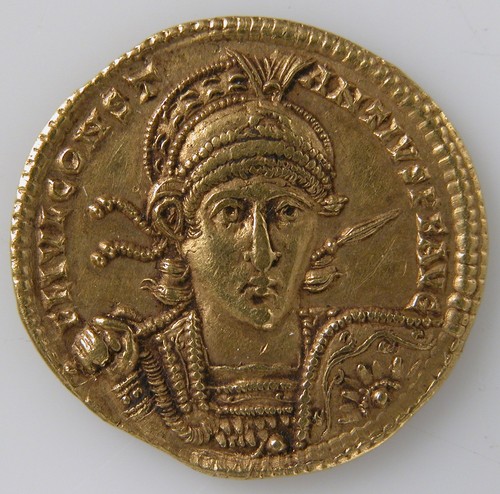
Solidus of Constantius II
337-361 AD
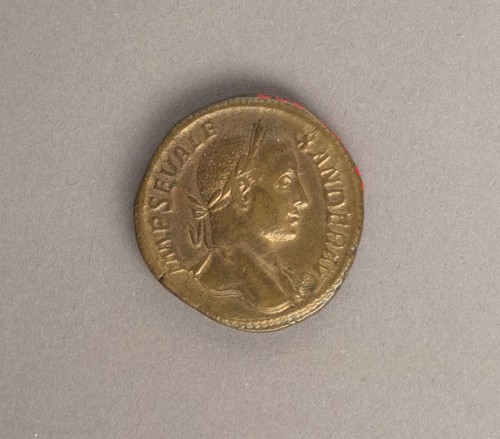
Sestertius of Alexander Severus
222-235 AD
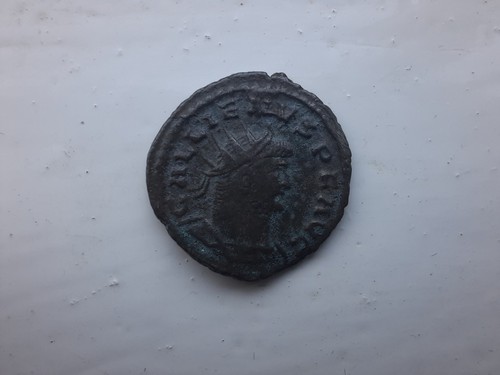
Antoninianus of Gallienus
253-268 AD
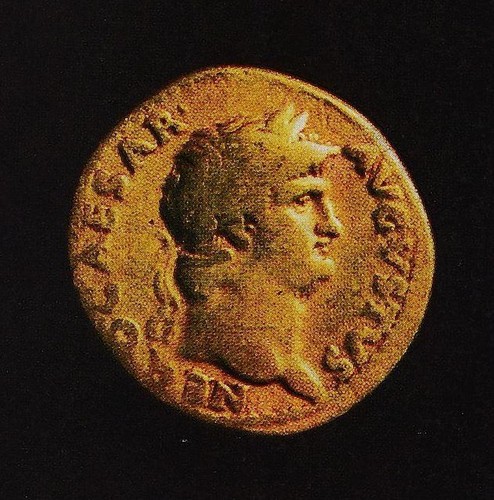
Aureus of Nero
54-68 AD
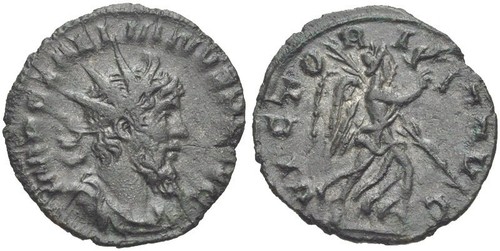
Antoninianus of Laelianus
AD 269
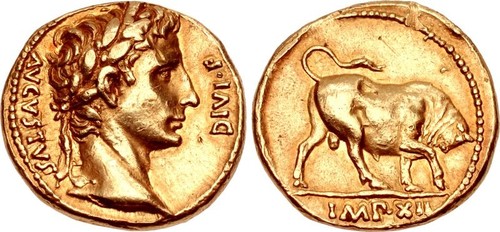
Aureus of Augustus
27 BC-14 AD
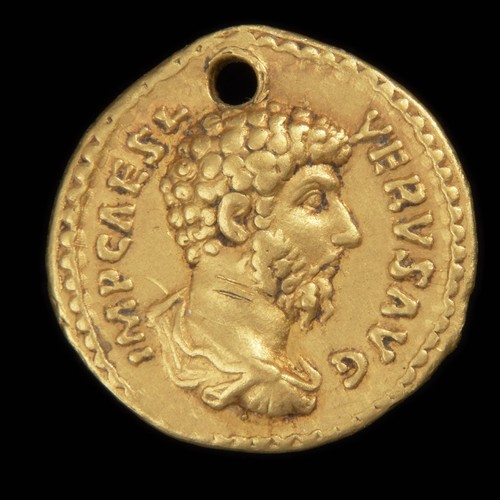
Aureus of Marcus Aurelius
c. 161-180 AD