
How to Identify the Aureus of Marcus Aurelius
Collector checks for an Antonine gold aureus: size and metal, reading the portrait and legends, reverse deity types, and spotting forgeries.
Read the full Aureus of Marcus Aurelius encyclopedia entry →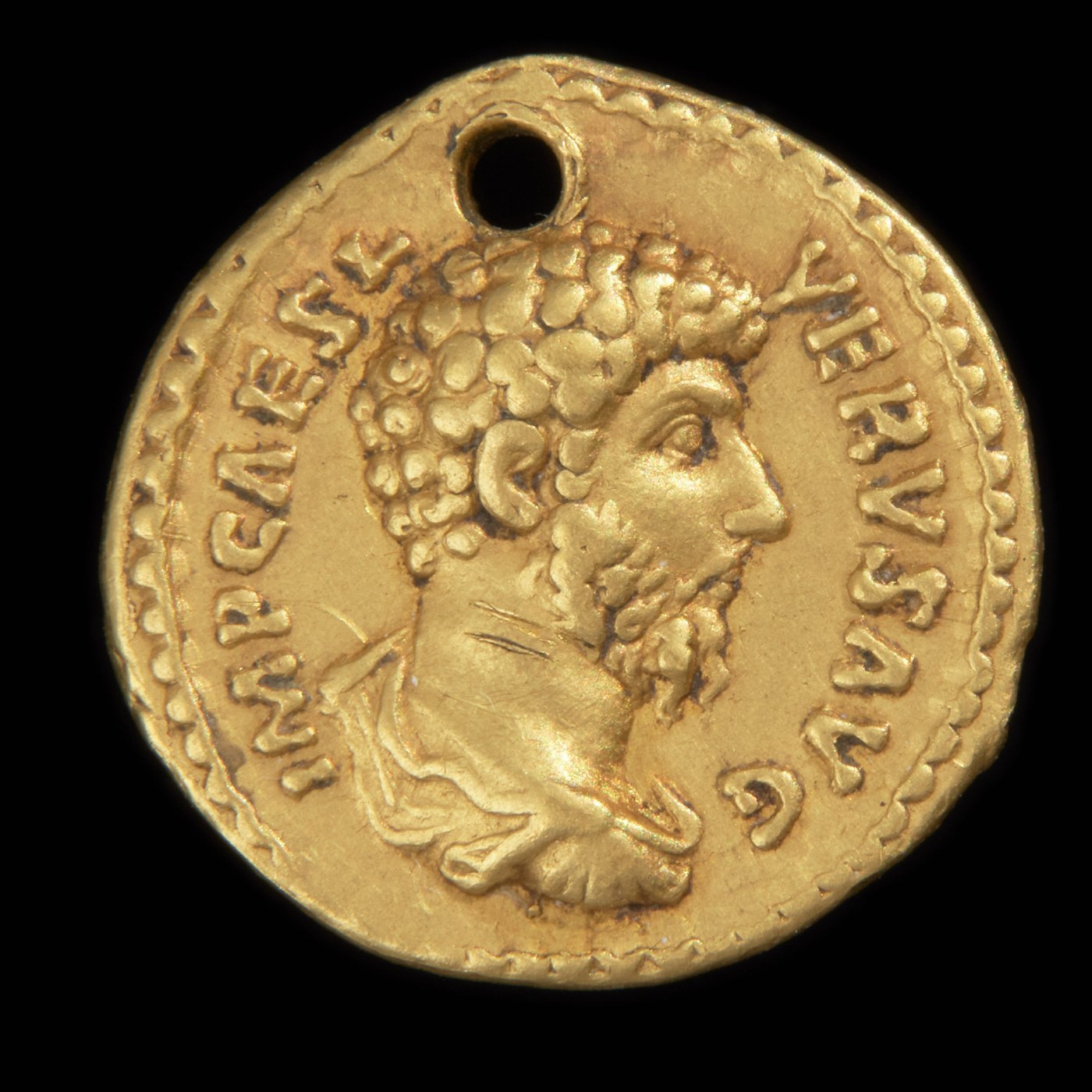
Begin with size, weight, and metal. An imperial aureus is a small gold coin, usually about 18-21 mm across and only a few grams, so it feels dense but looks modest next to a modern coin. The color should be a warm, high-purity gold throughout, with no plating flaking, no color difference at the edge, and no seam that would betray a cast copy.
Read the obverse before assuming who is pictured. The portrait is a profile head or bust with a Latin legend around the rim; that legend, not the face alone, tells you the subject. On this coin the portrait presents as female, which points to a woman of Marcus Aurelius's house, most commonly Faustina the Younger, rather than the emperor himself. Note the hairstyle and any diadem, veil, or drapery, as these help place the specific empress and issue.
Work through the reverse. A standing deity or personification is the key type here; identify it by its attributes (scepter, patera, cornucopia, child, rudder, or similar) and by the reverse legend naming the figure or virtue. Match the obverse subject and reverse type together, since the same reverse can appear on different portraits and the same portrait can pair with several reverses. A date or datable titulature in the legend (consistent with 163 AD on this piece) narrows the issue further.
Rule out look-alikes and later pieces. Silver denarii of the same reign share these designs but are white metal and worth a fraction of a gold aureus, so confirm the metal first. Be aware of gilded denarii or gilded forgeries posing as aurei, of cast reproductions with soft detail and grainy surfaces, and of modern "museum copy" strikings. Hand-struck originals show crisp but slightly uneven lettering, minor centering shifts, and occasional flan flaws, not the uniform perfection of machine work.
Authenticate before you buy or sell. Because aurei carry high value and have been forged since antiquity, weight and diameter should match published standards for the type, and the style of portrait and lettering should look right for the period. For anything beyond a nominal sum, rely on a specialist ancient-coin dealer or a third-party authentication and grading service, and favor coins with documented provenance.
Frequently asked questions
How do I tell an aureus from a silver denarius of the same reign?
Check the metal first. Denarii are silver (white to gray), while the aureus is warm gold throughout. They often share the same portraits and reverse types, but the gold aureus is far scarcer and more valuable.
What size and weight should a genuine aureus be?
Expect a small coin roughly 18-21 mm across weighing only a few grams. Wildly off measurements, or a coin that looks gold but feels wrong in weight, are warning signs of a plated or cast fake.
How do I identify the reverse figure?
Read the reverse legend and note the attributes the standing figure holds, such as a scepter, patera, cornucopia, or child. Together these name the deity or personified virtue depicted.
Should I get it authenticated?
Yes. Gold aurei are high-value and heavily forged, so have any example checked by a specialist ancient-coin dealer or a third-party grading service, and prefer coins with clear provenance.