
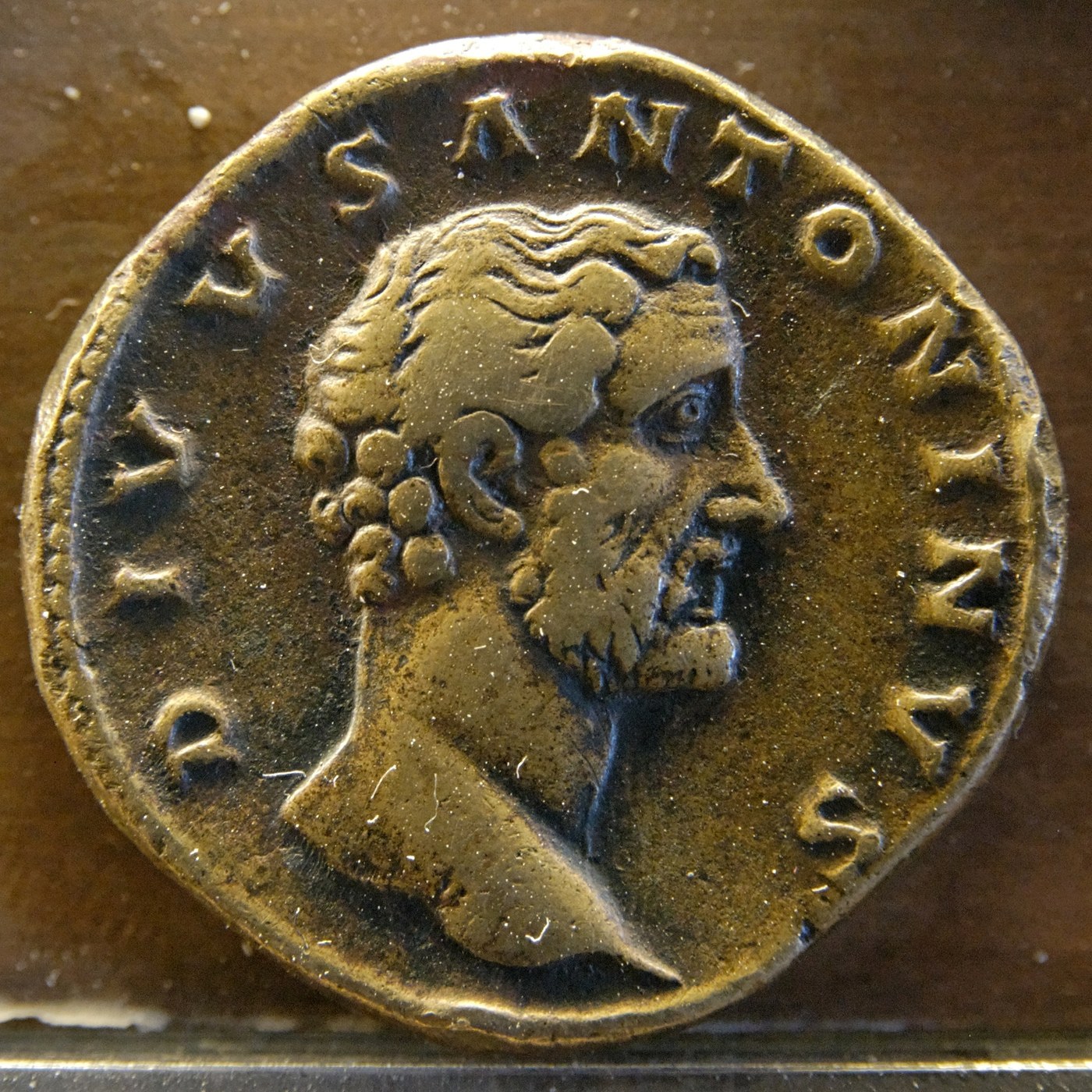
Sestertius of Antoninus Pius
Large Roman bronze coin of Emperor Antoninus Pius, with his bearded profile head and a standing deity or figure on the reverse.
- Country
- Roman Empire
- Denomination
- Sestertius
- Metal
- Bronze
Got a coin like this?
Identify any coin from a photo, free.
Overview
The Sestertius of Antoninus Pius is a large bronze coin of the Roman Empire struck during the reign of Antoninus Pius (138-161 AD). The example shown carries the emperor's bearded head in profile on the obverse, surrounded by a Latin legend giving his name and titles, and a standing draped figure, such as a personification like Providentia or a military figure, framed within the coin's circular border on the reverse.
The sestertius was the largest of the common Roman bronze denominations and served as a broad canvas for imperial imagery. Under Antoninus Pius, whose long and stable reign is remembered as a high point of Roman prosperity, these coins carried portraits and allegorical reverses that promoted the emperor's virtues and the well-being of the state. They survive today in considerable numbers and are among the most collected of Roman imperial bronzes.
History & Background
Antoninus Pius was adopted by Hadrian and became emperor in 138 AD, reigning until his death in 161 AD. His rule is traditionally counted among the "Five Good Emperors" and is associated with peace, sound administration, and public building. Coinage was a principal instrument of imperial messaging, and the mint at Rome produced sestertii throughout his reign in the emperor's name.
The reverse types of Antoninus Pius sestertii are varied, frequently showing personifications of imperial virtues and blessings, such as Providentia (foresight), Pietas, Salus, Annona, or figures representing peace, victory, and the military. The obverse legend typically abbreviates his name and titles, including references to his role as consul and holder of tribunician power, which can help date individual issues within the 138-161 AD span.
How to Identify
Look for a large, heavy bronze coin, usually around 30-34 mm in diameter, with a bearded male head in right or left profile on the obverse and a Latin legend running around the rim. On coins of Antoninus Pius the legend names the emperor with abbreviated titles beginning with elements such as ANTONINVS AVG PIVS.
The reverse shows a full-length standing figure, often draped and holding attributes, set within the coin's circular field; personifications commonly hold items such as a scepter, patera, cornucopia, or wand, and the reverse legend plus the letters S C (senatus consulto) frame the type. The S C marking in the field is characteristic of Roman imperial bronze and helps confirm the denomination. Wear on genuine examples appears first on the highest points, the cheek and hair of the portrait and the raised details of the standing figure.
Value & Collectibility
Sestertii of Antoninus Pius were struck in large numbers over a long reign, so they are among the more available large Roman bronzes, and value is driven mainly by condition, surface quality, portrait style, and the desirability of the reverse type rather than rarity alone. Well-worn or corroded examples are relatively affordable entry points into Roman imperial bronze, while coins with sharp detail, smooth surfaces, and attractive patina command substantial premiums.
Exceptional pieces with fine artistic portraits, rare or historically interesting reverse types, or original green or brown patina can be worth many times a common circulated example. Because ancient bronzes are frequently cleaned, tooled, patched, or outright faked, authentication and honest surfaces have a large effect on price. Treat any single figure as approximate and check recent auction results for comparable grade and type.
Frequently asked questions
Who is on this coin?
The portrait is Emperor Antoninus Pius, who ruled the Roman Empire from 138 to 161 AD. He is usually shown as a bearded man in profile with a Latin legend naming him.
What does the S C on the reverse mean?
S C stands for senatus consulto, meaning 'by decree of the Senate.' It appears on Roman imperial bronze coins like the sestertius and helps identify the denomination and metal.
How big is a sestertius?
A sestertius is a large bronze coin, typically about 30-34 mm across and noticeably heavy, making it the biggest of the common Roman bronze denominations of this period.
Who is the standing figure on the reverse?
It is usually a personification of an imperial virtue or blessing, such as Providentia, Pietas, or Salus, or sometimes a military figure. The reverse legend names the specific type.
Is it made of real bronze?
Yes. The sestertius was struck in bronze (a copper alloy), which over time develops a brown or green patina. The metal and large size are key features of the denomination.
Sestertius of Antoninus Pius guides
In-depth guides for identifying, valuing, and collecting Sestertius of Antoninus Pius.
Other coins you may enjoy
Antoninianus
250-270 AD
Sestertius of Hadrian
117-138 AD
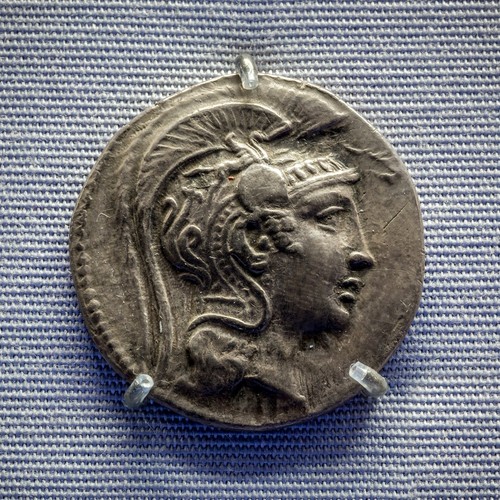
Athenian Owl Tetradrachm
165-42 BC
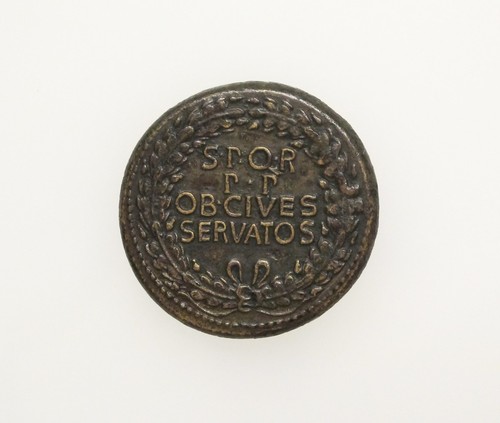
Sestertius of Caligula
37-41 AD
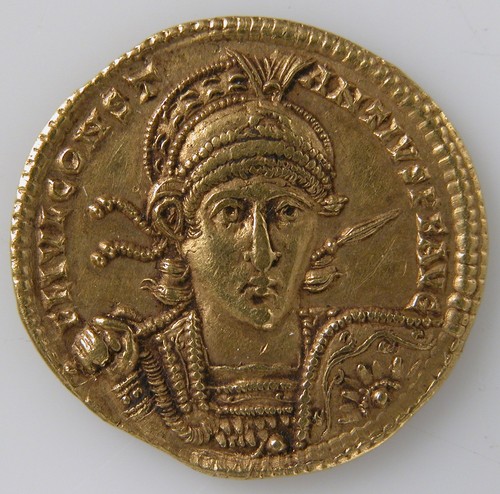
Solidus of Constantius II
337-361 AD
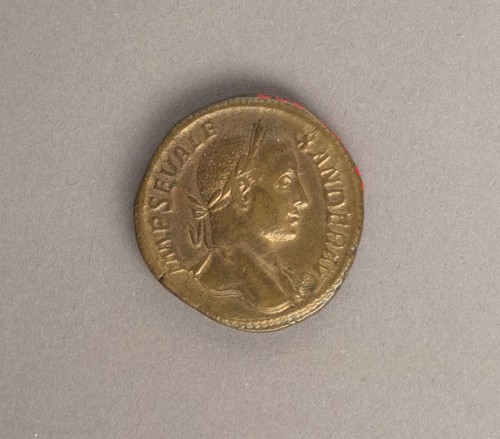
Sestertius of Alexander Severus
222-235 AD
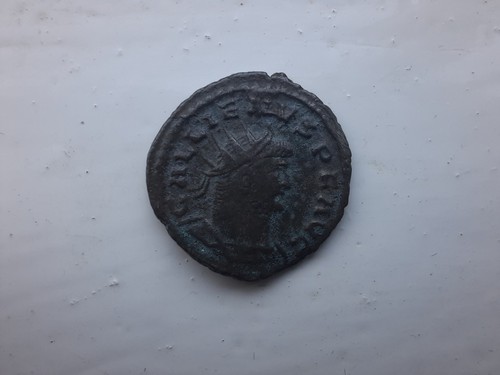
Antoninianus of Gallienus
253-268 AD
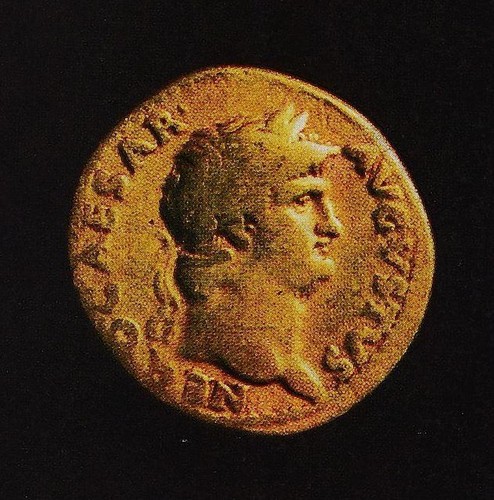
Aureus of Nero
54-68 AD
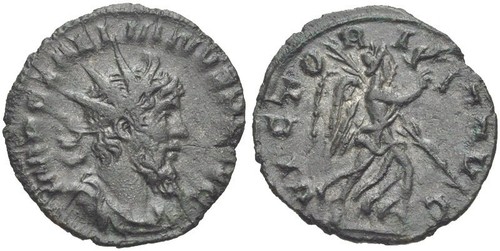
Antoninianus of Laelianus
AD 269
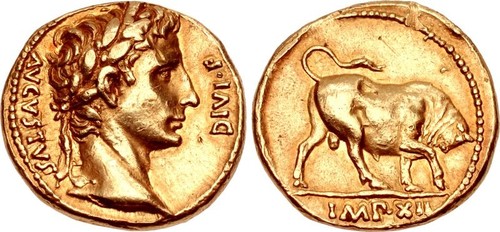
Aureus of Augustus
27 BC-14 AD
Aureus of Faustina II
147-150 AD
Aureus of Marcus Aurelius
c. 161-180 AD