
How to Identify the Aureus of Nero
A collector's walkthrough for confirming a Neronian gold aureus: the portrait, the Latin legend, size and weight, dating clues, look-alikes, and authentication cautions.
Read the full Aureus of Nero encyclopedia entry →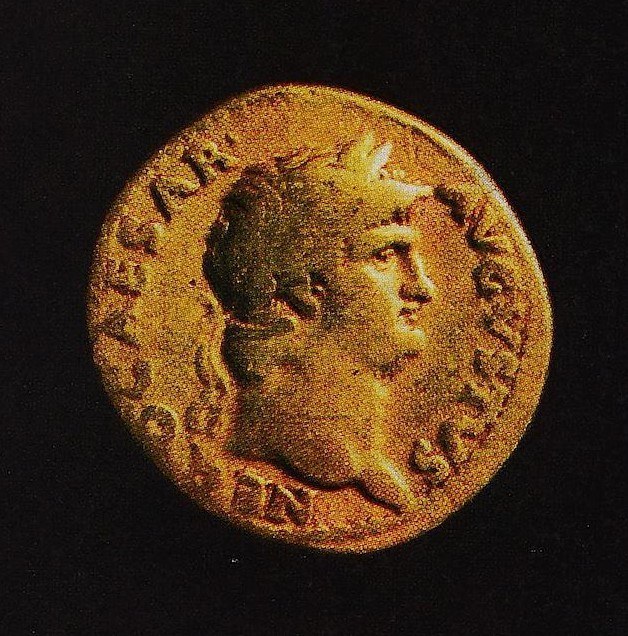
Begin with the portrait. A genuine aureus of Nero shows the emperor's head facing right with characteristically thick, curly hair; on issues from the middle and later reign the head is laureate and the neck and jaw are notably heavy and fleshy. This progression, from a slim youthful profile early in the reign toward a broad, jowly likeness by the mid-60s AD, is one of the surest ways to place a coin in time. Compare the exact hairstyle and facial features against trusted reference plates before drawing conclusions.
Read the legend around the portrait. It is Latin and names the emperor, appearing in forms such as NERO CAESAR AVGVSTVS or NERO CAESAR AVG IMP; slight variations in wording and titles correspond to different phases of the reign and to different reverse types. Note the letter forms and spacing carefully, since inscription details are among the first things a modern forger gets wrong.
Check size and weight against the standard. The aureus is a small, heavy gold disc about 18 to 20 mm in diameter. Coins struck early in the reign should weigh roughly 7.7 to 7.8 grams, while those from after Nero's reform of about 64 AD weigh closer to 7.2 to 7.3 grams. A piece that is markedly light, oversized, or underweight for its diameter deserves suspicion. Remember that the coin was hand-struck, so a slightly irregular flan, off-center design, or minor edge splits are normal and are not by themselves signs of a fake.
Be alert to look-alikes and impostors. Gold aurei of other Julio-Claudian and later emperors share the same size and fabric, so rely on the named legend rather than shape alone. Cast copies, tooled coins, and modern replicas are common; watch for a casting seam on the edge, granular or bubbled surfaces, mushy hair and lettering, or a soapy, too-uniform look that differs from the crisp relief of a struck coin.
Finally, treat authentication and provenance as essential rather than optional. Ancient gold is heavily counterfeited, and ownership and sale of ancient coins are regulated by cultural-property laws in many countries. For any coin of real value, seek certification from a recognized ancient-coin grading or authentication service and insist on documented collection history before relying on an attribution or paying a premium.
Frequently asked questions
What is the quickest way to confirm it is Nero?
Match the right-facing, curly-haired portrait to the Latin legend naming NERO, then check that the heavy-featured likeness fits Nero's known portrait style. The named legend combined with the portrait is more reliable than either alone.
What size and weight should a genuine example be?
About 18 to 20 mm across. Early-reign pieces weigh roughly 7.7 to 7.8 grams; those after the reform of about 64 AD weigh closer to 7.2 to 7.3 grams. A coin far outside this range is suspect.
How do I spot a fake or cast copy?
Look for a casting seam on the edge, bubbled or grainy surfaces, soft or misshapen lettering and hair, and incorrect weight or diameter. Struck originals show crisp relief and sharp inscriptions. Given the value, professional authentication is strongly advised.
Does an irregular, off-center flan mean it is fake?
No. The aureus was hand-struck, so slightly irregular flans, off-center designs, and minor edge splits are normal for genuine coins. Judge authenticity by fabric, weight, style, and lettering rather than by a perfectly round shape.