
How to Identify the Solidus of Constantius II
A collector's walkthrough for confirming a gold solidus of Constantius II: the diademed portrait, the Latin legend, size and weight, mint marks, look-alikes, and authentication cautions.
Read the full Solidus of Constantius II encyclopedia entry →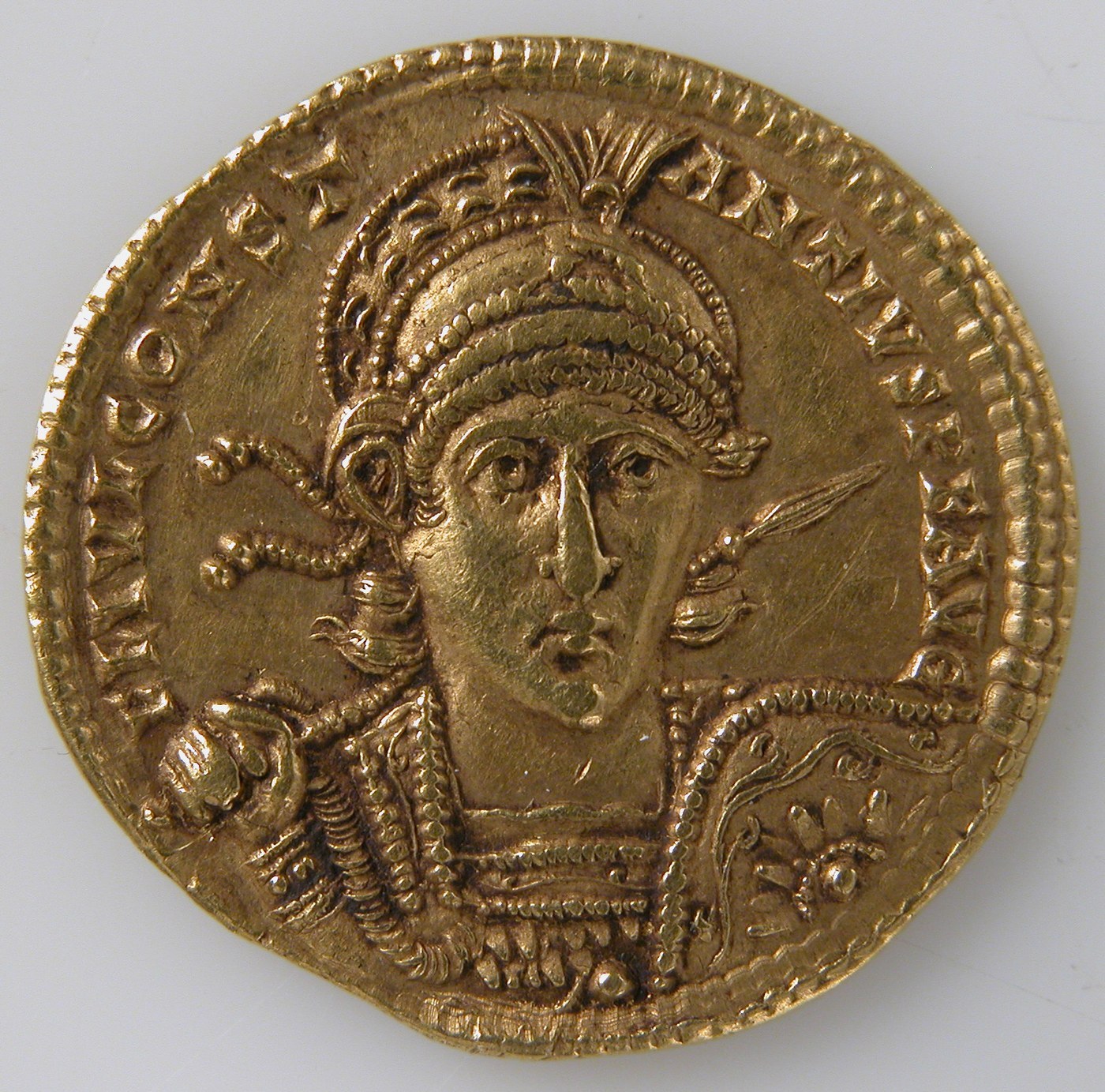
Begin with the portrait. A genuine solidus of Constantius II shows the emperor's bust facing right, wearing an elaborate pearl or rosette diadem with richly draped, cuirassed shoulders, rendered in the stiff, ceremonial style typical of fourth-century imperial gold. This formal, front-heavy diademed bust is quite different from the bare or laureate heads of earlier Roman coinage and is one of the first cues that a coin belongs to the Constantinian era. Compare the exact diadem type and drapery against trusted reference plates before drawing conclusions.
Read the legend around the portrait. It is Latin and names the emperor, appearing in forms such as FL IVL CONSTANTIVS PERP AVG or DN CONSTANTIVS PF AVG. Because several members of the Constantinian dynasty share similar portrait styles, the named legend is essential for separating Constantius II from his father Constantine I, his brothers Constans and Constantine II, and later relatives. Note the letter forms and spacing carefully, since inscription details are among the first things a modern forger gets wrong.
Check size and weight against the standard. The solidus is a thin, broad gold disc about 20 to 22 mm in diameter and close to 4.4 to 4.5 grams, struck in high-purity gold at 72 to the Roman pound. A piece that is markedly light, thick, or underweight for its diameter deserves suspicion. Remember that the coin was hand-struck, so a slightly irregular flan, off-center design, or minor edge marks are normal and are not by themselves signs of a fake.
Study the reverse and its mint marks. Seated-figure reverses are common on this emperor's gold, typically enthroned personifications such as Roma and Constantinopolis holding a shield inscribed with vota numerals under a GLORIA REIPVBLICAE type legend. Small letters in the exergue below the design record the mint and workshop, pointing to production centers such as Antioch, Constantinople, Nicomedia, Sirmium, or Thessalonica. Reading these marks is the surest way to attribute the coin to a specific mint and issue.
Finally, treat authentication and provenance as essential rather than optional. Ancient gold is heavily counterfeited, and the ownership and sale of ancient coins are regulated by cultural-property laws in many countries. Watch for casting seams on the edge, bubbled or grainy surfaces, mushy lettering, or a soapy, too-uniform look that differs from the crisp relief of a struck coin. For any coin of real value, seek certification from a recognized ancient-coin grading or authentication service and insist on documented collection history before relying on an attribution or paying a premium.
Frequently asked questions
What is the quickest way to confirm it is Constantius II?
Match the right-facing, diademed and draped bust to the Latin legend naming CONSTANTIVS, then check that the formal fourth-century portrait style fits. Because the Constantinian dynasty shares a similar look, the named legend is more decisive than the portrait alone.
What size and weight should a genuine example be?
About 20 to 22 mm across and close to 4.4 to 4.5 grams, in high-purity gold struck at 72 to the Roman pound. A coin far outside this range, or notably thick like an older aureus, is suspect.
How do the mint marks help identify the coin?
Small letters in the exergue beneath the reverse record the mint and workshop that struck the coin, pointing to centers such as Antioch, Constantinople, Nicomedia, Sirmium, or Thessalonica. Reading them lets you attribute the solidus to a specific mint and issue.
How do I spot a fake or cast copy?
Look for a casting seam on the edge, bubbled or grainy surfaces, soft or misshapen lettering, and incorrect weight or diameter. Struck originals show crisp relief and sharp inscriptions. Given the value and the prevalence of forgeries, professional authentication is strongly advised.