
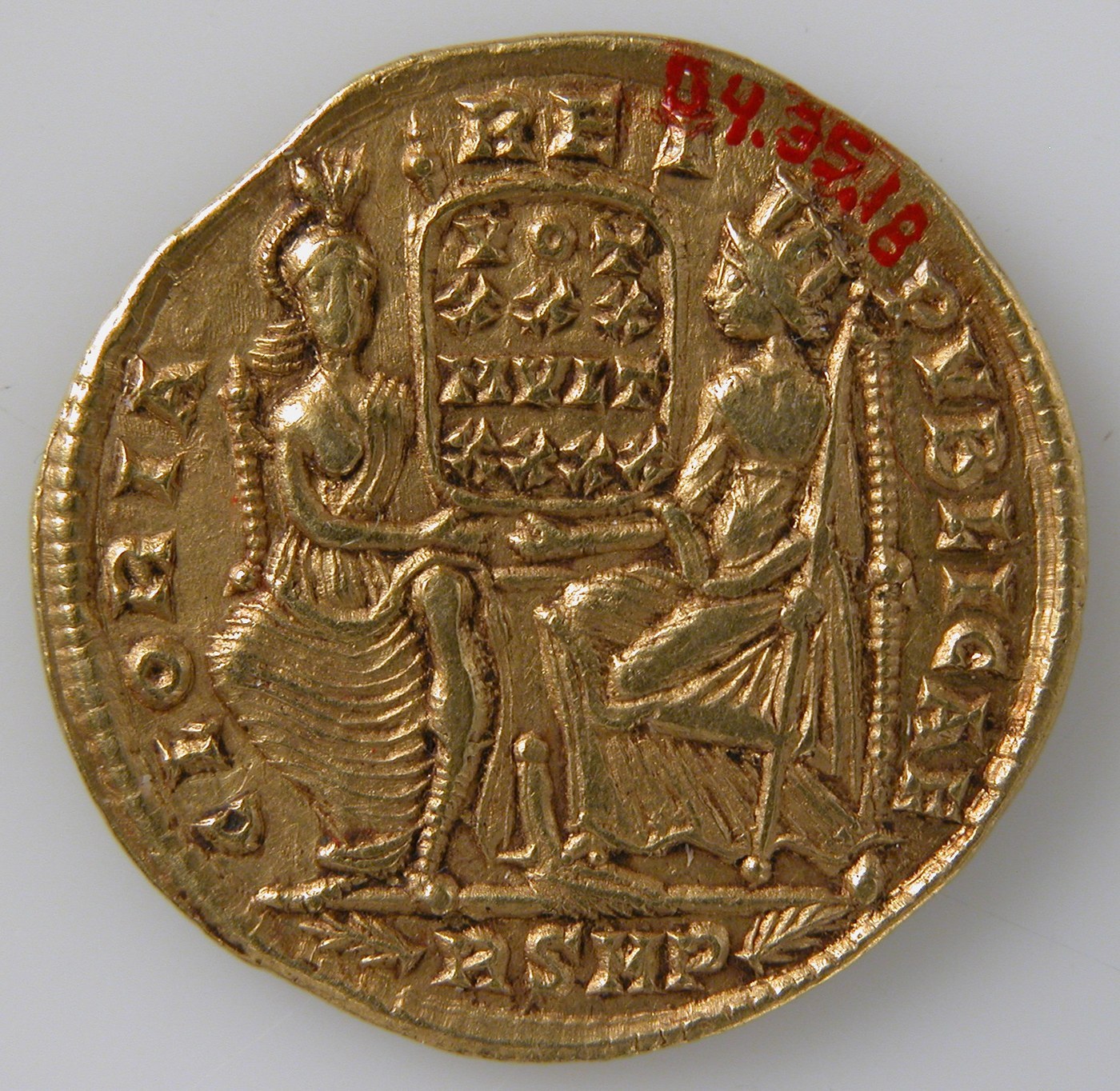
Solidus of Constantine II
Late Roman gold solidus of Constantine II, showing his ornately crowned bust and a seated figural reverse type.
- Country
- Byzantine/Late Roman
- Denomination
- Solidus
- Metal
- Gold
Got a coin like this?
Identify any coin from a photo, free.
Overview
The Solidus of Constantine II is a high-purity gold coin of the late Roman world, and the example shown carries the diademed, elaborately headdressed bust of Constantine II facing right on the obverse with a seated figural composition on the reverse. The solidus was the flagship gold denomination introduced under his father, Constantine the Great, and it became the backbone of Roman and later Byzantine gold coinage for centuries.
Constantine II was a son of Constantine I and held the rank of Caesar, and later Augustus, during the period 317-337 AD. Coins bearing his name and portrait were struck across the empire's imperial mints. As a gold issue of a named Constantinian prince, the solidus is a prestigious and historically resonant piece that sits at the transition from the classical Roman to the early Byzantine monetary world.
History & Background
Constantine II (Flavius Claudius Constantinus) was the eldest son of Constantine the Great and was raised to the junior imperial rank of Caesar in 317 AD as a young child. He shared in the dynastic coinage program that his father used to advertise the stability and continuity of the Constantinian house, and his portrait and titles appear on issues struck while Constantine I still ruled as senior Augustus.
The solidus itself was a reform coin. Constantine the Great established it in the early fourth century at a standard of roughly seventy-two coins to the Roman pound of gold, replacing the older, less stable aureus. Its dependable weight and high fineness gave it enormous prestige, and it circulated widely as the empire's premier gold denomination. Solidi in the name of Constantine II were produced at major imperial gold mints of the era, such as those at Nicomedia, Antioch, Thessalonica, Siscia, and other centers, each identified by mint marks in the reverse exergue.
After Constantine I died in 337 AD, Constantine II became a full Augustus alongside his brothers, but he was killed in 340 AD during a conflict with his brother Constans. The coins struck in his name during 317-337 AD therefore capture his years as Caesar and heir within the wider Constantinian dynasty.
How to Identify
Look for a small, thin, bright gold coin, roughly 20-21 mm across and about 4.5 grams, the standard weight of the early solidus. The obverse shows a youthful male bust facing right wearing an ornate diadem or headdress, encircled by a Latin legend that names Constantine II in forms such as CONSTANTINVS IVN NOB C (Caesar) or CONSTANTINVS AVG (as Augustus). The style is formal and frontal-leaning in the late Roman manner rather than the fully naturalistic portraiture of earlier centuries.
The reverse of this example shows seated figure(s), a common late Roman format used for enthroned personifications or paired seated figures such as Victories or the emperors, accompanied by a legend and a mint mark in the exergue below. Because dies were cut by hand and different mints used slightly different styles, expect minor variation in portrait detail, legend spacing, and the exact reverse composition between genuine coins. The coin should be struck in high-purity gold, feel dense for its small size, and show no seams or casting bubbles.
Value & Collectibility
As a gold solidus of a named Constantinian prince, this is a valuable ancient coin, and genuine examples sit well above common bronze issues of the same era. Value is driven chiefly by the specific reverse type, the mint, the completeness of the strike, centering, surface quality, and whether the coin is a scarcer Caesar issue or a later Augustus issue.
Well-centered coins with sharp, unworn portraits and clean surfaces command strong premiums, while creased, clipped, mounted, or ex-jewelry pieces sell for less. Rarer mints and reverse types can add substantially to value. Because gold coins of this prestige have long been forged and cast, authentication is essential at these price levels. Treat any single figure as approximate and check recent specialist auction results, ideally for coins with clear provenance and expert attribution.
Frequently asked questions
Who is on this coin?
The portrait is Constantine II, eldest son of Constantine the Great. He is shown facing right with an ornate diadem, and the obverse legend names him, often marking his rank as Caesar or later Augustus.
What is a solidus?
The solidus is a high-purity gold coin introduced under Constantine the Great, struck at about 72 to the Roman pound of gold. It became the standard Roman and Byzantine gold denomination for centuries.
Is it really solid gold?
Yes. The solidus was struck in high-fineness gold and is a small but dense coin around 20-21 mm across and about 4.5 grams. Its dependable gold content gave it prestige across the empire.
Is this a Roman or a Byzantine coin?
It sits at the transition. Constantine II ruled in the late Roman empire (317-337 AD), but the solidus he helped popularize became the foundation of Byzantine gold coinage, so it is often described as late Roman or early Byzantine.
Why does it look valuable?
It is a gold coin of a named prince of the Constantinian dynasty, which makes it both intrinsically and historically desirable. Condition, mint, and reverse type strongly affect the price, and authentication is important.
Solidus of Constantine II guides
In-depth guides for identifying, valuing, and collecting Solidus of Constantine II.
Other coins you may enjoy
Antoninianus
250-270 AD
Sestertius of Antoninus Pius
138-161 AD
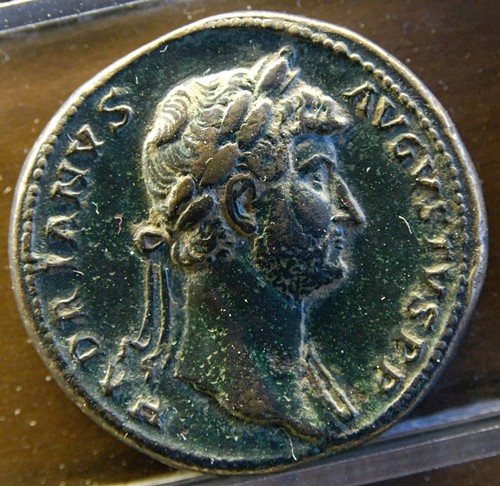
Sestertius of Hadrian
117-138 AD
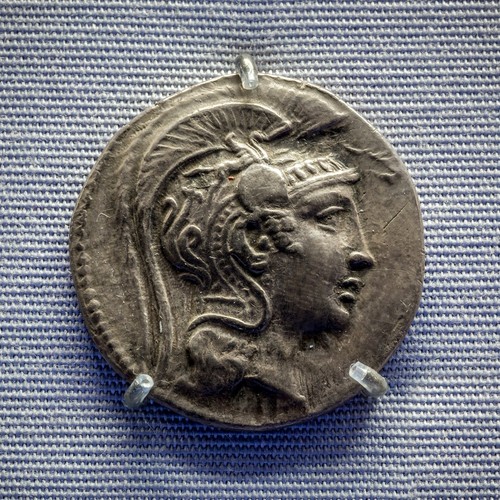
Athenian Owl Tetradrachm
165-42 BC
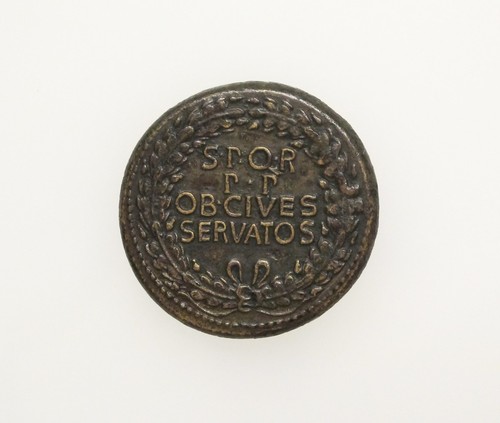
Sestertius of Caligula
37-41 AD
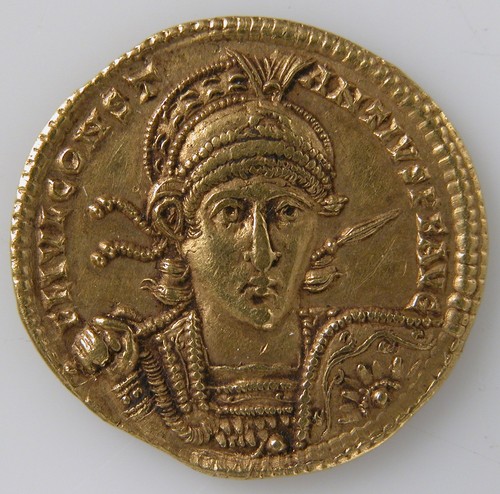
Solidus of Constantius II
337-361 AD
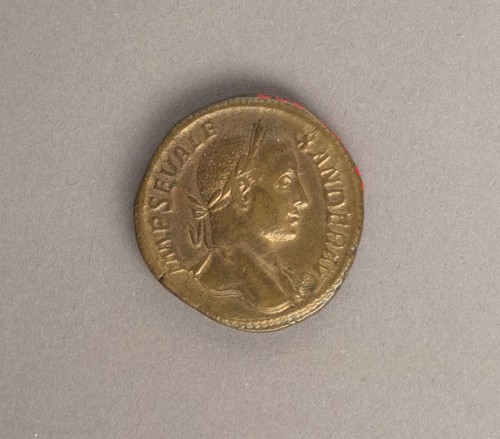
Sestertius of Alexander Severus
222-235 AD
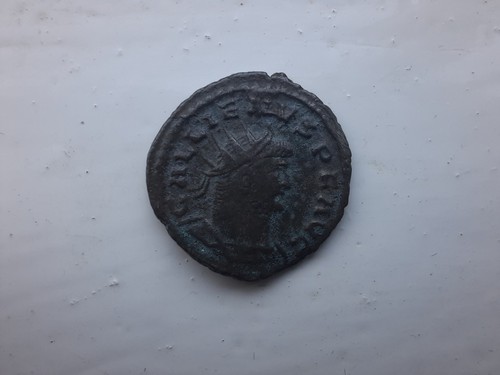
Antoninianus of Gallienus
253-268 AD
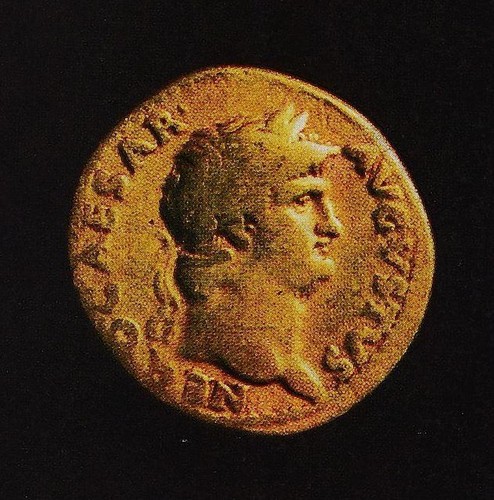
Aureus of Nero
54-68 AD
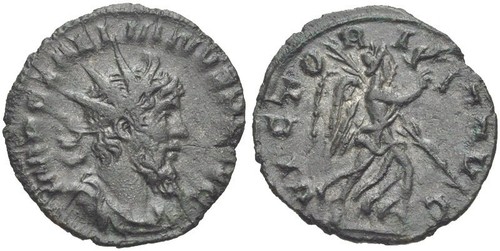
Antoninianus of Laelianus
AD 269
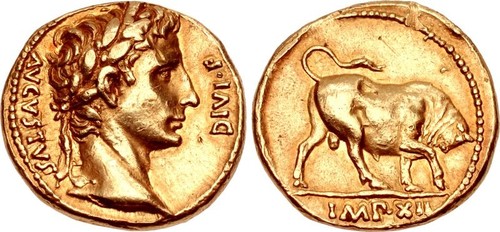
Aureus of Augustus
27 BC-14 AD
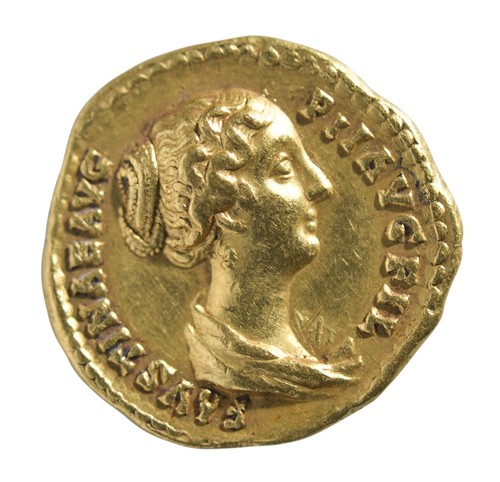
Aureus of Faustina II
147-150 AD