
How to Identify the Solidus of Constantine II
Collector checks for the Constantine II gold solidus: bust and legend, seated reverse, size and weight, mint marks, look-alikes, and authentication.
Read the full Solidus of Constantine II encyclopedia entry →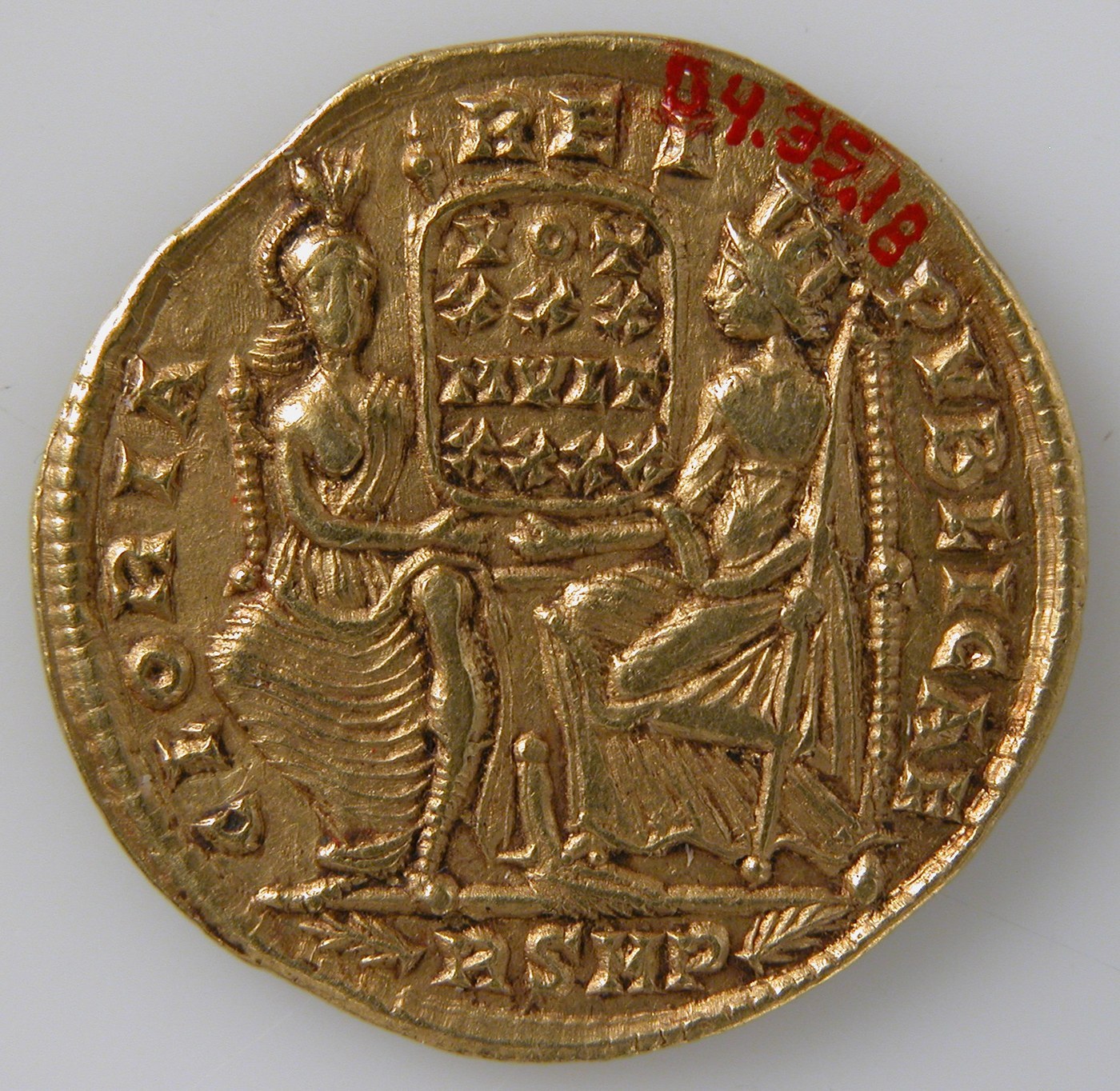
Start with metal, size, and weight. A genuine early solidus is high-purity gold, small and thin at roughly 20-21 mm, and about 4.5 grams, so it feels notably dense for its diameter. If your piece is much lighter, larger, or pale, it may be a plated or cast copy, or a different denomination entirely.
Read the obverse legend carefully, because it is the key to attribution. The bust should face right with an ornate diadem or headdress, and the surrounding Latin should name Constantine II. Watch for the abbreviations that separate him from his father and brothers: forms like CONSTANTINVS IVN NOB C (with IVN for Iunior and NOB C for Caesar) point to his junior rank, while CONSTANTINVS AVG indicates Augustus. His father Constantine I and brothers Constantius II and Constans share very similar names and portraits, so the exact wording matters.
Examine the reverse composition and exergue. This type shows seated figure(s), a standard late Roman format for enthroned personifications or paired seated figures, with a legend around and a mint mark in the exergue at the bottom. Those mint marks (abbreviations such as those for Nicomedia, Antioch, Thessalonica, or Siscia, often with an officina letter) pin down where the coin was struck and are important for both identification and value. Note the full reverse legend, as it names the specific type.
Separate the look-alikes. Solidi of the other Constantinian rulers use nearly identical style and reverse types, so never rely on the portrait alone; confirm the name in the legend. Be aware that gold multiples, later Byzantine solidi, and modern replicas and jewelry copies all imitate this general appearance, and many souvenir pieces reproduce Constantinian designs in base metal or low gold.
Authenticate before you buy or sell at value. Constantinian gold is heavily faked, including convincing struck forgeries and cast copies. Check weight and diameter precisely, look for casting seams, bubbles, or a soft mushy strike, inspect the edge, and be cautious of coins showing mount or solder traces from former jewelry use. For any significant purchase, seek expert attribution, third-party authentication, and ideally documented provenance.
Frequently asked questions
How do I tell Constantine II from Constantine I on a solidus?
Read the legend, not just the face. Constantine II is often marked IVN (Iunior) and NOB C or CAES for Caesar during 317-337 AD, while his father appears as CONSTANTINVS with senior Augustus titles. The wording is the reliable differentiator.
What size and weight should a genuine solidus be?
Expect a small, thin gold coin about 20-21 mm across and roughly 4.5 grams, dense in the hand. Significant deviations in weight or diameter are a warning sign of a copy or a different denomination.
Where is the mint mark?
It appears in the exergue, the small space beneath the reverse figures, usually as a short abbreviation with an officina (workshop) letter. It identifies the mint and helps confirm the issue and its rarity.
Are these coins often faked?
Yes. Gold coins of the Constantinian dynasty have long been targets for cast and struck forgeries and for ex-jewelry alterations. Verify weight, style, and surfaces, and get expert authentication before paying a gold-coin price.