
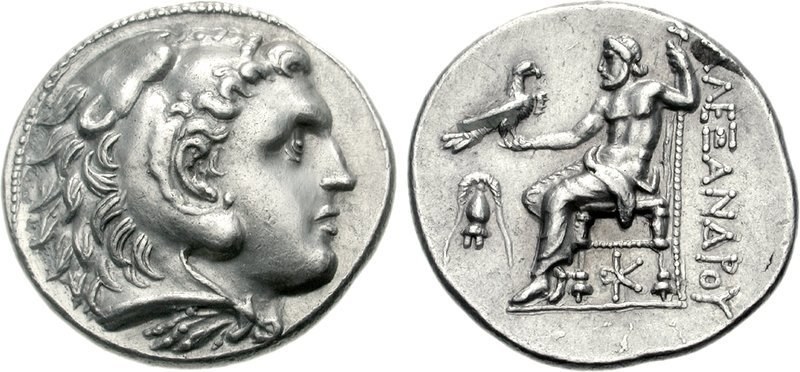
Antigonos II Gonatas Tetradrachm
Silver tetradrachm of the Macedonian king Antigonos II Gonatas, c. 275-270 BC, with a bearded royal head and a seated Nike holding a wreath.
- Country
- Ancient Macedon
- Denomination
- Tetradrachm
- Metal
- Silver
Got a coin like this?
Identify any coin from a photo, free.
Overview
The Antigonos II Gonatas tetradrachm is a large silver coin of the Antigonid kingdom of Macedon, struck for the king Antigonos II Gonatas (reigned c. 277-239 BC). The example shown belongs to an early phase of his reign, roughly 275-270 BC, and pairs a bearded male head on the obverse with a seated Nike (Victory) holding out a wreath on the reverse.
As a tetradrachm, the coin represents four drachms and was the standard large silver denomination of the Hellenistic Greek world. It is a substantial piece of high-purity silver, broad and heavy, of the kind used for major payments, trade, and the pay of soldiers.
The coin belongs to the era after Alexander the Great, when his generals' successors ruled competing kingdoms. Antigonos Gonatas restored Antigonid control of Macedon, and his coinage reflects both dynastic identity and the Victory imagery common to Hellenistic rulers who advertised military success.
History & Background
Antigonos II Gonatas was a grandson of Antigonos I Monophthalmos, one of Alexander the Great's leading generals. He came to power during the turbulent decades after Alexander's death, a period in which Macedon was fought over by rival successors and, in the 270s BC, ravaged by an invasion of migrating Gauls (Celts). Antigonos won a celebrated victory over these invaders near Lysimacheia around 277 BC, a triumph that helped secure his hold on the Macedonian throne.
The coin shown, dated to about 275-270 BC, falls in the early, consolidating years of his long reign. Victory imagery of the kind on the reverse resonated strongly in this context, celebrating the king's success against the Gauls and his restoration of Antigonid rule. Antigonos went on to reign for nearly four decades, founding the Antigonid dynasty that governed Macedon until the Roman conquest.
Hellenistic kings used their silver tetradrachms as instruments of prestige as well as commerce. Struck at Macedonian mints and circulating widely, coins like this carried the ruler's chosen imagery across the Greek world and paid the professional armies on which his power depended.
How to Identify
The obverse shows a bearded male head in profile. The heavy beard is a strong diagnostic, since many Hellenistic royal portraits are clean-shaven; here it reflects the dynasty's imagery associated with Antigonos. Look for careful modeling of the hair and beard and the high-relief style typical of good Macedonian dies.
The reverse shows a seated figure of Nike (Victory) holding a wreath, extending the wreath outward as if to crown. Nike is winged and seated, and the design is usually accompanied by a Greek royal legend naming the king (in the form BASILEOS ANTIGONOU, "of King Antigonos"), together with control marks or monograms that vary between dies and mints.
In hand the coin is a large, thick silver disc. Hellenistic tetradrachms of this weight standard typically run on the order of about 16 to 17 grams and roughly 28 to 32 mm across, struck on hand-cut dies so centering and flan shape are irregular. The metal is high-grade silver, usually toned grey with age. The combination of bearded head and seated wreath-bearing Nike, with the Antigonos legend, is the coin's key identifier.
Value & Collectibility
Silver tetradrachms of Antigonos II Gonatas are authentic Hellenistic royal coinage and are actively collected, so they carry a solid market. Worn but clearly identifiable examples generally trade in the low-to-mid hundreds of dollars, while sharply struck, well-centered coins with a bold portrait and crisp Nike can reach well into the four figures.
Value depends on the strength and style of the portrait, the completeness of the Nike and legend, centering, surface quality and toning, and overall eye appeal. Finely engraved dies and superb or provenanced coins command strong premiums, while off-center strikes, corrosion, or heavy wear reduce value.
These figures are general context rather than appraisals. Any specific coin's price depends heavily on condition, style, and authenticity, and valuable Hellenistic silver of this kind is often sold with specialist attribution or third-party certification.
Frequently asked questions
Who was Antigonos II Gonatas?
He was a Macedonian king (reigned c. 277-239 BC) and grandson of Alexander's general Antigonos I. He secured the throne after defeating invading Gauls and founded the Antigonid dynasty that ruled Macedon until the Roman conquest.
What does the reverse image mean?
It shows Nike, the goddess of Victory, seated and holding out a wreath. Victory imagery advertised the king's military success, fitting for a ruler who won fame defeating Gaulish invaders early in his reign.
How big and heavy is the coin?
It is a large silver tetradrachm, typically on the order of about 16 to 17 grams and roughly 28 to 32 mm across. It is a thick, substantial piece struck on a hand-cut blank, so its shape is somewhat irregular.
Is there writing on the coin?
Yes. The reverse normally carries a Greek royal legend naming the king, in the form BASILEOS ANTIGONOU, meaning "of King Antigonos," often with monograms or control marks that vary between dies.
Why is the head bearded?
Many Hellenistic royal portraits are clean-shaven, so the heavy beard is a distinctive feature tied to the imagery of the Antigonid line and helps distinguish this coinage from that of other successor kings.
Antigonos II Gonatas Tetradrachm guides
In-depth guides for identifying, valuing, and collecting Antigonos II Gonatas Tetradrachm.
Other coins you may enjoy
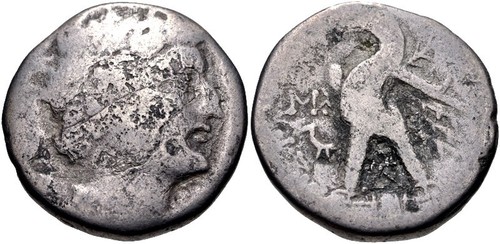
Tetradrachm of Ptolemy XII
80-51 BC
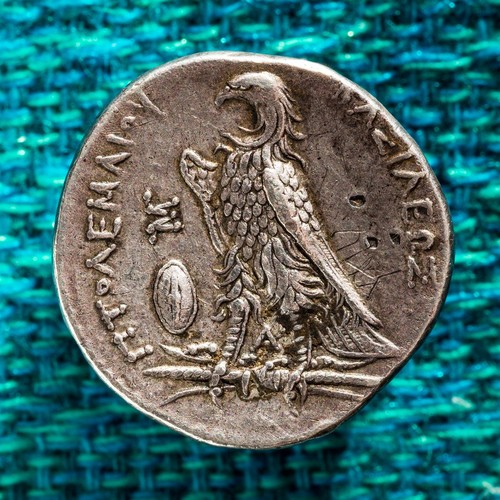
Tetradrachm of Ptolemy I
305-283 BC
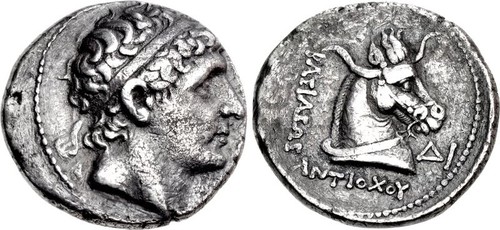
Tetradrachm of Antiochos I Soter
281-261 BC
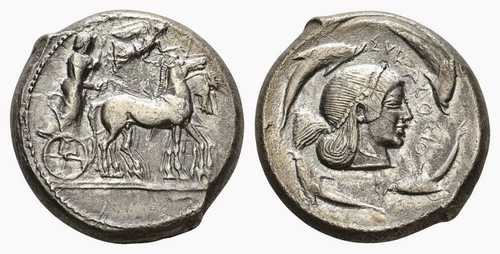
Syracuse Tetradrachm
c. 5th-4th century BC (Classical period)
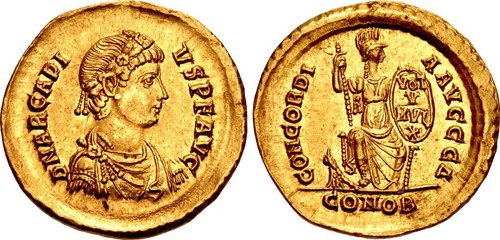
Solidus of Arcadius
AD 395-402
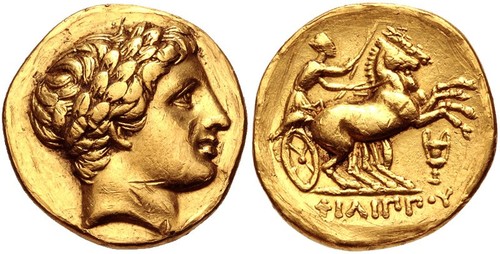
Philip III Gold Stater
323-317 BC
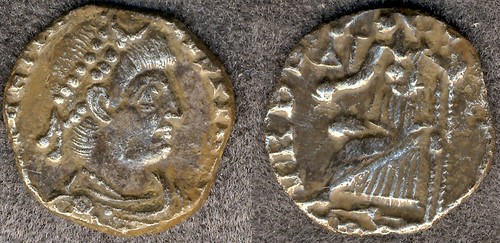
Siliqua of Gratian
AD 367-383
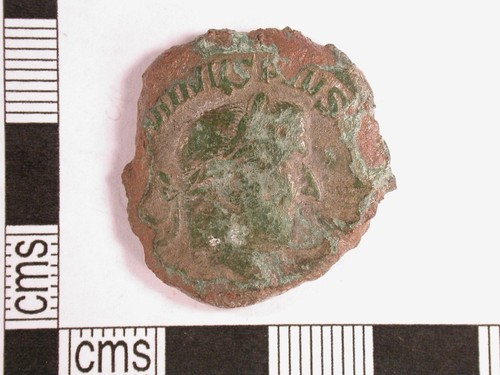
Sestertius of Maximinus Thrax
235-238 AD
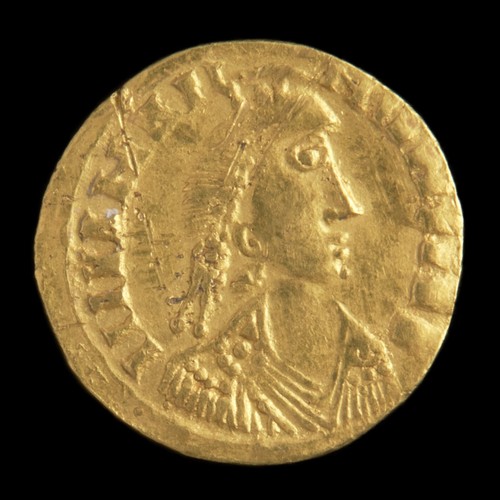
Solidus of Valentinian III
AD 425-455
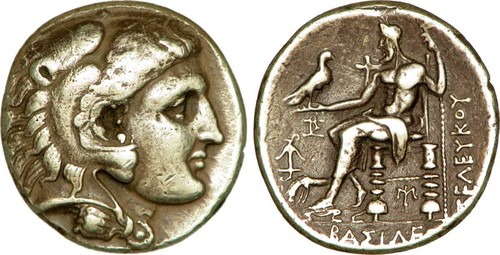
Seleucus I Nicator Tetradrachm
Late 4th-3rd century BC
Nummus of Magnentius
AD 350-353
Follis of Galerius
AD 308-310