
How to Identify the Antigonos II Gonatas Tetradrachm
A collector's guide to recognizing this Macedonian silver tetradrachm by its bearded head, seated Nike with wreath, Greek legend, size, and fabric.
Read the full Antigonos II Gonatas Tetradrachm encyclopedia entry →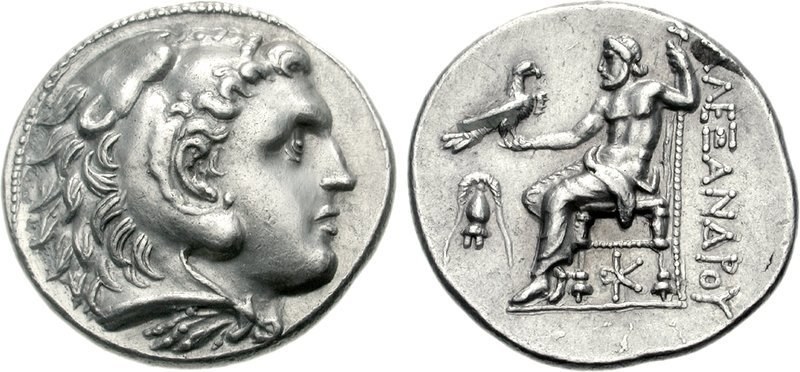
Start with the obverse portrait. This tetradrachm shows a bearded male head in profile, rendered in fairly high relief. The beard itself is an important clue, because a great many Hellenistic royal portraits are beardless; a bearded head paired with the other features here points toward the Antigonid coinage of Antigonos Gonatas rather than an Alexander-type or other successor issue. Study the modeling of the hair and beard, which on good dies is detailed and carefully cut.
Turn to the reverse and look for a seated, winged Nike holding out a wreath. Victory is shown seated rather than standing or driving a chariot, and she extends the wreath as if to crown. Around the figure you should be able to find a Greek royal legend naming the king, in the form BASILEOS ANTIGONOU ("of King Antigonos"), often accompanied by monograms or small control symbols. Reading even part of that legend confirms the attribution and separates this from look-alike seated-figure reverses of other rulers.
Check size, weight, and fabric together. A genuine tetradrachm is a large, thick silver disc, on the order of about 16 to 17 grams and roughly 28 to 32 mm wide, struck from hand-cut dies. Expect an irregular, slightly oval flan, uneven edges, and centering that can push part of the design or legend off the blank. The metal should look like high-grade silver, usually with grey age toning rather than a bright modern shine.
Beware of look-alikes and denomination confusion. Many Hellenistic kings issued seated-deity reverses and profile-head obverses, so it is the specific combination of a bearded head, a seated wreath-bearing Nike, and the Antigonos legend that identifies this type. Smaller silver pieces (drachms and fractions) share the imagery at reduced size and weight, so confirm the weight before calling a coin a tetradrachm. Widely circulated Alexander-type tetradrachms are a common source of misattribution.
Finally, watch for authenticity problems. Cast forgeries betray a seam around the edge, a soft or bubbly surface, and dull, non-metallic tone; tooled or re-engraved coins show unnaturally sharp, scratchy detail added to worn areas or a legend that looks freshly recut. Because good examples are valuable, treat bargain-priced coins with caution and, for a significant purchase, rely on specialist attribution or third-party certification and, where available, documented provenance.
Frequently asked questions
How do I tell this from an Alexander the Great tetradrachm?
Alexander-type tetradrachms typically show a beardless head of Herakles in a lion skin and a seated Zeus holding an eagle. This coin instead has a bearded head and a seated Nike holding a wreath, with an Antigonos legend, so the reverse figure and the legend are the deciding clues.
What should the legend say?
Look for a Greek inscription naming the king, in the form BASILEOS ANTIGONOU, meaning "of King Antigonos." It is usually placed around the seated Nike, often with monograms or small control marks that vary between dies and mints.
How can I confirm it is a full tetradrachm and not a smaller coin?
Weigh and measure it. A tetradrachm sits on the order of about 16 to 17 grams and roughly 28 to 32 mm across. Lighter, smaller coins with the same imagery are drachms or fractions, so weight is the key test between denominations.
What are the main warning signs of a fake?
A seam around the edge, a soft or bubbly surface, and a dull tone suggest a cast copy, while unnaturally sharp detail or a freshly recut legend on an otherwise worn coin suggests tooling. For valuable examples, seek specialist attribution or certification.