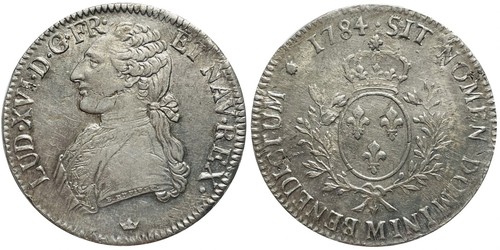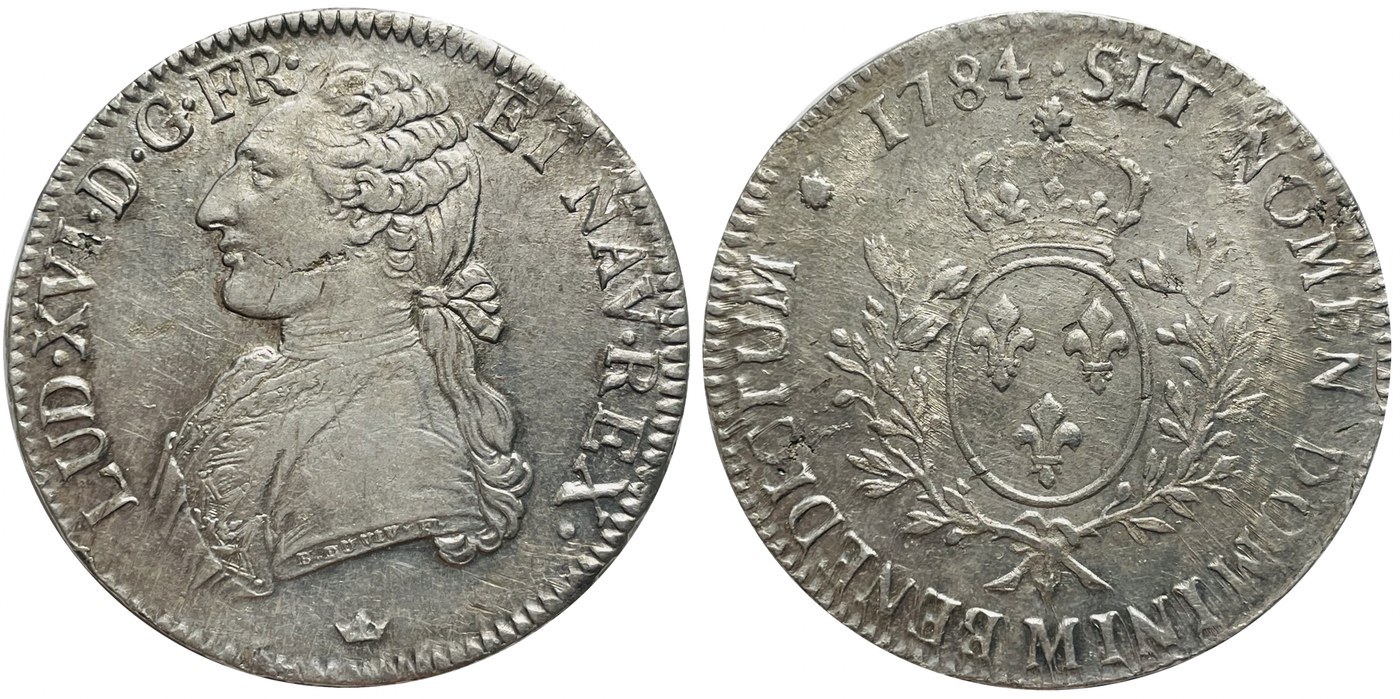
Ecu of Louis XIV
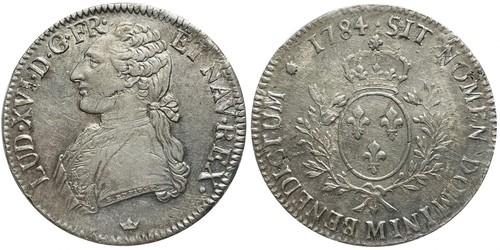
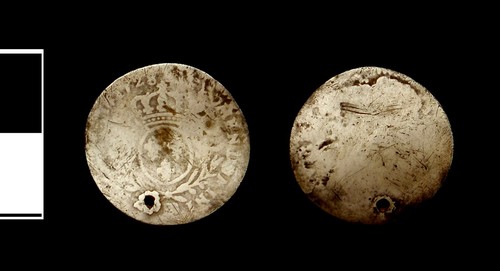
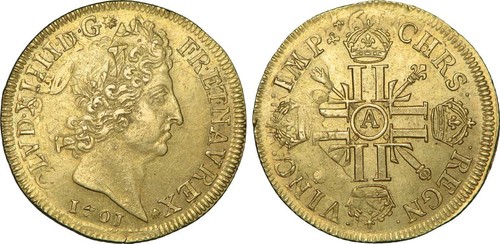
A large silver crown of Louis XIV, the Sun King, showing his laureate or wigged bust facing left and a crowned French shield of fleur-de-lis, dated 1693.
- Country
- France
- Denomination
- Ecu
- Metal
- Silver
Got a coin like this?
Identify any coin from a photo, free.
Overview
The Ecu of Louis XIV is a large silver coin — a crown-sized piece — struck during the long reign of the French king known as the Sun King. This example is dated 1693 and shows the king's mature portrait facing left, wearing the heavy curled wig for which the period is famous. The ecu was the principal high-value silver denomination of the French monarchy, roughly the counterpart of the English crown, the Spanish eight reales or the German thaler.
The obverse carries the royal bust and a Latin legend giving Louis's name and titles; the reverse displays the crowned coat of arms of France, its field filled with the fleur-de-lis, the emblem of the Bourbon and earlier French kings. A surrounding legend invokes divine protection of the realm, a standard formula on French royal silver.
Because the ecu was struck across many years, at many mints, and in several successive portrait and shield designs, no single description fits every piece. What identifies the type is the combination of a large silver module, the left-facing wigged royal bust, and the crowned fleur-de-lis arms of France.
History & Background
Louis XIV reigned from 1643 to 1715, one of the longest reigns in European history, and his silver ecu was reissued repeatedly through those decades. Over the reign the coinage passed through a series of portrait styles — from the young king to the heavily periwigged monarch of his later years — and through several reforms in which older coins were called in and restruck. A piece dated 1693 belongs to the middle of the reign, a period marked by costly wars that placed heavy demands on the royal treasury.
French royal ecus were produced at numerous mints across the kingdom, each identified by a letter or symbol in the design. Reforms of the period sometimes involved overstriking existing coins with new dies, which is why some ecus of these years show faint traces of an earlier undertype beneath the current design. The date and mint together place a given coin within this shifting sequence of issues.
The ecu remained the backbone of French silver coinage until the monarchy itself was swept away. After 1795 the franc replaced the ecu and the livre-based system, so the silver ecu of Louis XIV belongs firmly to the age of the absolute Bourbon monarchy rather than to modern France.
How to Identify
The Ecu of Louis XIV is a large, heavy silver coin, typically around 38–42 mm across and close to an ounce in weight, struck in high-fineness silver. The obverse shows the king's bust facing left, wearing the long curled wig of the era, encircled by a Latin legend naming him — a formula built on LVD(ovicvs) XIIII D(ei) G(ratia) FR(anciae) ET NAV(arrae) REX, "Louis XIV by the grace of God king of France and Navarre."
The reverse presents a crowned shield bearing the fleur-de-lis arms of France, on this design flanked or surrounded by additional royal ornament, with a legend such as SIT NOMEN DOMINI BENEDICTVM ("blessed be the name of the Lord") and the date — here 1693. A single letter beneath or within the reverse marks the mint that struck the coin, and small privy symbols identify the mint officials.
To confirm the type, read the three key features together: the left-facing wigged bust, the crowned coat of arms filled with fleur-de-lis, and the large silver crown-sized module. The precise sub-type is then narrowed by the portrait style, the exact reverse arrangement, the date and the mint letter, since Louis XIV's ecus exist in several distinct series across his reign.
Value & Collectibility
The silver Ecu of Louis XIV is a genuinely old and substantial coin, and its value rests first on its silver content — close to a troy ounce of high-fineness silver — which sets a firm floor well above modern base-metal pieces. Above that floor, price depends heavily on the portrait type, the date, the mint, and above all the condition, since these coins circulated hard and most surviving examples show real wear.
Common dates and mints in worn or damaged grades are affordable and widely available, trading as attractive but modestly priced silver antiques. Scarcer mints, better-preserved portraits, and pieces with clear, sharp detail and original surfaces command substantially higher prices, and rare varieties or high grades can be worth many times a common example.
Overstrikes, adjustment marks, old cleaning and edge knocks are common on ecus of this era and affect value. Because so much depends on the exact date-and-mint combination and on grade, it is best to match a specific coin against recent auction results for the same variety rather than rely on a single catalogue figure.
Frequently asked questions
What is an ecu?
The ecu was the large silver crown of the French monarchy, the highest-value everyday silver coin of its day and a counterpart to the English crown, Spanish eight reales and German thaler. The Ecu of Louis XIV is the version struck during his 1643–1715 reign.
Who is on the front of the coin?
It is Louis XIV, the Sun King, shown facing left in the long curled wig of the period. The surrounding Latin legend names him as Louis XIV, by the grace of God king of France and Navarre.
What do the fleur-de-lis on the back mean?
The reverse shows the crowned coat of arms of France, whose field is filled with fleur-de-lis, the lily emblem of the French crown. It identifies the coin as a royal issue of the Kingdom of France.
Is the Ecu of Louis XIV made of real silver?
Yes. It is a large crown-sized coin struck in high-fineness silver, weighing close to a troy ounce. That silver content sets a base value well above its worn condition alone.
How can I tell where and when it was struck?
The date appears in the reverse legend — 1693 on this example — and a single letter within the reverse design marks the mint. Together the date and mint letter place the coin within Louis XIV's many ecu issues.
Ecu of Louis XIV guides
In-depth guides for identifying, valuing, and collecting Ecu of Louis XIV.