
How to Identify the Ecu of Louis XIV
A collector's guide to the silver Ecu of Louis XIV — reading the wigged royal bust, the crowned fleur-de-lis arms, the mint letter, and spotting overstrikes and fakes.
Read the full Ecu of Louis XIV encyclopedia entry →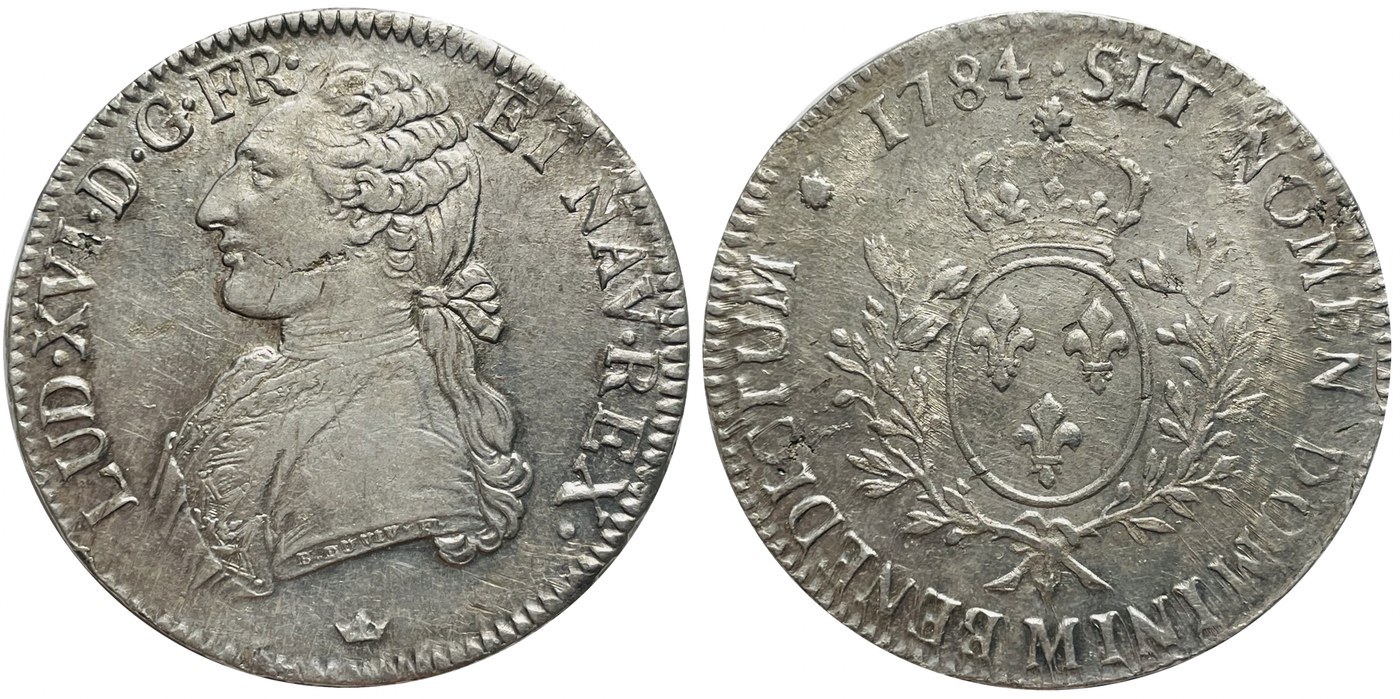
Start with the portrait. An Ecu of Louis XIV shows the king in profile facing left, wearing the heavy curled wig that dates the piece to the later seventeenth or early eighteenth century. Read the Latin legend around him: it is built on LVD XIIII D G FR ET NAV REX, naming Louis XIV as king of France and Navarre. The Roman numeral XIIII (four ones, not IV) is characteristic of French royal coinage and helps confirm the ruler.
Turn to the reverse and confirm the arms. You should see a crowned shield whose field is filled with fleur-de-lis, the emblem of the French crown, encircled by a pious Latin legend such as SIT NOMEN DOMINI BENEDICTVM and the date — 1693 on this coin. Read the date from the legend, and look for a single letter set within the reverse design: this is the mint mark, identifying which of France's many royal mints struck the piece. Small extra symbols beside it are privy marks for the mint officials.
Check size and metal. The ecu is a large crown-sized coin, roughly 38–42 mm across and close to an ounce of high-fineness silver, with a correspondingly hefty feel and a clear ring. A coin of the right design but much smaller or lighter may be a fraction — a half ecu or smaller division — rather than the full ecu, so weigh and measure before concluding the denomination.
Be alert to overstriking and reform marks. Ecus of this reign were sometimes struck over earlier coins during monetary reforms, so faint traces of an underlying design, doubled letters, or ghost outlines are normal for the type rather than signs of damage. Adjustment file-marks, where the blank was filed to correct weight before striking, are also common and original. Do not mistake these period features for defects or for evidence of a fake.
Finally, weigh authenticity carefully. Louis XIV ecus are popular and valuable enough that cast and struck counterfeits exist, including cast copies with soft detail, seams or wrong weight, and modern replicas. Confirm the diameter and weight against references, examine the sharpness of the lettering and the edge, and be cautious of pieces that are underweight, greasy-looking, or show casting bubbles. For any coin bought as a scarce date, mint or high grade, seek an expert opinion or third-party certification before paying a premium.
Frequently asked questions
How do I read the date and mint on the coin?
The date is part of the reverse legend around the crowned arms — 1693 here. A single letter placed within the reverse design marks the mint that struck the coin, and small symbols beside it identify the mint officials. Date plus mint letter pin down the exact issue.
Why does the legend read XIIII instead of IV?
French royal coinage wrote the king's numeral additively, so Louis XIV appears as LVD XIIII rather than LVD IV. Seeing XIIII after the name is a useful confirmation that the coin is an issue of Louis the Fourteenth.
Are the doubled outlines and file marks a problem?
Usually not. Many ecus of this period were overstruck on earlier coins during reforms, leaving faint undertype or doubling, and blanks were often filed to weight, leaving adjustment marks. These are normal period features, though heavy examples can still affect eye appeal and value.
How can I spot a fake ecu?
Check weight and diameter against references first, since many fakes are off. Look for casting seams, surface bubbles, soft mushy lettering, or a dull tone, all warning signs of a cast copy. For any coin bought at a premium, get an expert opinion or third-party certification.