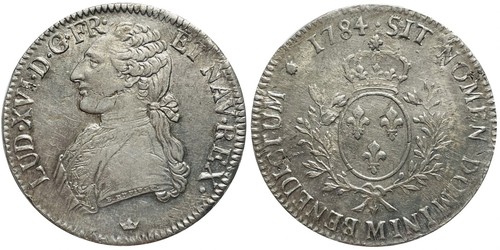
French Half Ecu (Demi-Ecu)
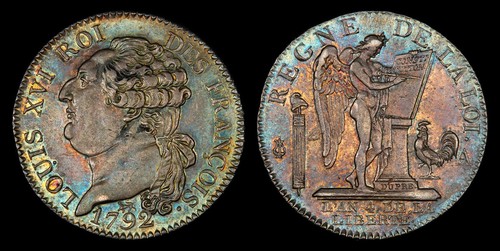
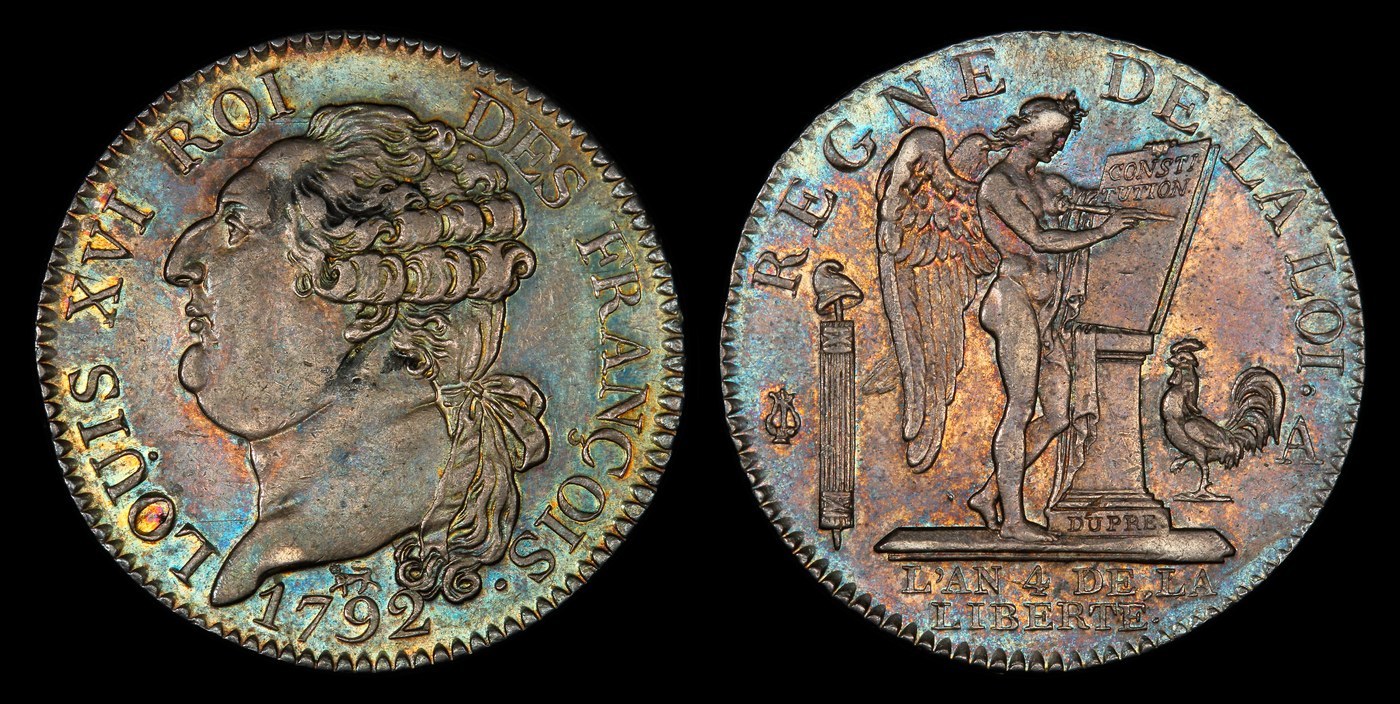
A silver half ecu of Louis XVI dated 1792, with his bust left and a standing winged genius reverse reading L'AN 4 DE LA LIBERTE.
- Country
- France
- Denomination
- 1/2 Ecu
- Metal
- Silver
Got a coin like this?
Identify any coin from a photo, free.
Overview
The French half ecu (demi-ecu) shown here is a large silver coin struck under Louis XVI during the constitutional-monarchy phase of the French Revolution. The obverse carries the king's bust facing left; this example shows attractive iridescent toning across the fields.
The reverse departs sharply from older royal designs: it shows a standing winged genius engraving on an altar, with the revolutionary legend L'AN 4 DE LA LIBERTE ("Year 4 of Liberty"). The date 1792 places it in the brief window when France minted coins bearing both the king and revolutionary iconography, just before the monarchy fell.
History & Background
By 1791-1792 France was a constitutional monarchy: Louis XVI remained king but reigned under the new Constitution. The coinage of this moment reflects that tension, pairing the royal portrait with revolutionary slogans and the winged 'genie' (genius) writing the law, a design by the celebrated engraver Augustin Dupre.
The legend L'AN 4 DE LA LIBERTE counts years from 1789, so 'Year 4' corresponds to 1792. The reverse also typically carries the motto of the reign of law. This transitional series was short-lived: the monarchy was abolished in September 1792 and Louis XVI was executed in January 1793, after which royal portraiture disappeared from French coins.
Because it captures France between monarchy and republic, the constitutional demi-ecu is historically significant far beyond its silver content.
How to Identify
Obverse: the bare or draped bust of Louis XVI facing left, encircled by a Latin/French legend naming him as king of the French. The photographed coin displays iridescent toning over the silver.
Reverse: a standing winged genius (a robed, winged figure) inscribing a tablet or altar, often accompanied by a Gallic cock and fasces. The revolutionary legend L'AN 4 DE LA LIBERTE identifies the type and, with the 1792 date, confirms it as the constitutional issue.
Physical clues: the demi-ecu is a substantial silver coin, roughly a half-crown-sized piece struck in high-grade silver. Look for a mint letter and small privy/engraver marks in the legends, which indicate which French mint produced it.
Value & Collectibility
Value depends heavily on grade, eye appeal, mint, and the strength of the strike. Heavily worn examples sit toward the lower collectible range, while sharply struck coins with original, attractive toning (like the iridescence seen here) command a strong premium.
As a large, historically charged silver coin from the French Revolution, a genuine 1792 constitutional demi-ecu is a solidly collectible piece rather than a bullion-only item. Scarcer mints and higher grades can rise well above common examples.
For a specific figure, compare recent auction results for the same date, mint mark, and grade, and have high-value or uncertain pieces authenticated by a specialist before buying or selling.
Frequently asked questions
What is a demi-ecu?
A demi-ecu is a half ecu, a large French silver coin worth half of the full ecu. This example is a constitutional-monarchy issue of Louis XVI dated 1792.
What does 'L'AN 4 DE LA LIBERTE' mean?
It means 'Year 4 of Liberty.' The count begins in 1789, so Year 4 corresponds to 1792, dating the coin to the constitutional phase of the French Revolution.
Who is on the coin?
The obverse shows Louis XVI, King of France, facing left. He reigned as a constitutional monarch until the monarchy was abolished in 1792.
What is the figure on the reverse?
It is a winged genius (genie) inscribing an altar or tablet, a revolutionary allegory by the engraver Augustin Dupre representing the reign of law.
Is it real silver?
Yes. The demi-ecu was struck in high-grade silver, which is part of why these Revolution-era coins remain desirable to collectors.
French Half Ecu (Demi-Ecu) guides
In-depth guides for identifying, valuing, and collecting French Half Ecu (Demi-Ecu).