
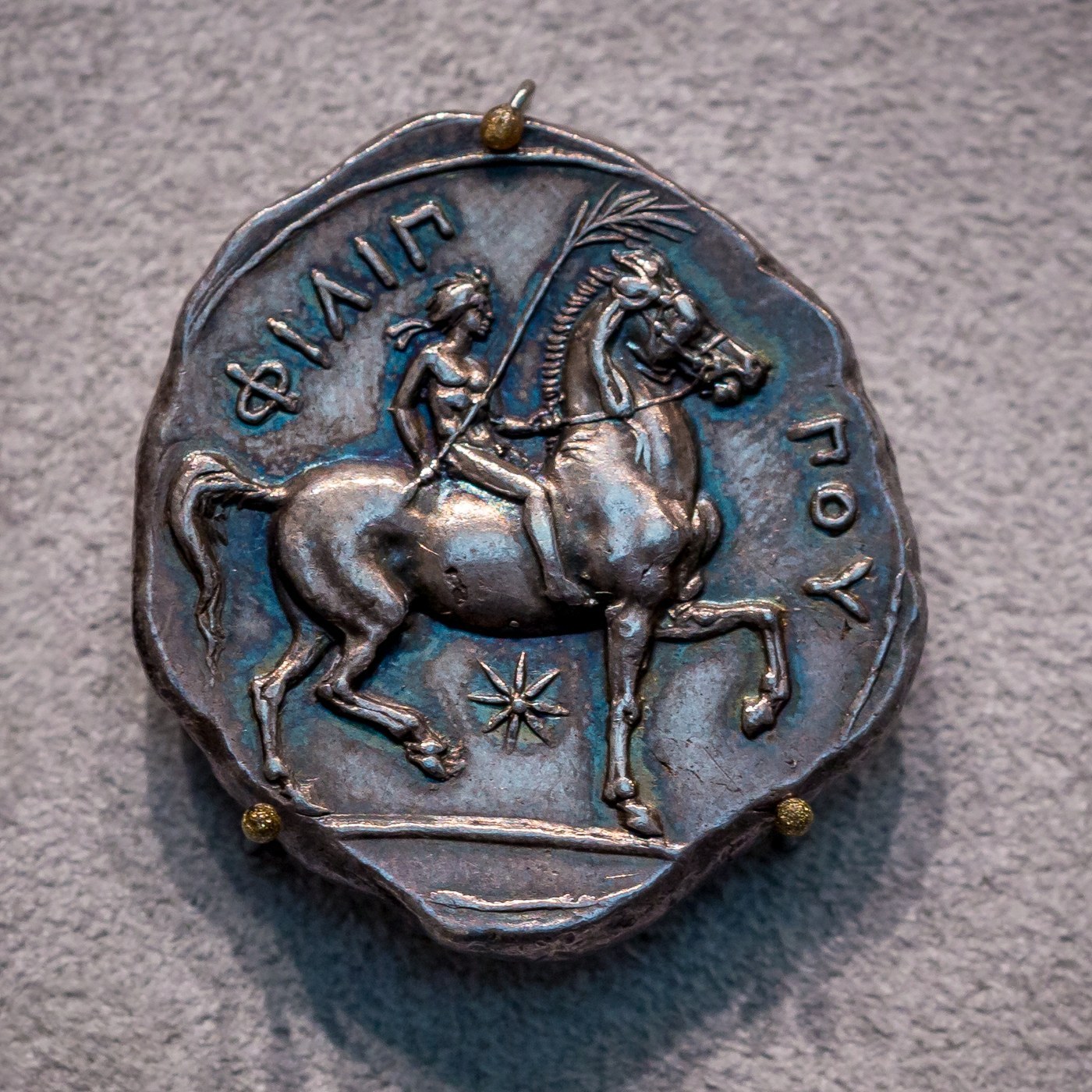
Philip II Tetradrachm
A large silver coin of the Macedonian kingdom showing the laureate head of Zeus and a youthful horseman, struck under and after Philip II.
- Country
- Macedonia
- Denomination
- Tetradrachm
- Metal
- Silver
Got a coin like this?
Identify any coin from a photo, free.
Overview
The Philip II tetradrachm is a large silver coin of the ancient kingdom of Macedonia, named for King Philip II (reigned 359-336 BC), the father of Alexander the Great. It carries a laureate head of Zeus on the obverse and a youth riding a horse on the reverse, a pairing that became one of the most recognizable designs of the Greek world.
The tetradrachm was worth four drachms and served as a major trade and payment coin. Struck from good silver at a weight of roughly seventeen grams, it circulated widely across Macedonia, Greece, and beyond, and was imitated by peoples to the north and west long after Philip's death.
The examples dated here to 336-328 BC fall in the period around and just after Philip's assassination, when the type continued to be struck in his name under Alexander III and later authorities. Coins of this design remained in production for decades, making them among the most familiar surviving silver pieces of the Macedonian kingdom.
History & Background
Philip II transformed Macedonia from a peripheral kingdom into the dominant power of the Greek world, funding his army and diplomacy in part from the rich silver and gold mines he controlled in the north, especially around the Pangaion region. This bullion allowed Macedonia to strike coinage in great quantity, and the tetradrachm became a principal vehicle for that silver.
The horseman reverse is usually read as a celebration of Macedonian horsemanship and of Philip's Olympic connections; the king's horses won at the Olympic games, and the youthful rider, sometimes shown carrying a palm branch, is often linked to those victories. The laureate Zeus obverse asserted the kingdom's ties to the chief Greek god and lent the coinage a Panhellenic dignity.
Production did not stop at Philip's death in 336 BC. His son Alexander III continued to issue tetradrachms in Philip's name, and the type was struck at Macedonian mints for years afterward, with later phases running into the reign of Philip III and beyond. The coins observed here, assigned to about 336-328 BC, belong to this continuing posthumous coinage rather than solely to Philip's lifetime.
How to Identify
The obverse shows the laureate head of Zeus facing right, the god crowned with a wreath of laurel and rendered with a full beard and flowing hair. This dignified male head, without any inscription around it, is the immediate marker of the type and should not be confused with the youthful, clean-shaven or lion-scalp portraits found on Alexander's own coins.
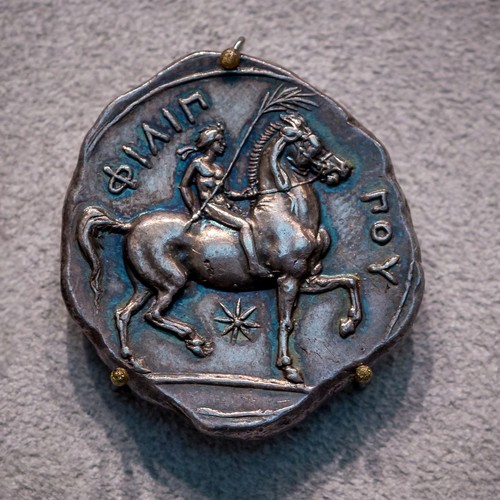
The reverse depicts a nude or lightly draped youth on horseback moving right, frequently raising a hand or holding a palm or branch. Small symbols, control marks, or letters commonly appear in the field, and on many issues small stars or star-like ornaments accompany the rider, matching the starred horseman seen on this coin. A Greek legend reading ΦΙΛΙΠΠΟΥ ("of Philip") typically runs near the horseman, naming the coinage.
In hand the coin is a substantial piece of silver, generally in the range of about 23 to 26 mm across and close to seventeen grams. It is hand-struck, so centering, flan shape, and strike sharpness vary from coin to coin, and the fields often show the slightly irregular surfaces expected of ancient hammered coinage.
Value & Collectibility
Philip II tetradrachms are collectible but were struck in large numbers over many years, so they are not rare in absolute terms. Well-worn or off-center examples with weak detail commonly trade in the low-to-mid hundreds of dollars, while sharply struck, well-centered coins with attractive metal and clear symbols can reach the high hundreds to several thousand.
Value is driven by the quality of the strike and centering, the state of the silver surfaces, the specific mint and control marks, and overall eye appeal. Coins tied by their symbols to particular mints or issues, or with strong provenance, can command premiums, and exceptional examples in top grade sit well above the ranges given here.
The figures here are general context, not appraisals. Because these coins are widely faked and closely imitated, authentication has a direct bearing on value, and a piece with a credible attribution or trusted pedigree will always be worth more than an unverified one.
Frequently asked questions
Does this coin show Philip II himself?
No. The bearded head on the obverse is the god Zeus wearing a laurel wreath, not a portrait of the king. Philip's name appears in the reverse legend, ΦΙΛΙΠΠΟΥ, but ancient royal coins of this era did not usually carry the living king's portrait.
Who is the rider on the reverse?
The youthful horseman is generally understood as a celebration of Macedonian cavalry and of Philip's Olympic horse-racing victories. He is often shown raising a hand or holding a palm branch, and small stars or symbols may appear in the field.
Was it really struck during Philip's lifetime?
Some were, but the type continued in Philip's name after his death in 336 BC. Coins dated to about 336-328 BC belong to this posthumous coinage struck under Alexander III and later authorities at Macedonian mints.
How big is a tetradrachm?
A tetradrachm was worth four drachms. This one is a large silver coin, roughly 23 to 26 mm across and close to seventeen grams, making it one of the heftier Greek silver denominations of its day.
Philip II Tetradrachm guides
In-depth guides for identifying, valuing, and collecting Philip II Tetradrachm.
Other coins you may enjoy
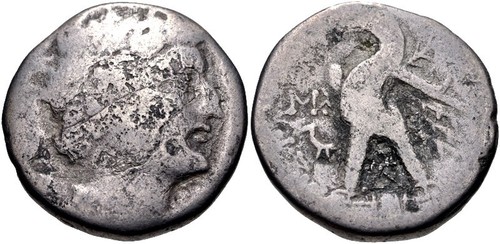
Tetradrachm of Ptolemy XII
80-51 BC
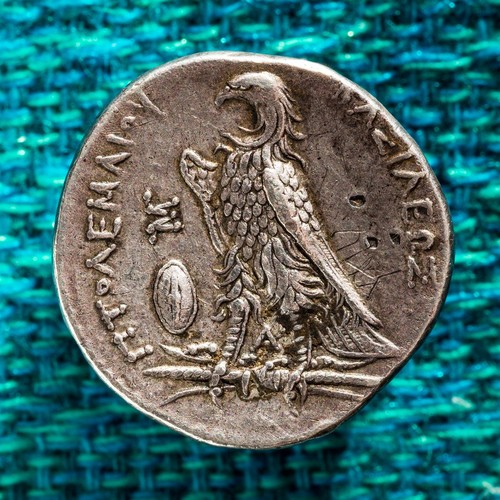
Tetradrachm of Ptolemy I
305-283 BC
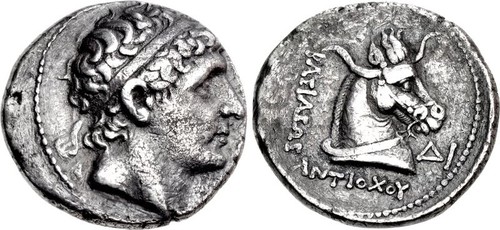
Tetradrachm of Antiochos I Soter
281-261 BC
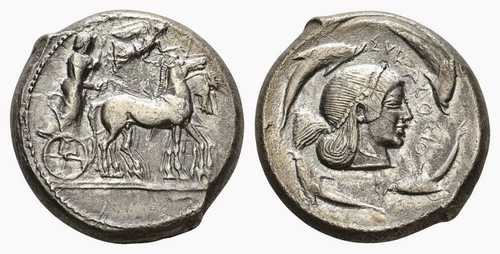
Syracuse Tetradrachm
c. 5th-4th century BC (Classical period)
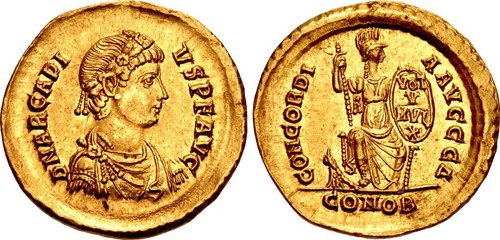
Solidus of Arcadius
AD 395-402
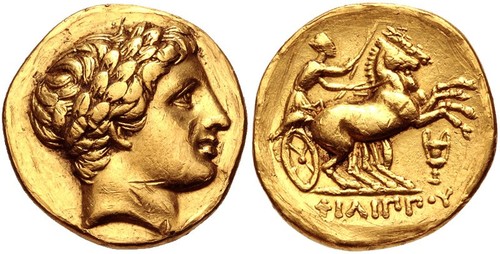
Philip III Gold Stater
323-317 BC
Siliqua of Gratian
AD 367-383
Sestertius of Maximinus Thrax
235-238 AD
Solidus of Valentinian III
AD 425-455
Seleucus I Nicator Tetradrachm
Late 4th-3rd century BC
Nummus of Magnentius
AD 350-353
Follis of Galerius
AD 308-310