
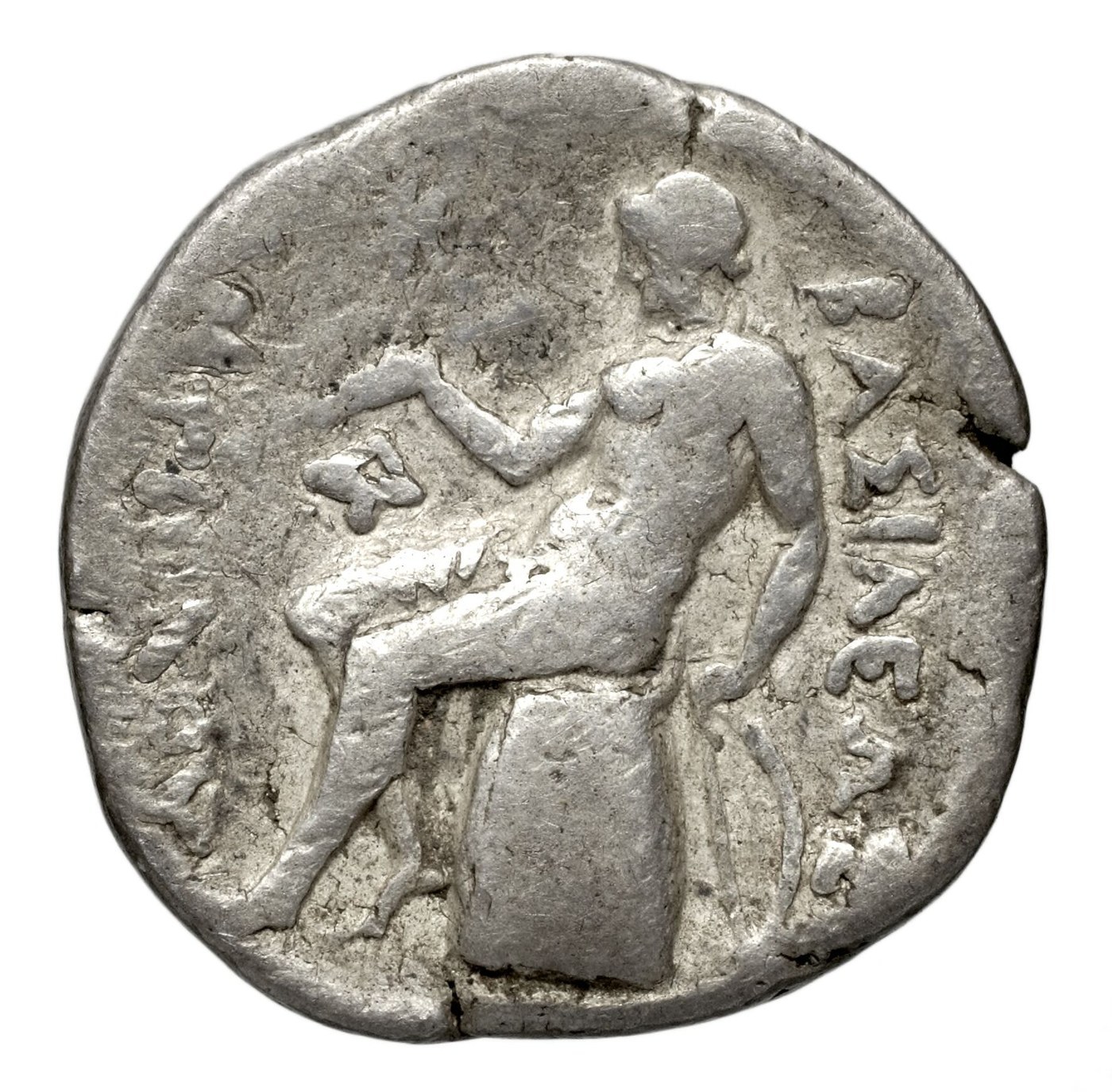
Drachm of Antiochos II Theos
Silver drachm struck under Antiochos II Theos of the Seleukid realm, showing a seated helmeted Athena and, on the reverse, Nike beside an altar.
- Country
- Ancient Bactria
- Denomination
- Drachm
- Metal
- Silver
Got a coin like this?
Identify any coin from a photo, free.
Overview
The drachm of Antiochos II Theos is an ancient Greek silver coin issued during the reign of the Seleukid king Antiochos II (ruled roughly 261-246 BC), whose empire at its height reached across Asia into the region of Bactria in what is now Afghanistan and Central Asia. This example shows a seated figure of Athena wearing a crested helmet on the obverse, and a standing Nike beside an altar on the reverse, accompanied by the Greek royal legend naming the king.
Athena, the armed goddess of war and wisdom, and Nike, the personification of victory, are traditional Greek symbols of martial success and divine favor, well suited to a Hellenistic monarch presenting himself as heir to Alexander's conquests. The pairing of the two, together with the altar, frames the coin as an assertion of victory and piety by the ruling house.
Because Seleukid silver was struck at many mints across a vast territory, coins in the name of Antiochos II are told apart less by any date and more by their imagery, legend, and the small control marks in the field. The drachm is a smaller silver denomination than the more familiar tetradrachm, struck on a lighter and thinner flan.
History & Background
Antiochos II Theos was a king of the Seleukid dynasty, the Greek-Macedonian house founded by Seleukos I Nikator, one of the generals who divided Alexander the Great's empire after 323 BC. Ruling in the mid-third century BC, Antiochos II inherited a sprawling realm stretching from Asia Minor and Syria eastward toward the Iranian plateau and the frontier province of Bactria. His epithet "Theos," meaning "the God," reflects the Hellenistic practice of according divine honors to living kings.
His reign was marked by continual warfare, including the drawn-out conflict with Ptolemaic Egypt known as the Second Syrian War, and by growing strain on the empire's eastern edge. It was during and shortly after his reign that Bactria began to break away under its own Greek governors, giving rise to the independent Greco-Bactrian kingdom. Coins struck in his name in the eastern provinces belong to this pivotal moment before that separation.
Seleukid coinage served to pay soldiers and officials and to project royal authority across an enormous, culturally mixed territory. Types drawing on the shared Greek repertoire of gods and personifications, such as Athena and Nike, spoke a visual language that Greek settlers, soldiers, and local elites across the realm could all read as emblems of the king's power and success.
How to Identify
Begin with the obverse. This coin shows a seated Athena wearing a crested helmet, the goddess identifiable by her military headgear and armed bearing. Athena is a standard Hellenistic emblem of martial strength, and the seated pose within the round flan is the primary device on this side. There may be little or no legend on the obverse, so the imagery carries the identification.
The reverse shows a standing Nike, the winged figure of Victory, beside an altar, together with a Greek royal legend naming the king (of the form BASILEWS ANTIOCHOU, "of King Antiochos"). Small symbols and monograms typically appear in the field; on Seleukid coinage these control marks identify the mint and issue and are the key to attributing a given piece. Reading the legend and matching the control marks is how the coin is tied specifically to Antiochos II rather than to another Antiochos of the dynasty.
In hand this is a small silver coin. A drachm of the period is on the order of about 4 grams and roughly 15-18 mm across, thinner and lighter than the Seleukid tetradrachm, which is about four times the weight. The metal is good silver, usually toned grey with age. Because dies were cut by many hands across the empire, style varies, and worn coins can be difficult to read; the combination of the seated Athena, the Nike-and-altar reverse, and the royal legend is what secures the identification.
Value & Collectibility
Seleukid silver in the name of Antiochos II is collectible ancient Greek coinage, and drachms are generally more affordable than the larger tetradrachms of the same king. Well-worn but clearly identifiable examples commonly trade in the low tens to low hundreds of dollars, while sharply struck, well-centered coins with clear devices and legend can bring more, and scarce mints or unusual issues carry premiums.
Value is driven by the strength of the imagery, centering, toning, the specific mint and control marks, and overall eye appeal, as well as by secure attribution to Antiochos II rather than a broader "Seleukid" listing. Eastern and Bactrian-frontier issues can attract specialist interest, which may affect price.
These figures are general context, not appraisals. Any particular coin's price depends heavily on condition, style, mint, and authenticity, and higher-value examples are often sold with specialist attribution or third-party certification.
Frequently asked questions
Who was Antiochos II Theos?
He was a Seleukid king who ruled in the mid-third century BC (about 261-246 BC), a descendant of Seleukos I who governed a large Hellenistic empire reaching from Asia Minor toward Bactria. His epithet "Theos" means "the God."
Who are the figures on this coin?
The obverse shows Athena, the helmeted goddess of war and wisdom, seated; the reverse shows Nike, the winged personification of Victory, standing beside an altar. Both are traditional Greek symbols of martial success and divine favor.
Why is it linked to Bactria?
Bactria was the eastern frontier province of the Seleukid empire during Antiochos II's reign, in modern Afghanistan and Central Asia. It was around this time that Bactria began breaking away to form the independent Greco-Bactrian kingdom, making the region historically significant for coins of this era.
How is the drachm different from a tetradrachm of the same king?
They share the Seleukid royal coinage tradition, but the drachm is much smaller and lighter, roughly 4 grams versus about 17 grams for the tetradrachm. The drachm is the smaller everyday silver denomination.
How do I know it is Antiochos II and not another Antiochos?
The Greek legend names "King Antiochos," and several Seleukid kings bore that name. Distinguishing Antiochos II relies on style, the specific reverse type, and the control marks, which specialists match against reference catalogues to fix the correct king and mint.
Drachm of Antiochos II Theos guides
In-depth guides for identifying, valuing, and collecting Drachm of Antiochos II Theos.
Other coins you may enjoy
Tetradrachm of Ptolemy XII
80-51 BC
Tetradrachm of Ptolemy I
305-283 BC
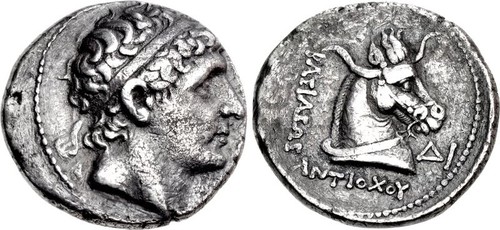
Tetradrachm of Antiochos I Soter
281-261 BC
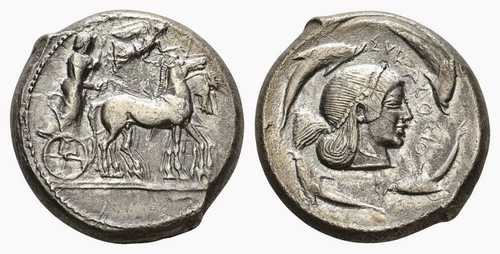
Syracuse Tetradrachm
c. 5th-4th century BC (Classical period)
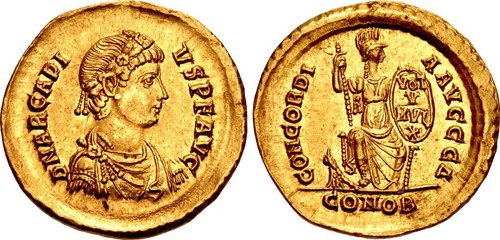
Solidus of Arcadius
AD 395-402
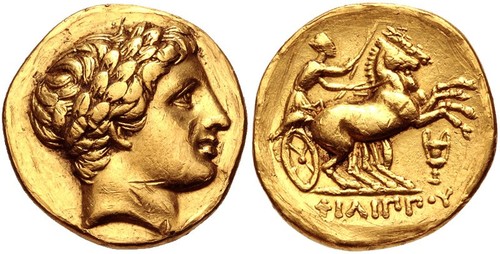
Philip III Gold Stater
323-317 BC
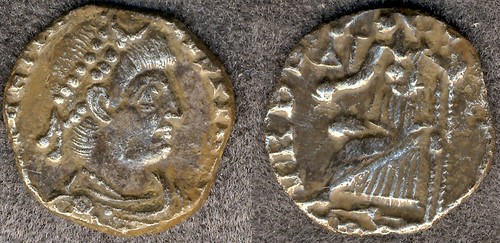
Siliqua of Gratian
AD 367-383
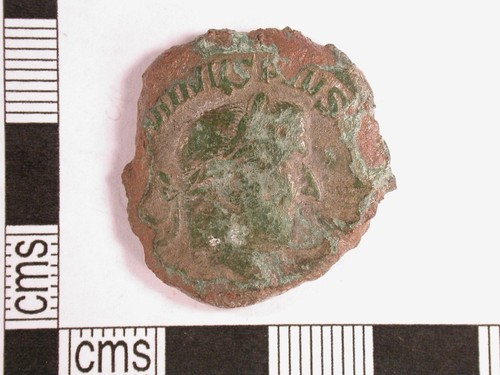
Sestertius of Maximinus Thrax
235-238 AD
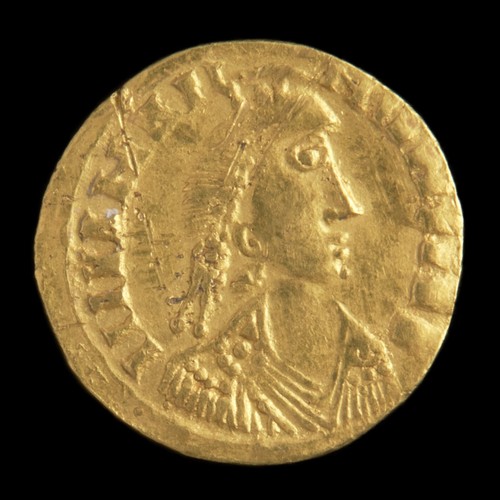
Solidus of Valentinian III
AD 425-455
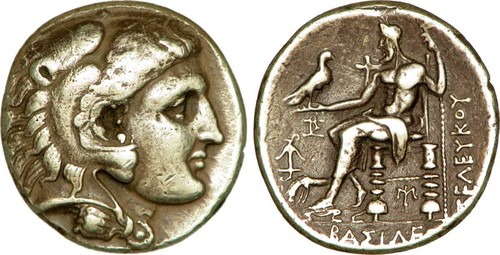
Seleucus I Nicator Tetradrachm
Late 4th-3rd century BC
Nummus of Magnentius
AD 350-353
Follis of Galerius
AD 308-310