
How to Identify the Drachm of Antiochos II Theos
A collector's guide to recognizing this Seleukid silver drachm by its seated helmeted Athena, Nike-and-altar reverse, royal legend, and control marks.
Read the full Drachm of Antiochos II Theos encyclopedia entry →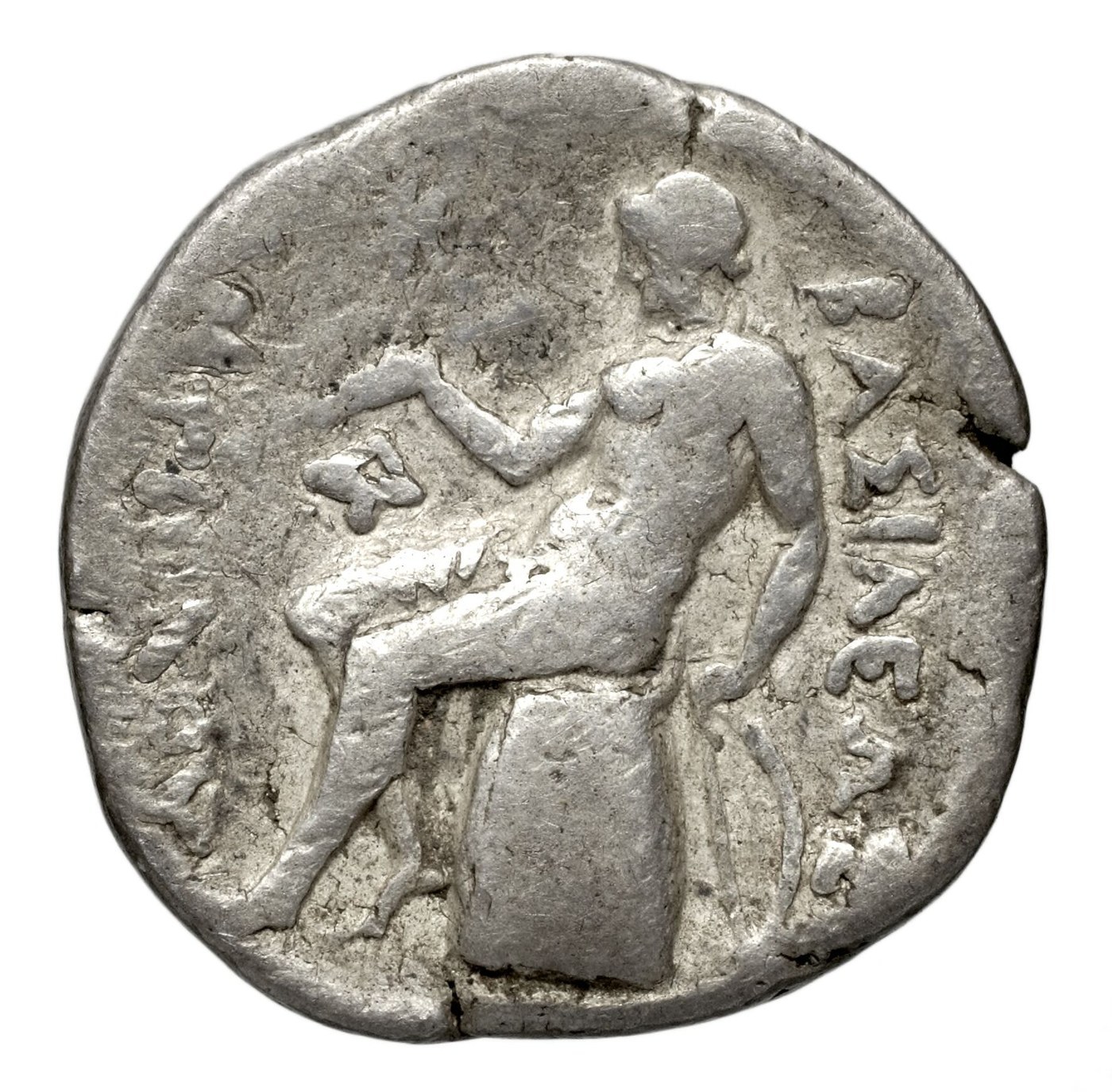
Start with the obverse device. This drachm shows a seated Athena in a crested helmet, the goddess recognizable by her military headgear and armed pose. Confirm you are looking at a helmeted seated figure and not a diademed royal portrait, since many Seleukid silver coins instead carry the king's head; the seated Athena is the primary obverse diagnostic here. There is usually little or no legend on this side, so the figure itself does the work.
Turn to the reverse and read both the image and the words. Look for a standing Nike, winged and often holding a wreath, next to an altar, with a Greek legend of the form BASILEWS ANTIOCHOU running in the field. The legend naming "King Antiochos" places the coin in the dynasty, while the Nike-and-altar composition and the arrangement of the letters help pin down the issue. Because several Seleukid kings were named Antiochos, the reverse type and control marks, not the name alone, are what tie the coin specifically to Antiochos II.
Use size, weight, and metal to fix the denomination. A drachm of this period is a small, thin silver coin of roughly 4 grams and about 15-18 mm across. If a coin with related types weighs around 17 grams and spans 25 mm or more, it is a tetradrachm, not a drachm; weighing the coin is the reliable way to separate the denominations. The metal should be good silver, typically toned grey, with the honest surfaces and wear of an ancient struck coin.
Read the control marks to attribute the piece. Symbols and monograms in the reverse field identify the mint and issue on Seleukid coinage, and standard references catalogue them. A coin whose style, legend, and control marks do not match a recorded combination for Antiochos II deserves closer scrutiny, and eastern or Bactrian-frontier issues in particular reward careful attribution.
Finally, weigh look-alikes and authenticity. Coins of other Seleukid kings named Antiochos, and later Greco-Bactrian issues, can share a similar visual vocabulary, so do not stop at the name in the legend. Cast forgeries show an edge seam, soft mushy detail, and a dull non-metallic surface, while tooled coins show unnaturally sharp scratchy detail added to worn metal. For any higher-grade or higher-priced example, seek specialist attribution or third-party certification and, where possible, documented provenance.
Frequently asked questions
How do I tell this from a coin of a different Antiochos?
The legend names "King Antiochos," but several Seleukid rulers shared that name. Rely on the specific reverse type, the style of the devices, and the control marks, which specialists match against reference catalogues to confirm Antiochos II rather than another king.
How do I separate a drachm from a tetradrachm?
Weigh and measure it. The drachm is small and thin at roughly 4 grams and about 15-18 mm, while the tetradrachm is about 17 grams and 25 mm or more. Size and weight are the dependable way to tell the silver denominations apart.
What are the little symbols on the reverse for?
They are control marks, small symbols and monograms that identify the mint and issue. Matching the specific combination against reference catalogues is how an otherwise similar Seleukid drachm is attributed to a particular mint and issue.
What are the main warning signs of a fake?
An edge seam, soft blurry detail, and a dull cast-looking surface suggest a forgery, and unnaturally sharp scratchy detail on worn metal suggests tooling. For a more valuable example, seek specialist attribution or certification before relying on it.