
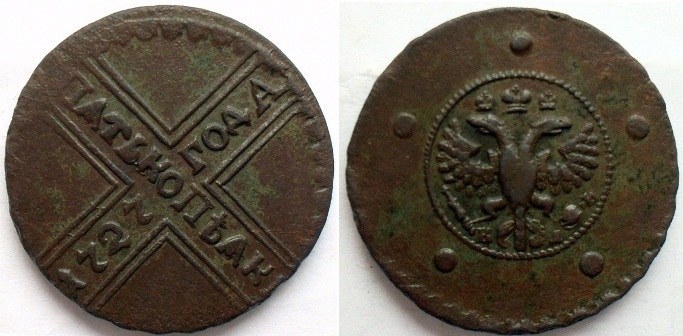
5 Kopecks (Catherine II)
Large copper 5 Kopecks of Catherine the Great, dated 1790 with the EM mint mark, showing a crowned monogram and the imperial double-headed eagle.
- Country
- Russia
- Denomination
- 5 Kopecks
- Metal
- Copper
Got a coin like this?
Identify any coin from a photo, free.
Overview
The 5 Kopecks of Catherine II is a large copper coin of Imperial Russia, part of the workhorse copper coinage struck throughout Catherine the Great's long reign. This example is dated 1790 and carries the mint mark EM (ЕМ), for the Ekaterinburg mint in the Urals, which supplied much of the empire's copper money.
It is a substantial, heavy piece, often called a "pyatak" in Russian, and was a familiar denomination in everyday circulation. The obverse displays a crowned monogram with the value and date, while the reverse bears the imperial double-headed eagle. Its size and weight reflect the intrinsic-value approach to copper coinage of the period.
Because the 5 Kopecks was struck in enormous quantities over many years and at several mints, it is one of the most commonly encountered eighteenth-century Russian coins today. It appeals to collectors of Imperial Russia, of Catherine the Great's reign, and of large early copper more generally.
History & Background
Catherine II, known as Catherine the Great, reigned as Empress of Russia from 1762 to 1796, a period of expansion and reform. Her government continued the large-denomination copper coinage inherited from earlier reigns, with the 5 Kopecks serving as a heavy, high-value copper piece for everyday transactions across a vast empire.
Much of this copper was struck at Ekaterinburg, the mint whose EM mark appears on this 1790 coin, using ore from the mineral-rich Urals. Coins were produced year after year in great volume, which is why dated pieces like the 1790 survive in quantity and why the type is so strongly associated with Catherine's era.
The 5 Kopecks copper type outlasted individual reigns, and the double-headed eagle reverse and crowned monogram formula link this coin to the broader tradition of Imperial Russian coinage. Coins of this kind circulated heavily and later became a staple of collections documenting eighteenth-century Russia.
How to Identify
The obverse shows a crowned monogram (the intertwined cipher of the ruler) at center, with the value written in Cyrillic and the date 1790 together with the letters ЕМ (EM) identifying the Ekaterinburg mint. The mint mark is a key attribution point, as the same type was struck at other mints under different letters.
The reverse carries the Russian imperial double-headed eagle, crowned and holding its regalia, framed within a wreath. The eagle is the state emblem of Imperial Russia and, together with the crowned monogram, marks the coin unmistakably as an Imperial Russian issue rather than a regional or foreign copper.
This is a large, thick copper coin, heavy in hand, with brown to reddish-brown surfaces typical of aged copper. Key identifiers are the crowned monogram with value and 1790 ЕМ on one side, the double-headed eagle in a wreath on the other, the copper metal, and the broad, weighty planchet characteristic of the 5 Kopecks denomination.
Value & Collectibility
As a common large copper of Catherine the Great, the 5 Kopecks is affordable and widely available. Well-worn circulated examples typically trade in the low tens of dollars, while sharper coins with clear monogram, eagle, and date detail bring more as demand for attractive early Russian copper stays steady.
Condition drives the price spread. Because these coins circulated heavily and are big copper pieces, wear, corrosion, and old cleaning are common, so problem-free coins with even brown surfaces and strong strike are worth clearly more than pitted, holed, or harshly cleaned examples. Mint mark, date, and any scarcer variety can also affect value.
Exact prices depend on grade, surfaces, variety, and market conditions, so treat these as general ranges rather than fixed quotes. Choice, high-grade, or scarce-variety pieces can command significant premiums, while damaged or corroded coins trade well below sound examples.
Frequently asked questions
What does the ЕМ (EM) mark on the 1790 5 Kopecks mean?
EM stands for the Ekaterinburg mint in the Urals, which struck much of Russia's copper coinage. The letters next to the date identify where this coin was made.
Is this coin made of silver?
No. The 5 Kopecks of Catherine II is a large copper coin. Its value comes from collector interest and condition, not precious-metal content, and its surfaces show the brown tones of aged copper.
Whose monogram is on the obverse?
The crowned monogram is the cipher of Catherine II (Catherine the Great), who reigned from 1762 to 1796. It appears with the value and the date 1790.
What is the bird on the reverse?
It is the Russian imperial double-headed eagle, the state emblem of Imperial Russia, shown crowned and holding regalia within a wreath.
Is the 1790 5 Kopecks rare?
No. It was struck in very large numbers over many years, so it is one of the more common eighteenth-century Russian coins. Value depends mainly on condition and any scarcer variety.
5 Kopecks (Catherine II) guides
In-depth guides for identifying, valuing, and collecting 5 Kopecks (Catherine II).
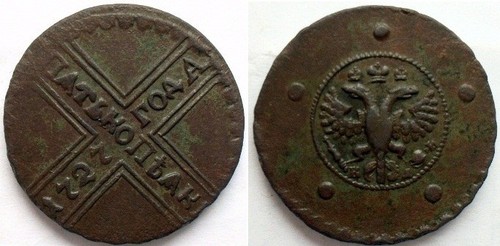
5 Kopecks (Catherine II) identified by the community
Real coins identified with Coin Identifier.
Other coins you may enjoy
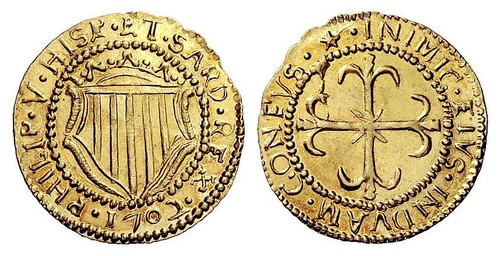
Scudo (Philip V)
c. 1701–1708
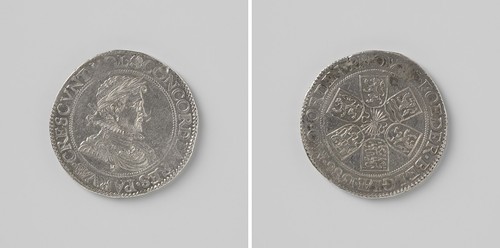
Rijksdaalder van Leicester
1580s-1590s
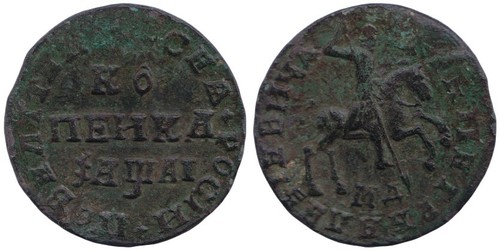
Kopek (Peter I)
c. 1704–1718 (observed 1711)
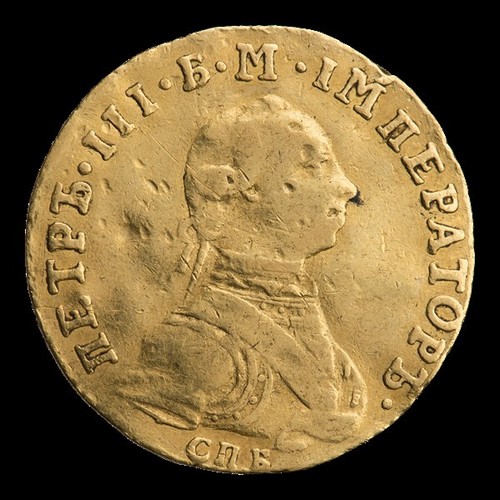
Imperial Chervonets
1762
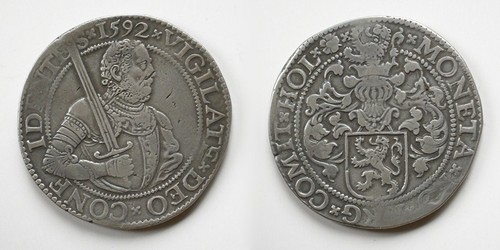
Prinsendaalder (Rijksdaalder)
1592
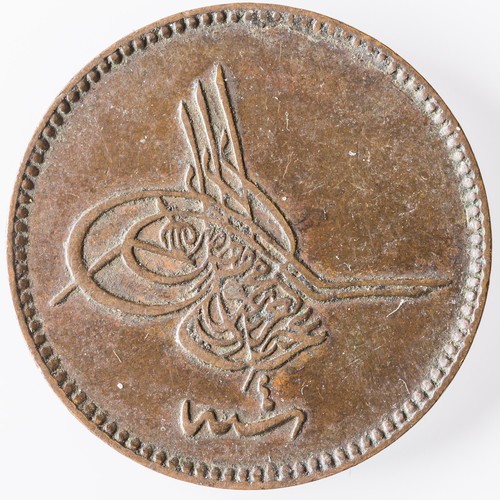
10 Para
AH 1280 (1863-1864 CE)
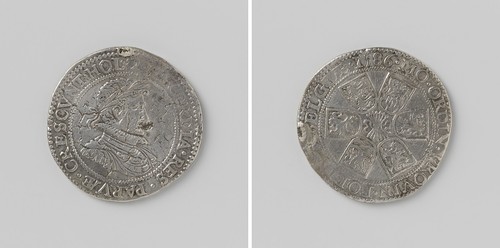
Halve Rijksdaalder van Leicester
1580s-1590s
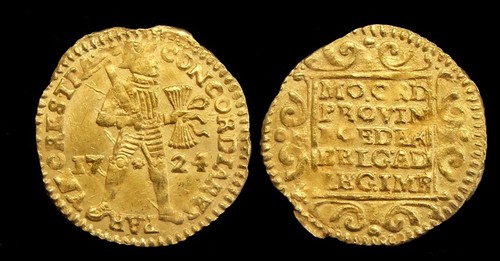
Gouden Dukaat
1724
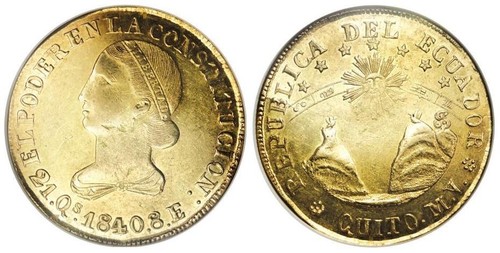
Escudo (Joanna and Charles V, contemporary copy)
1516-1558
Duit (VOC)
1790
4 Escudos
1780s
Tymf
1663