
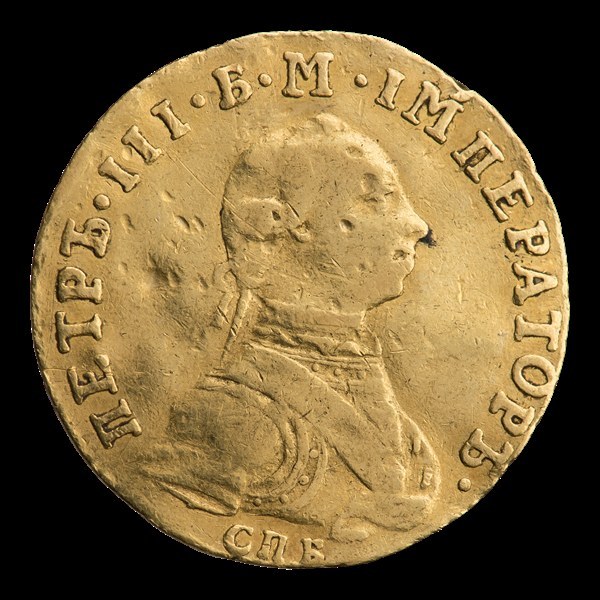
Imperial Chervonets
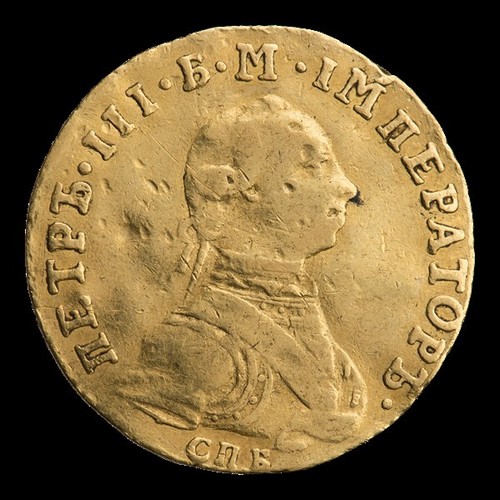
A small imperial Russian gold chervonets bearing the right-facing bust of Peter III with regalia and the crowned double-headed eagle, dated 1762.
- Country
- Russia
- Denomination
- Chervonets
- Metal
- Gold
Got a coin like this?
Identify any coin from a photo, free.
Overview
The Imperial Chervonets is a small, high-purity gold coin of the Russian Empire. The example shown carries the right-facing armored and robed bust of Emperor Peter III on the obverse and the crowned double-headed imperial eagle on the reverse, dated 1762, the single year of Peter III's short reign.
The chervonets was Russia's traditional gold trade coin, struck to a standard close to the widely circulated Dutch ducat rather than to a fixed rouble denomination. It carries no stated face value in numerals; instead its worth came from its gold content and the imperial guarantee implied by the portrait and arms.
As a one-year type tied to a ruler who held the throne only months before being deposed, the Peter III chervonets is a scarce and historically charged piece, prized far more for its rarity and imperial associations than for its modest bullion weight.
History & Background
Peter III reigned as Emperor of Russia for only about six months in 1762, from the death of his aunt Empress Elizabeth in January until he was overthrown in a palace coup that summer that brought his wife, Catherine II (Catherine the Great), to the throne. Coinage bearing his portrait was therefore produced during a very brief window, making all of his issues short-lived types.
The chervonets itself was an older Russian institution. Reintroduced in the era of Peter the Great, it served as a prestige gold trade coin whose weight and fineness mirrored the internationally trusted ducat, allowing it to function in foreign commerce. Successive rulers, including Elizabeth and Peter III, continued striking chervontsy to this pattern.
Because Peter III's reign was cut short, gold struck in his name is uncommon. The 1762 chervonets belongs to the final phase of Russia's eighteenth-century imperial gold coinage before Catherine II's long reign reshaped the empire's money.
How to Identify
The obverse shows a bare-headed bust of the emperor facing right, shown with armor and an imperial mantle, surrounded by a Cyrillic legend naming him as emperor and autocrat of all the Russias (of the form ПЕТРЪ ... ИМПЕРАТОРЪ ... САМОДЕРЖЕЦЪ). The right-facing portrait and this titulature are the primary markers of a Peter III issue.
The reverse displays the double-headed imperial eagle wearing crowns, with a central shield on its breast (bearing the St. George arms of Moscow) and the date 1762. The eagle, not a stated denomination, dominates the field, consistent with the chervonets tradition of carrying no numeric face value.
Physically this is a small, thin gold coin of high purity, roughly the size and weight of a ducat (on the order of about 3.4 grams and around 20 mm). Its diminutive size, high gold color, portrait of Peter III, crowned double-headed eagle, and 1762 date together identify the type.
Value & Collectibility
As a rare one-year imperial gold type, the Peter III chervonets is a significant numismatic item whose value rests chiefly on scarcity and historical importance rather than on its small gold weight. Genuine examples are seldom offered and, when they appear, are typically high-value coins well beyond common bullion pieces.
Because survivors are few and demand for imperial Russian gold is strong, condition, originality, and secure provenance heavily influence price, and the market for such rarities can vary widely. Any specific figure should be treated as approximate and confirmed against recent auction results for comparable certified examples.
The rarity and desirability of this type also make it a frequent target for forgery, so authenticity, not just grade, is the dominant factor in what a genuine coin is worth. Cast copies, altered dates, and modern replicas trade for a tiny fraction of an authenticated original.
Frequently asked questions
Does the chervonets show a face value?
No. Like other chervontsy, it carries no numeric denomination. Its value came from its gold content and fineness, which matched the internationally trusted ducat standard used in trade.
Who is on the obverse?
The right-facing bust in armor and mantle is Emperor Peter III of Russia, identified by the Cyrillic legend naming him emperor and autocrat. He reigned only in 1762.
Why is a Peter III coin scarce?
Peter III ruled for only about six months in 1762 before being deposed by Catherine the Great, so coinage in his name was struck briefly and survives in small numbers.
What is on the reverse?
The reverse shows the crowned double-headed imperial eagle with a central breast shield and the date 1762, the traditional Russian imperial arms rather than a stated value.
Is it made of real gold?
Yes. The chervonets is a high-purity gold trade coin, small and thin, struck to roughly ducat weight. Its gold content is part of why the type was used in international commerce.
Imperial Chervonets guides
In-depth guides for identifying, valuing, and collecting Imperial Chervonets.
Other coins you may enjoy
Scudo (Philip V)
c. 1701–1708
Rijksdaalder van Leicester
1580s-1590s
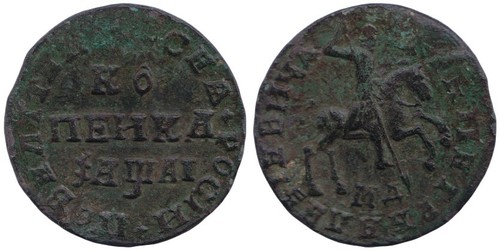
Kopek (Peter I)
c. 1704–1718 (observed 1711)
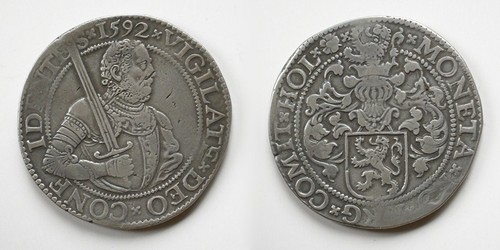
Prinsendaalder (Rijksdaalder)
1592
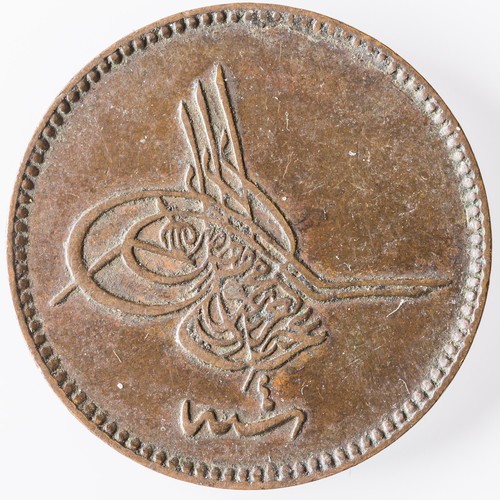
10 Para
AH 1280 (1863-1864 CE)
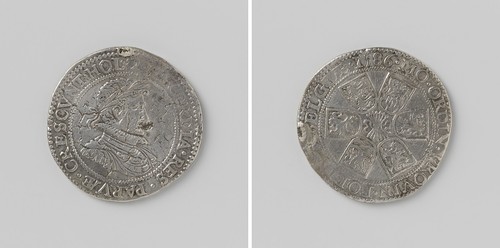
Halve Rijksdaalder van Leicester
1580s-1590s
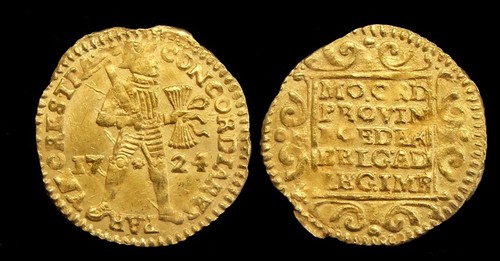
Gouden Dukaat
1724
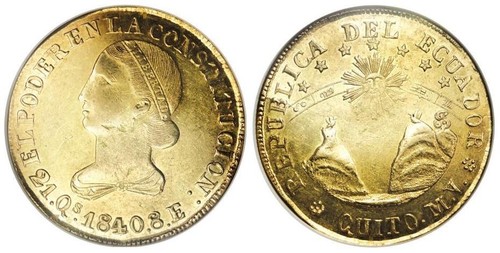
Escudo (Joanna and Charles V, contemporary copy)
1516-1558
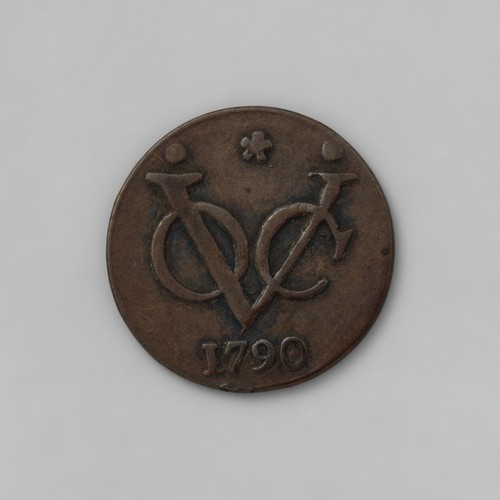
Duit (VOC)
1790
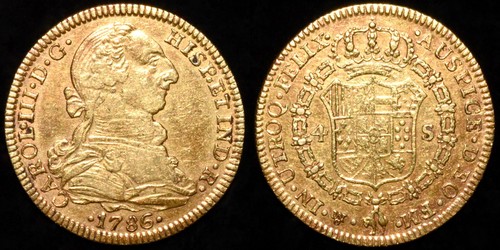
4 Escudos
1780s
Tymf
1663
Speciedaler
1628