
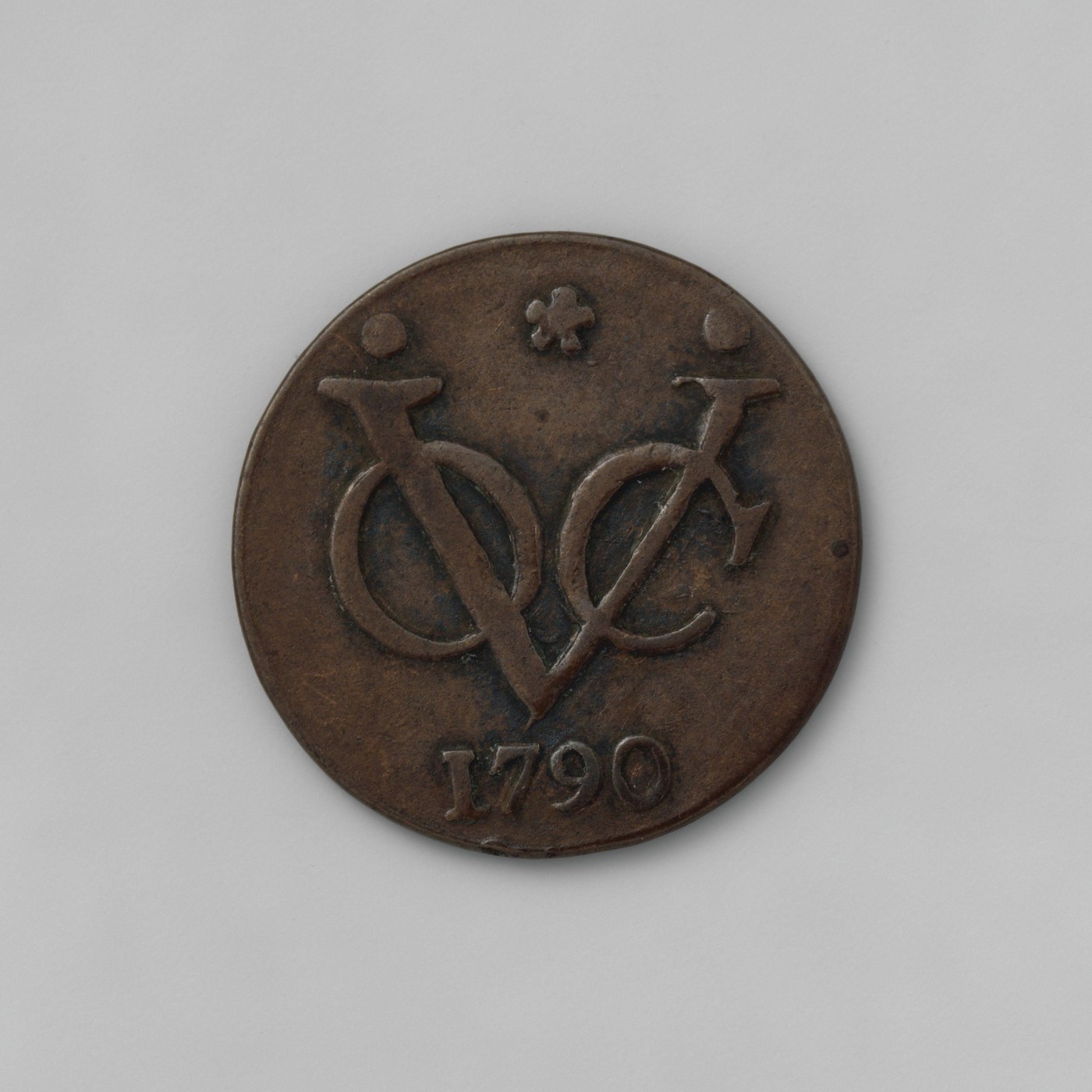
Duit (VOC)
A small copper duit struck for the Dutch East India Company (VOC), showing the crowned VOC monogram and the date 1790 on the obverse.
- Country
- Netherlands
- Denomination
- Duit
- Metal
- Copper
Got a coin like this?
Identify any coin from a photo, free.
Overview
The VOC duit is a small copper coin issued in the name of the Verenigde Oostindische Compagnie, the Dutch East India Company, one of the most famous trading enterprises of the early modern era. The example here is dated 1790 and carries the company's celebrated interlaced VOC monogram beneath a crown on the obverse.
Duits were the humblest denomination of the Dutch monetary system, low-value copper pieces used for everyday small change. The VOC struck vast numbers of them at mints in the Netherlands to supply its trading network in Asia, so they circulated heavily around the Indian Ocean world, especially in the Dutch East Indies.
Because so many were made and shipped abroad, VOC duits survive in large quantities today and are among the most accessible and recognizable relics of the Dutch colonial and maritime golden age. The bold monogram makes even worn examples easy to attribute at a glance.
History & Background
The Dutch East India Company was chartered in 1602 and grew into a powerful commercial and quasi-governmental power across Asia, trading in spices, textiles, and other goods. To lubricate its commerce it needed enormous quantities of low-value coin, and the copper duit became a workhorse of that small-change economy.
In the later eighteenth century the several provinces and their mints in the Dutch Republic struck duits bearing the VOC monogram for shipment east. A coin dated 1790 belongs to the final decades of the company's existence, a period of mounting financial trouble; the VOC was formally dissolved in 1799, its possessions passing to the Dutch state.
As a result, dated VOC duits like this 1790 piece are tangible survivors of the company's last years and of the wider Dutch presence in the Indies. They connect a tiny copper coin to a vast history of global trade, colonial administration, and maritime empire.
How to Identify
The obverse, visible on this coin, shows the interlaced VOC monogram, the entwined letters V, O, and C forming the company's cipher, topped by a crown, with the date 1790 struck alongside. This crowned monogram is the single most diagnostic feature and marks the piece unmistakably as a Dutch East India Company issue.
The coin is a small, thick copper piece with a brown to dark patina typical of aged copper, and its low denomination means it was made to a modest size and weight. The date is the key to placing this example in 1790, near the end of the company's operations.
The reverse of VOC duits customarily bears the arms or cipher of the issuing province in the Netherlands, such as Holland, Utrecht, Zeeland, West-Friesland, or Gelderland, which identifies which provincial mint produced it. On this particular coin the reverse is not shown, so the province cannot be confirmed here; on any physical example, the reverse arms and any small mint mark are what pin down the exact striking authority.
Value & Collectibility
VOC duits are common and affordable. They were struck and exported in huge numbers, so ordinary circulated examples typically trade for only a few dollars up to the low tens of dollars, making them a popular entry point into colonial and world copper coinage.
Value is driven by condition, sharpness of the monogram and date, and the specific province and year. Well-preserved pieces with clear detail, attractive original surfaces, or scarcer province-date combinations bring higher prices, while heavily worn, corroded, or damaged coins sit at the bottom of the range.
Because these are inexpensive copper coins, treat any figures as broad context rather than firm quotes; actual prices depend on grade, eye appeal, provenance, and demand. Corroded ground finds and cleaned or lacquered pieces are worth less than problem-free originals.
Frequently asked questions
What does VOC stand for on this coin?
VOC stands for Verenigde Oostindische Compagnie, the Dutch East India Company. The interlaced VOC letters under a crown are the company's monogram and the defining feature of the coin.
What is a duit?
A duit was the smallest common copper denomination of the old Dutch monetary system, a low-value coin used for everyday small change. The VOC struck them in quantity for use in its trading territories.
Is a 1790 VOC duit rare?
No. VOC duits were produced and exported in enormous numbers, so they are common and generally inexpensive. Rarity depends more on the specific province, date, and condition than on the type itself.
What metal is it made of?
It is copper. Expect a small, fairly thick coin with the brown to dark patina typical of aged copper rather than any silver or gold appearance.
What is on the reverse?
VOC duits normally show the arms or cipher of the issuing Dutch province on the reverse, which tells you the mint. On this coin the reverse is not pictured, so the province is not confirmed here.
Duit (VOC) guides
In-depth guides for identifying, valuing, and collecting Duit (VOC).
Other coins you may enjoy
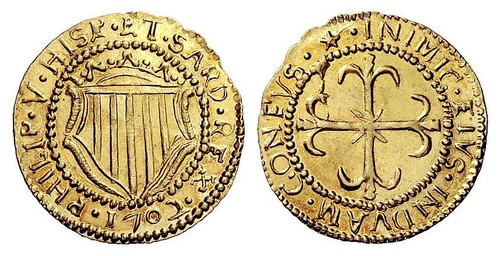
Scudo (Philip V)
c. 1701–1708
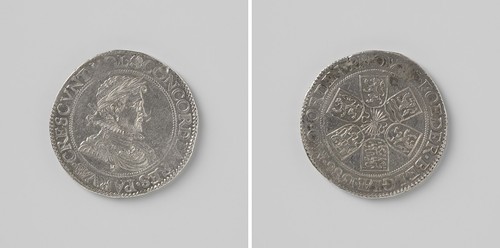
Rijksdaalder van Leicester
1580s-1590s
Kopek (Peter I)
c. 1704–1718 (observed 1711)
Imperial Chervonets
1762
Prinsendaalder (Rijksdaalder)
1592
10 Para
AH 1280 (1863-1864 CE)
Halve Rijksdaalder van Leicester
1580s-1590s
Gouden Dukaat
1724
Escudo (Joanna and Charles V, contemporary copy)
1516-1558
4 Escudos
1780s
Tymf
1663
Speciedaler
1628