
How to Identify the Duit (VOC)
A collector's guide to confirming a VOC duit by its crowned VOC monogram, date, small copper format, and provincial reverse arms.
Read the full Duit (VOC) encyclopedia entry →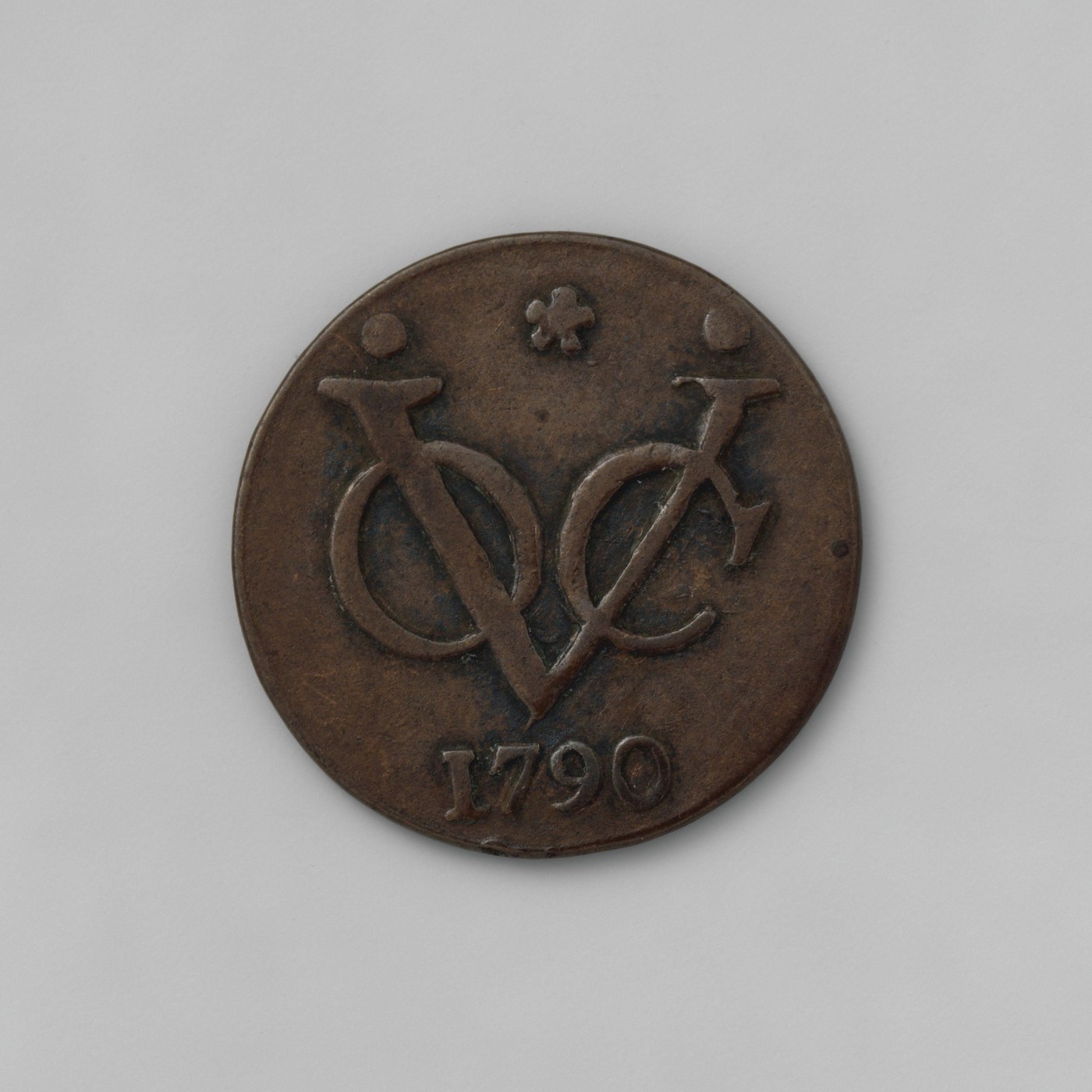
Read the Crowned VOC Monogram
The fastest confirmation is the obverse cipher. A genuine VOC duit shows the interlaced letters V, O, and C combined into a single monogram, topped by a small crown, with a date beside it, here 1790. If you can trace the three entwined letters under a crown, you are almost certainly looking at a Dutch East India Company duit rather than an ordinary provincial or foreign copper.
Confirm the Format: Small Copper
This is a small, thick copper coin of the lowest denomination, so expect modest size and weight and a brown to dark, sometimes rough, copper patina. Bright yellow, white, or magnetic metal would be wrong for the type. Genuine pieces are non-magnetic copper, and honest wear typically softens the high points of the monogram while leaving the overall cipher legible.
Check the Reverse for the Province
The reverse of a VOC duit normally carries the arms or cipher of the Dutch province that struck it, such as Holland, Utrecht, Zeeland, West-Friesland, or Gelderland, sometimes with the province name and a tiny mint mark. Reading that reverse tells you which mint produced the coin and, combined with the date, pins down the exact issue. On a photo showing only the monogram side, the province cannot be determined, so always turn a physical coin over.
Rule Out Look-Alikes
Contemporary Dutch provincial duits without the VOC cipher look similar in size and metal but lack the crowned VOC monogram, so the presence or absence of that cipher is the deciding cue. Be aware, too, that VOC duits are widely reproduced as souvenirs and tourist replicas, especially around shipwreck and "treasure" themes; these copies often have mushy, cast-looking detail, wrong weight, or artificially aged surfaces.
Authentication Cautions
Because the type is common and cheap, crude fakes and modern casts exist mainly as novelties rather than high-value forgeries, but they can still fool a beginner. Compare the monogram, crown, and date style to trusted references, check that the coin is struck rather than cast (look for seams or bubbles), and weigh corrosion and cleaning heavily, since ground-dug and lacquered pieces are worth far less than original, problem-free examples.
Frequently asked questions
What single feature confirms a VOC duit?
The crowned, interlaced VOC monogram on the obverse. If you can pick out the three entwined letters V, O, and C beneath a crown next to a date, the coin is a Dutch East India Company duit.
How do I tell the mint or province?
Look at the reverse, which normally shows the arms or cipher of the issuing Dutch province, sometimes with a mint mark. That, plus the date, identifies the exact issue; a monogram-only image cannot confirm the province.
Could a magnetic or shiny coin still be a real duit?
No. Genuine VOC duits are non-magnetic copper with a brown to dark patina. A magnetic, bright silver, or golden piece of this design points to a replica or a plated or wrong-metal copy.
Are replicas of VOC duits common?
Yes. They are widely reproduced as inexpensive souvenirs, often with shipwreck or treasure themes. Cast-looking detail, wrong weight, seams, or artificially aged surfaces are warning signs of a modern copy.