
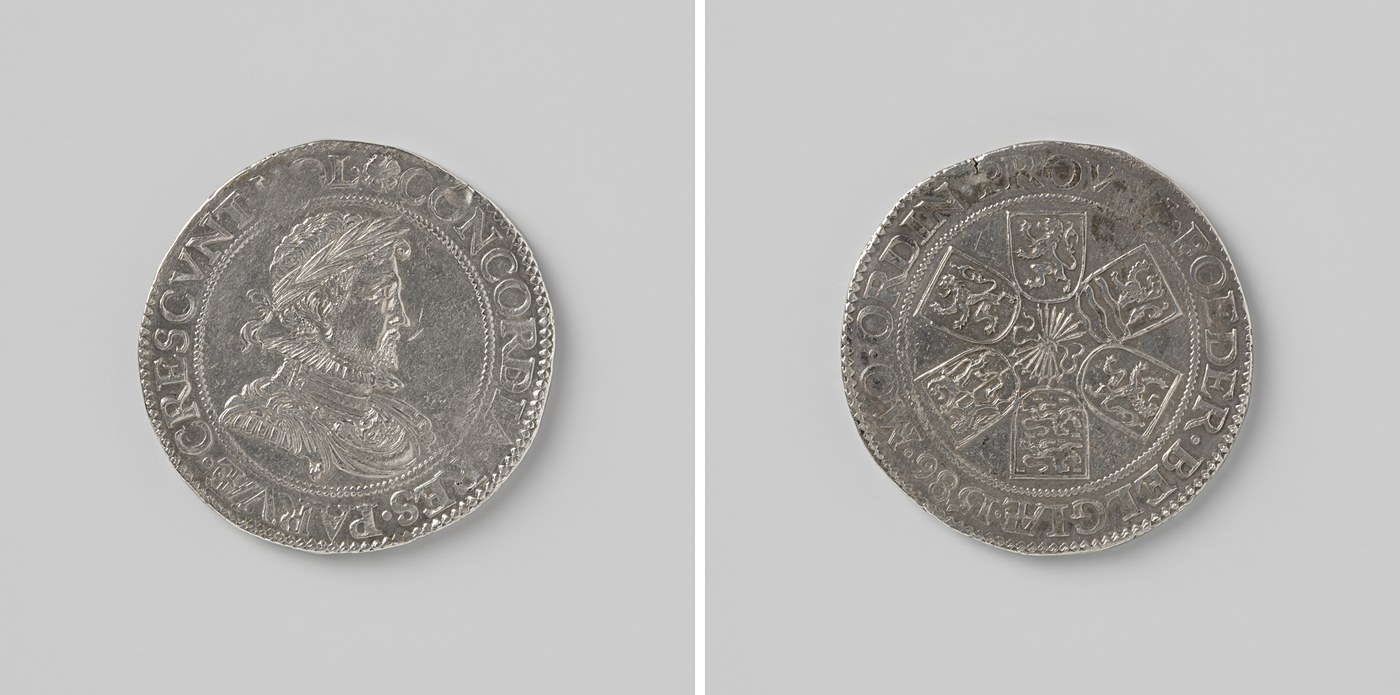
Rijksdaalder van Leicester
A large silver Dutch rijksdaalder of the Leicester type, with a helmeted armored bust and ruff on the obverse and a compartmented heraldic shield on the reverse.
- Country
- Netherlands
- Denomination
- Rijksdaalder
- Metal
- Silver
Got a coin like this?
Identify any coin from a photo, free.
Overview
The Rijksdaalder van Leicester is a large silver coin of the late-sixteenth-century Dutch Republic, named after Robert Dudley, Earl of Leicester, whose monetary ordinance established the type. It is defined by a helmeted, armored half-figure facing right, dressed in a ruff, paired with a compartmented heraldic shield on the reverse.
Struck as a crown-sized trade coin, it belongs to the family of European "daalder" or thaler pieces that circulated widely in international commerce. Its high silver content and standard weight made it a reliable unit of value at a time when the young United Provinces were asserting their independence from Spanish rule.
For collectors, the Leicester rijksdaalder is prized as one of the foundational silver types of the Dutch Republic and a direct ancestor of the long-lived Netherlands rijksdaalder tradition. Genuine period examples are historically significant relics of the Eighty Years' War era.
History & Background
In 1585-1587 Robert Dudley, Earl of Leicester, served as Governor-General of the United Provinces, sent by Elizabeth I of England to support the Dutch revolt against Spain. During his authority a coinage ordinance regularized the silver rijksdaalder, and the resulting type carried his name even after his brief and troubled administration ended.
The Leicester rijksdaalder was issued by the confederated provinces and their mints as a standardized large silver piece, helping to unify a patchwork of local coinages. Its armored, ruffed figure and provincial arms projected the emerging identity and military resolve of the Dutch state during the Eighty Years' War against Spain.
The type set a lasting pattern: the rijksdaalder remained a core denomination of the Netherlands for generations, and the Leicester issue stands at the beginning of that continuous tradition of Dutch crown-sized silver.
How to Identify
The obverse shows a helmeted, armored half-length bust facing right, wearing a prominent ruff at the neck, surrounded by a Latin legend. The martial figure with its distinctive ruffed collar is the signature marker of the Leicester type and separates it from later portrait or lion daalders.
The reverse displays a compartmented heraldic shield, an ornate coat of arms divided into fields, encircled by an inscription giving titles and often a date. This is a large silver coin in the crown class, broadly on the order of 40 mm across and roughly 29 grams, so it feels heavy and substantial in hand.
Key identifiers are the ruffed armored half-figure facing right, the compartmented arms on the reverse, the large high-fineness silver flan, and Latin legends referencing the provinces or their authority. The metal is genuine silver, giving the coin its weight and ring and distinguishing it from base-metal imitations.
Value & Collectibility
As a historic large silver coin of the early Dutch Republic, the Leicester rijksdaalder carries both numismatic and precious-metal value. Well-worn but genuine examples typically trade in the mid hundreds of dollars, while sharp, well-centered, and problem-free pieces command substantially more as sought-after early Republic silver.
Condition, strike quality, and eye appeal drive most of the spread. Because these coins were hand-struck on broad flans, weakly struck, clipped, holed, or heavily worn pieces are common and worth less, whereas boldly detailed, attractively toned examples bring strong premiums. Provincial variety and clear dates can also affect desirability.
Exact prices vary widely with grade, variety, market conditions, and silver spot, so treat these as general ranges rather than fixed quotes. Cleaned, damaged, or counterfeit pieces trade well below genuine problem-free coins, and high-grade certified examples can realize much higher figures at specialist auction.
Frequently asked questions
Why is it called the Rijksdaalder van Leicester?
It is named for Robert Dudley, Earl of Leicester, Governor-General of the United Provinces in 1585-1587, whose monetary ordinance standardized this large silver rijksdaalder type.
Is the Leicester rijksdaalder real silver?
Yes. It is a genuine crown-sized silver coin of high fineness, which is why it is large and heavy for its diameter and rings when struck. The silver content adds to its value.
Who is the figure on the obverse?
The obverse shows an armored, helmeted half-figure in a ruff facing right, a martial emblem of the Dutch state rather than a realistic portrait of a named individual.
What is on the reverse?
The reverse carries a compartmented heraldic shield, an ornate coat of arms divided into fields, ringed by a Latin legend that typically states titles and a date.
Is this coin valuable?
It is a historically important early Dutch silver type. Worn examples are affordable to mid-priced, while high-grade, original pieces bring significant premiums. Value depends on grade, variety, eye appeal, and silver price.
Rijksdaalder van Leicester guides
In-depth guides for identifying, valuing, and collecting Rijksdaalder van Leicester.
Other coins you may enjoy
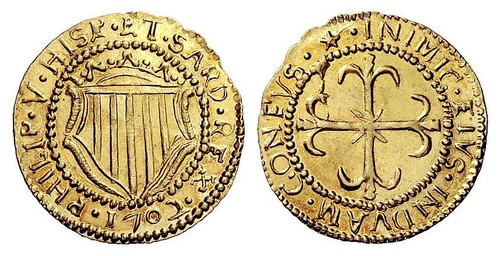
Scudo (Philip V)
c. 1701–1708
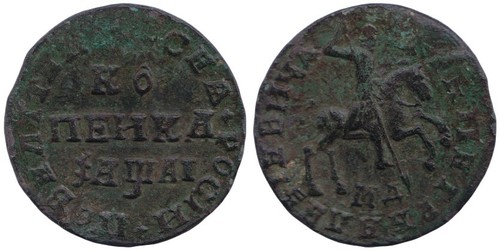
Kopek (Peter I)
c. 1704–1718 (observed 1711)
Imperial Chervonets
1762
Prinsendaalder (Rijksdaalder)
1592
10 Para
AH 1280 (1863-1864 CE)
Halve Rijksdaalder van Leicester
1580s-1590s
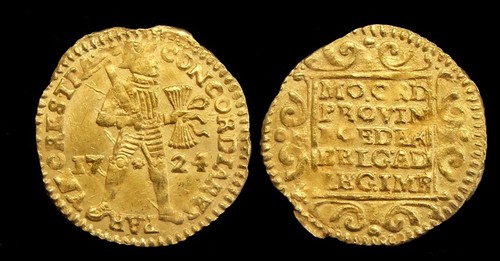
Gouden Dukaat
1724
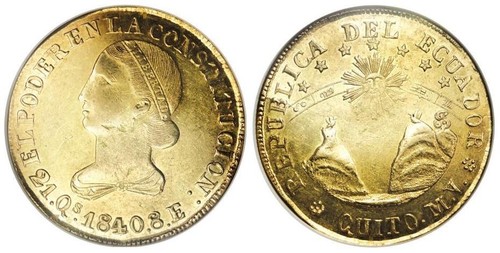
Escudo (Joanna and Charles V, contemporary copy)
1516-1558
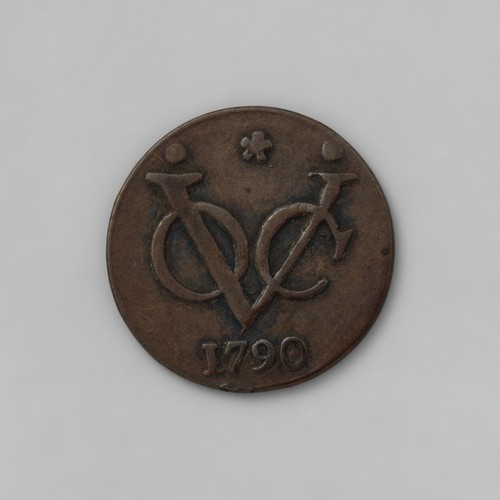
Duit (VOC)
1790
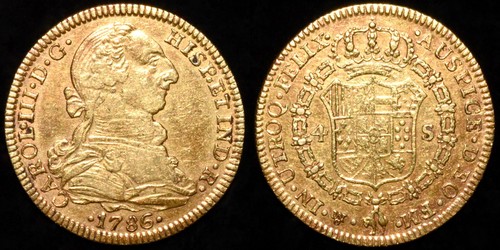
4 Escudos
1780s
Tymf
1663
Speciedaler
1628