
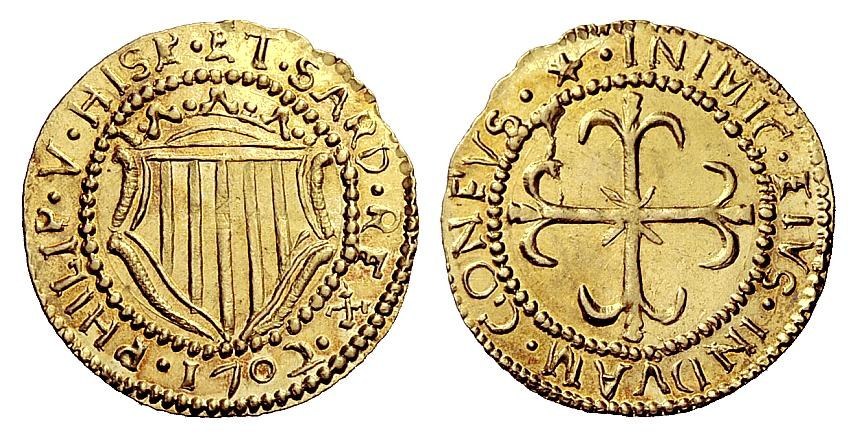
Scudo (Philip V)
A gold scudo struck for Spanish-ruled Sardinia under Philip V, bearing a crowned shield flanked by the Columns of Hercules and a cross reverse.
- Country
- Spain (Sardinia)
- Denomination
- Scudo
- Metal
- Gold
Got a coin like this?
Identify any coin from a photo, free.
Overview
The Scudo of Philip V is a gold coin issued for the Kingdom of Sardinia while it was held by the Spanish crown at the opening of the 18th century. Philip V, the first Bourbon king of Spain, reigned from 1700, and Sardinia remained under Spanish administration during his early years, so its coinage carried his name and the traditional Spanish gold designs adapted to local use.
The piece follows the long-established Spanish gold pattern of a crowned heraldic shield on one face and a cross on the other, a layout used across Spain and its Mediterranean and colonial possessions. The example documented here is dated 1702, placing it squarely in the earliest phase of Philip's reign and of the War of the Spanish Succession.
As a small-issue provincial gold coin from a contested period, surviving pieces are scarce, and they are collected both as Spanish Bourbon gold and as coinage of Sardinia.
History & Background
Philip V (Felipe V) inherited the Spanish throne in 1700 as the grandson of Louis XIV of France, triggering the War of the Spanish Succession as rival powers contested the Bourbon succession. Sardinia, long a Spanish possession, continued to be governed in Philip's name during the war's early years, and coins dated 1702 belong to this brief window of continued Spanish control.
Spain's Mediterranean territories such as Sardinia, Sicily, Naples, and Milan each struck coinage locally, using Italian denomination names like scudo alongside the shared Spanish gold designs. The scudo served as the principal gold unit in this Italian-language context, paralleling the escudo of the Spanish mainland.
Spanish rule over Sardinia ended during the war: the island passed to Austrian Habsburg control and was formally ceded by the Treaty of Utrecht settlement, later passing to the House of Savoy in 1720. Gold scudi bearing Philip V's name therefore mark the closing chapter of Spanish rule on the island, which is part of what makes the type of historical interest.
How to Identify
The observed coin shows a crowned heraldic shield with fields rendered in vertical hatching, flanked by the two Columns of Hercules — the paired pillars, often wrapped with a scroll, that are a hallmark of Spanish gold and silver coinage of this era. The reverse displays a cross with floral or foliate ornaments in the angles, another standard element of Spanish gold design. The date 1702 appears with the legends.
Because it is a hand-struck gold coin, expect a slightly irregular flan, uneven rims, and legends that may be partly off the edge or weakly struck. Latin abbreviations naming Philip (Philippus / PHILIP) as king typically run around the shield, with a continuation of titles around the cross. Look for a small mint mark and assayer or control letters within the legends or beside the shield, which help attribute the piece to Sardinia.
The warm, deep yellow tone and notable heft for its size are consistent with a high-fineness gold coin of the period. Weight and diameter should be checked against reference standards for the Sardinian scudo, since the denomination (single scudo versus multiples) is judged largely by size and mass.
Value & Collectibility
As an early-18th-century provincial gold coin from a short period of Spanish rule, the Philip V scudo is scarce and generally commands a meaningful premium over its gold bullion content. Precise values vary widely with denomination (single versus multiple scudi), date, mint, strike quality, and preservation, so this type is best appraised individually rather than by a fixed price.
Hand-struck gold of this era is frequently found with weak areas, adjustment marks, or slightly clipped edges; well-centered, fully legible examples are worth substantially more than worn or damaged ones. Provenance and clear attribution to Sardinia also add to desirability.
Because gold coins of this profile are widely reproduced and faked, verified authenticity and, ideally, third-party grading materially affect what a piece will realize. Treat any single quoted figure with caution and seek specialist appraisal.
Frequently asked questions
Who was Philip V and why is he on a Sardinian coin?
Philip V was the first Bourbon king of Spain, reigning from 1700. Sardinia was a Spanish possession governed in his name during his early reign, so its coinage carried his titles until the island left Spanish control during the War of the Spanish Succession.
What is the difference between a scudo and an escudo?
They are essentially the same denomination under different language names. 'Scudo' is the Italian term used in Spain's Italian territories such as Sardinia, while 'escudo' is the Spanish form used on the mainland; both were the standard gold unit of the period.
What do the two columns on the shield represent?
They are the Columns of Hercules, a long-standing emblem of the Spanish crown associated with the Strait of Gibraltar. They appear flanking the shield on much Spanish gold and silver coinage of the 16th to 18th centuries.
Is a 1702 gold scudo of Philip V rare?
Yes. It comes from a brief window of continued Spanish rule over Sardinia during a major war, and provincial gold from this period survives in small numbers, so genuine examples are considered scarce.
Scudo (Philip V) guides
In-depth guides for identifying, valuing, and collecting Scudo (Philip V).
Other coins you may enjoy
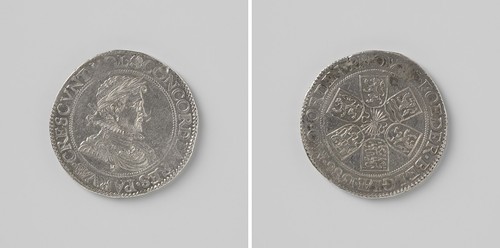
Rijksdaalder van Leicester
1580s-1590s
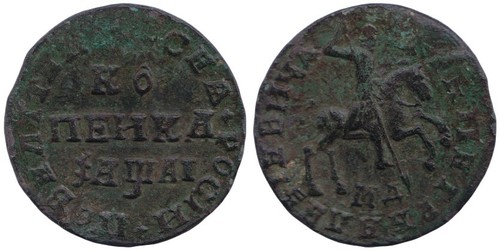
Kopek (Peter I)
c. 1704–1718 (observed 1711)
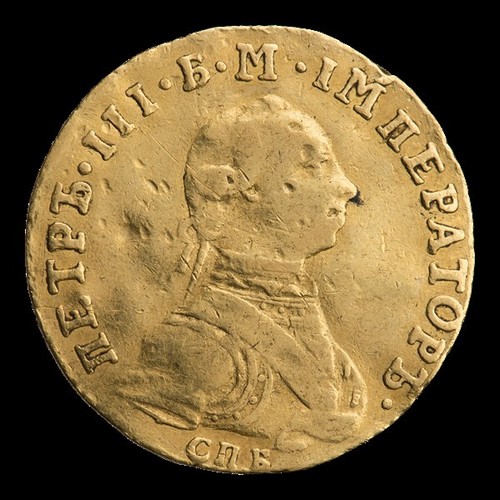
Imperial Chervonets
1762
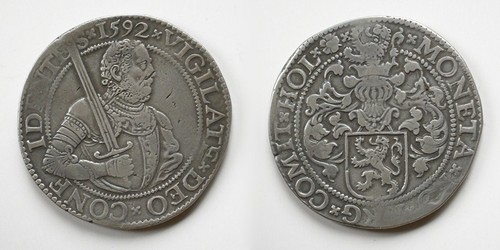
Prinsendaalder (Rijksdaalder)
1592
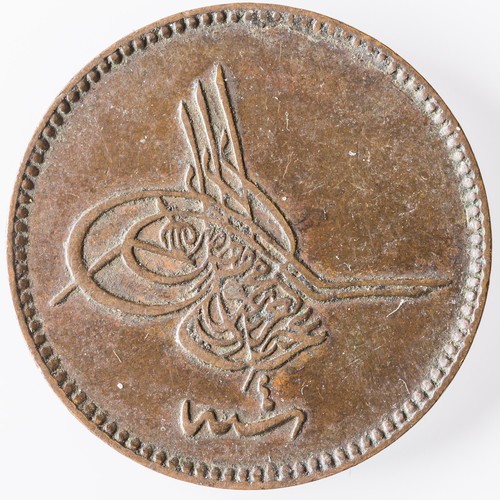
10 Para
AH 1280 (1863-1864 CE)
Halve Rijksdaalder van Leicester
1580s-1590s
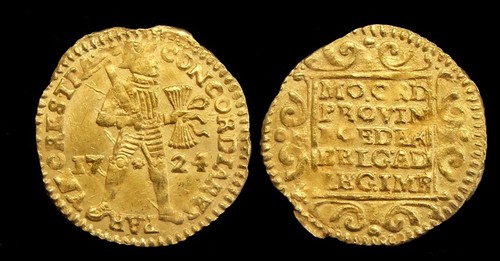
Gouden Dukaat
1724
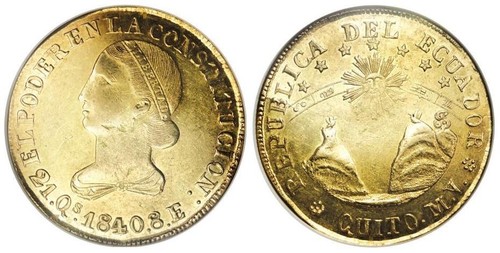
Escudo (Joanna and Charles V, contemporary copy)
1516-1558
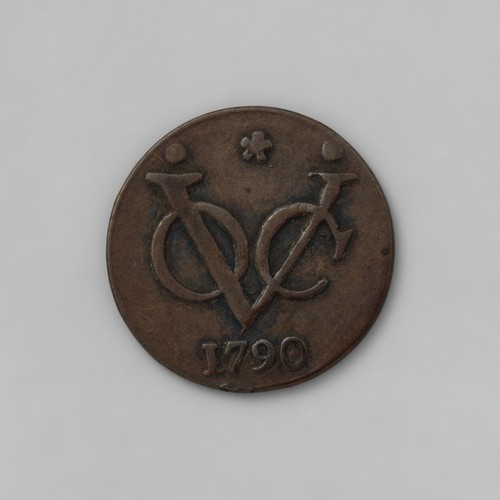
Duit (VOC)
1790
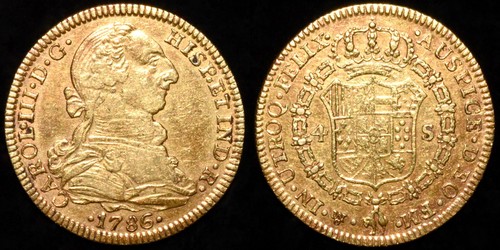
4 Escudos
1780s
Tymf
1663
Speciedaler
1628