
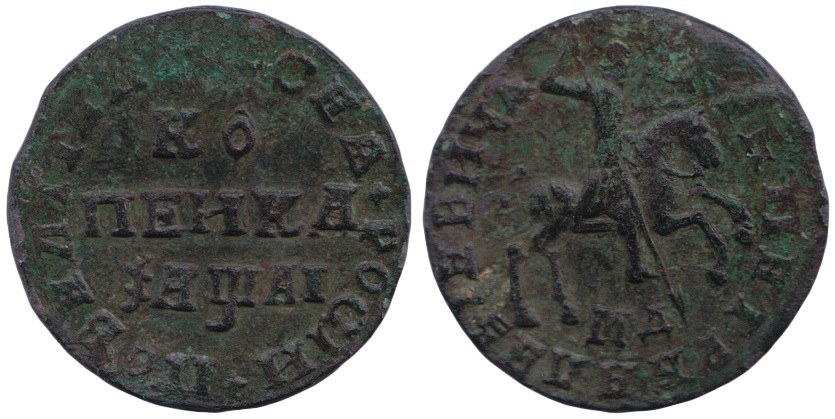
Kopek (Peter I)
An early copper kopek of Peter the Great, showing a profile of Peter I and Cyrillic legends on one side and the Russian double-headed eagle on the other.
- Country
- Russia
- Denomination
- Kopek
- Metal
- Copper
Got a coin like this?
Identify any coin from a photo, free.
Overview
The kopek of Peter I is a small copper coin from the sweeping monetary reforms of Peter the Great (Petrus Primus). The example shown here carries a profile bust of Peter I with a Cyrillic legend around the rim on the obverse and the crowned Russian double-headed eagle with inscriptions on the reverse, and is dated 1711.
The kopek was the workhorse of the reformed Russian coinage, and Peter's decision to strike it in copper rather than the old hand-made silver wire money was a deliberate break with the past. It is a modest, everyday denomination rather than a prestige piece, which is exactly what makes it a good witness to how ordinary money changed in early-eighteenth-century Russia.
Between the imperial portrait, the state eagle, and the Cyrillic legends and date, the coin packs the main symbols of the Petrine state onto a single small copper flan. That combination is its signature look and the reason it is quickly recognisable as a product of Peter the Great's reign.
History & Background
Peter I (reigned 1682–1725) overhauled Russia's currency around the turn of the eighteenth century, replacing the tiny hand-struck silver wire kopeks that had served for centuries with machine-made round coins. As part of this reform Russia adopted a decimal system in which one rouble equalled 100 kopeks, one of the earliest decimal coinages in the world. The observed 1711 date falls within the run of round copper kopeks struck in this reformed system.
Striking the kopek in copper freed scarce silver for higher denominations and let the mints produce large quantities of small change for everyday trade. The copper coins sat at the base of a graded system that also included smaller pieces such as the denga and polushka, with the kopek as the familiar unit of account. Dates on these early coins were often rendered in Cyrillic letter-numerals rather than Arabic figures, a feature of the transitional Petrine period.
The copper kopek was produced across a span of years under Peter, with designs and details evolving as the mints and the reform matured. Because it was made in quantity for circulation and used heavily as everyday money, it survives today in large numbers but usually in well-worn condition, making it one of the more accessible relics of the Petrine reforms.
How to Identify
Look first at the obverse, which shows a profile of Peter I surrounded by a Cyrillic legend naming him as tsar. The reverse carries the crowned Russian double-headed eagle together with Cyrillic inscriptions and the date, here 1711. The pairing of the imperial portrait on one side and the state eagle on the other is the key visual signature of the type.
The metal and size are the next checks. This is a small copper coin, and genuine examples show the warm brown, reddish, or greenish tones that copper develops with age rather than the grey of silver. Early Petrine copper kopeks are modest in diameter and light in the hand, and the flans are often slightly irregular with striking that can be soft or off-centre, typical of the period's technology.
The Cyrillic legends and the date are important confirmers. The lettering is in period Cyrillic, and the year may appear as Cyrillic letter-numerals or in a transitional style rather than plain Arabic numbers. Reading the eagle, the portrait, the Cyrillic text, and the date together is the surest way to confirm the coin, since wear often leaves only some of these elements clear.
Value & Collectibility
The copper kopek of Peter I is a historic but generally affordable coin. It was struck in quantity as circulating small change, so most surviving examples are common and trade in modest ranges, with heavily worn pieces being inexpensive and sharp, well-centred, clearly dated examples worth more to collectors.
Condition drives value heavily. Because these copper coins circulated hard and were struck with early machinery, many are worn, corroded, or weakly struck; a piece with a clear portrait, a legible eagle, full Cyrillic legends, and a readable date commands a premium over the typical worn survivor. Particular dates, mints, and varieties within Peter's copper coinage can be scarcer and more sought-after.
As with any early Russian copper, exact prices depend on grade, surfaces, and eye appeal rather than any fixed figure, so a specific example is best judged individually. Cleaned or corroded copper is worth less, and any high-value or unusual variety is worth confirming with a specialist or grading service before buying or selling.
Frequently asked questions
Is this really a coin of Peter the Great?
Yes. It is a copper kopek from the reign of Peter I (Peter the Great), whose reformed coinage introduced machine-struck round copper kopeks in place of the old silver wire money. The observed piece is dated 1711, within his reign.
Why is a kopek made of copper and not silver?
Peter I deliberately moved the small kopek denomination to copper as part of his monetary reform. Using copper for small change freed up scarce silver for higher denominations and let the mints produce large quantities of everyday coins.
What is on each side of the coin?
The obverse shows a profile of Peter I with a Cyrillic legend naming him, and the reverse shows the crowned Russian double-headed eagle with Cyrillic inscriptions and the date, here 1711.
Why is the date hard to read?
Early Petrine coins often express the year in Cyrillic letter-numerals rather than Arabic figures, and the coins were struck with early machinery, so wear and off-centre strikes can leave the date faint or partly missing.
Is my worn kopek worth much?
The copper kopek of Peter I was made in large numbers, so common worn examples are affordable. Value rises with condition and with clear portrait, eagle, legends, and date; scarcer dates or varieties are worth more.
Kopek (Peter I) guides
In-depth guides for identifying, valuing, and collecting Kopek (Peter I).
Other coins you may enjoy
Scudo (Philip V)
c. 1701–1708
Rijksdaalder van Leicester
1580s-1590s
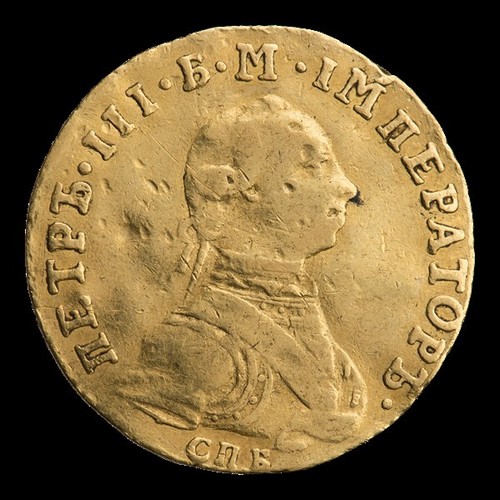
Imperial Chervonets
1762
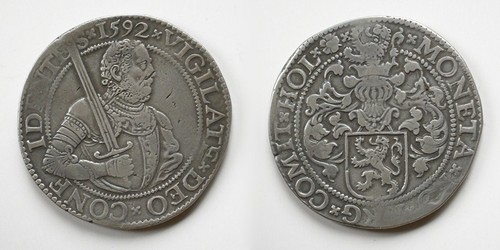
Prinsendaalder (Rijksdaalder)
1592
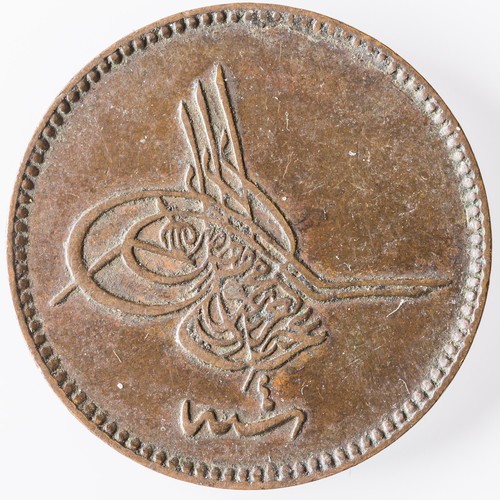
10 Para
AH 1280 (1863-1864 CE)
Halve Rijksdaalder van Leicester
1580s-1590s
Gouden Dukaat
1724
Escudo (Joanna and Charles V, contemporary copy)
1516-1558
Duit (VOC)
1790
4 Escudos
1780s
Tymf
1663
Speciedaler
1628