
How to Identify the Kopek (Peter I)
Spot Peter the Great's copper kopek by its portrait obverse, double-headed eagle reverse, small copper flan, and Cyrillic legends and date.
Read the full Kopek (Peter I) encyclopedia entry →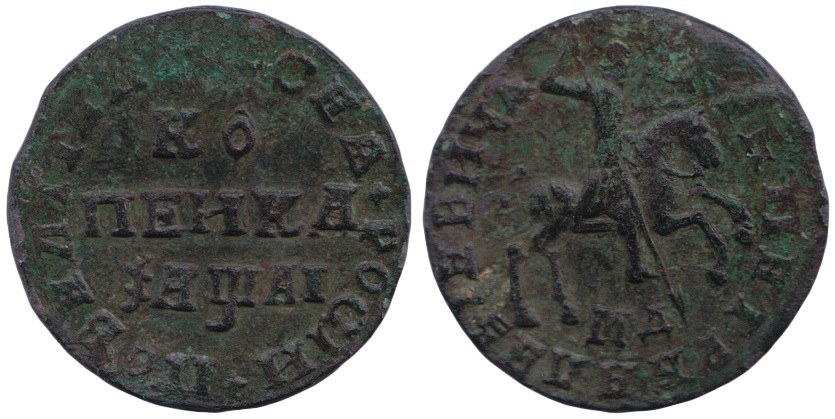
Start with the two designs, because together they define the type. One side should show a profile bust of Peter I framed by a Cyrillic legend that names him as tsar; the other should show the crowned Russian double-headed eagle with Cyrillic inscriptions and a date such as the observed 1711. If both the imperial portrait and the state eagle are present with Cyrillic lettering, you are on the right track for a Petrine kopek.
Confirm the metal and format next. This is a small, light copper coin, so expect the brown, reddish, or green-brown patina of aged copper rather than the grey of silver. The flan is modest in diameter and often slightly irregular, and the strike can be soft or off-centre; crisp, perfectly round, bright metal on a supposedly early copper kopek is a reason for caution, not reassurance.
Read the Cyrillic carefully, as it separates this coin from look-alikes. The legends are in period Cyrillic, and the year may be written in Cyrillic letter-numerals or a transitional form rather than plain Arabic digits, so the date can look unfamiliar. Peter also issued other small copper denominations such as the denga and polushka with related eagle designs; check the legend and denomination wording rather than assuming any small Petrine copper is a kopek.
Be alert to condition problems and to fakes. Because these coins circulated heavily, many are worn smooth, corroded, or tooled, and harsh cleaning is common on old copper; all of these reduce both certainty of identification and value. Cast copies and modern reproductions exist, and tell-tale signs include grainy or pitted surfaces, mushy lettering, seams on the edge, and weight or size that does not match a genuine small copper kopek.
When the portrait, eagle, Cyrillic legends, and date all agree and the piece has honest copper surfaces, identification is usually straightforward. For any coin that seems to be a scarce date or variety, or that is being bought or sold at a meaningful price, confirm the attribution with a specialist in Russian imperial copper or a recognised grading service before relying on it.
Frequently asked questions
How do I tell a kopek from Peter's smaller copper coins?
Read the reverse legend and denomination wording rather than the eagle alone. Peter also struck the denga and polushka in copper with related eagle designs; the kopek is the larger unit, so the size, weight, and the Cyrillic denomination text distinguish it.
The date looks like letters, not numbers. Is that normal?
Yes. Early Petrine coins often show the year as Cyrillic letter-numerals or in a transitional style instead of Arabic figures, so a 1711 date can look like a group of Cyrillic characters rather than familiar digits.
How can I spot a fake or cast copy?
Look for grainy or pitted surfaces, soft or blurred lettering, an edge seam, and weight or diameter that does not match a genuine small copper kopek. Struck originals show sharper detail in the portrait and eagle even when worn.
Does cleaning my copper kopek help its value?
No. Harsh cleaning of old copper removes original surface and generally lowers value. Collectors prefer honest, undisturbed patina, so a corroded or scrubbed coin is worth less than one with intact surfaces.