
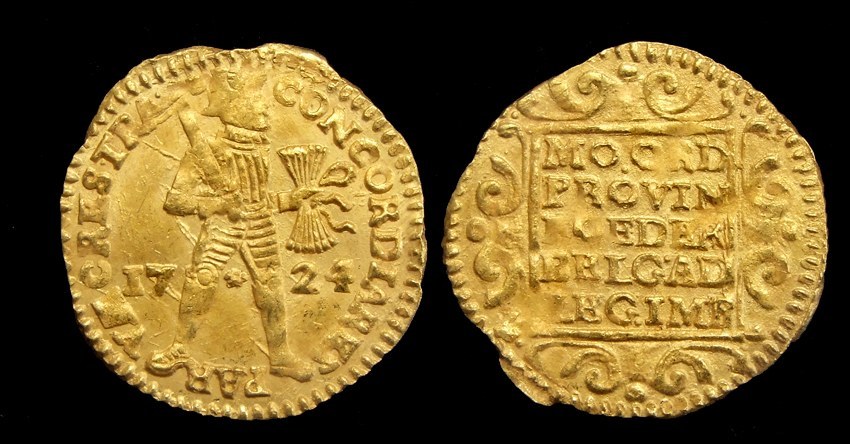
Gouden Dukaat
A Dutch gold trade ducat of the United Provinces, showing an armored standing knight and an inscribed heraldic tablet; this example is dated 1724.
- Country
- Netherlands
- Denomination
- Dukaat
- Metal
- Gold
Got a coin like this?
Identify any coin from a photo, free.
Overview
The Gouden Dukaat, or Dutch gold ducat, is one of the most enduring trade coins of early modern Europe. This example, dated 1724, belongs to the classic provincial type struck by the United Provinces of the Netherlands: a standing armored figure on the obverse and an ornate inscribed tablet on the reverse. It is a small but high-purity gold coin, made for international commerce rather than everyday change.
The design is deliberately conservative. For well over a century the ducat kept the same standing-knight motif and Latin legends, changing mainly the small province markings and the date. That continuity made the coin instantly recognizable to merchants across Europe, the Baltic, and the Levant, and it is a large part of why the type is so collectable today.
Because it is struck in nearly pure gold to a long-standing international standard, a 1724 ducat is prized both as a historical trade coin and as a compact piece of gold. Genuine examples combine fine, thin engraving with real precious-metal weight in the hand.
History & Background
After the northern Netherlands broke from Spanish rule, the United Provinces began issuing gold ducats in the late sixteenth century, modeling them on the widely trusted Hungarian and Venetian ducat standard. The coin was intended above all as an export and trade piece, and the Dutch Republic struck it in enormous numbers through the seventeenth and eighteenth centuries. A 1724 example sits squarely in this high tide of Dutch commercial and maritime power.
Each of the provinces and authorized mints of the Republic could strike ducats to the same shared standard, distinguished only by small marks and abbreviations in the legends. This is why coins that look almost identical can carry different provincial identifiers while sharing the same date and design.
The standing-knight ducat proved so successful that it long outlived the Republic itself. The design was later revived and continued by the Kingdom of the Netherlands, and the Royal Dutch Mint still strikes gold ducats to the historic pattern for collectors and investors, a direct descendant of pieces like this 1724 coin.
How to Identify
The obverse shows a standing armored, helmeted figure, a knight, holding a sword and a bundle of arrows that symbolize the united provinces, with heraldic detail beside him and the date, here 1724, in the field. Around him runs a Latin legend in the CONCORDIA RES PARVAE CRESCUNT family ("by concord small things grow"), typically with an abbreviation identifying the issuing province.
The reverse carries an ornate rectangular tablet, or cartouche, framed by decorative scrollwork and filled with a multi-line Latin inscription reading in the sense of MONETA ORDINUM PROVINCIARUM FOEDERATARUM BELGICARUM AD LEGEM IMPERII, meaning money of the confederated Netherlandish provinces struck to the standard of the empire.
Physically this is a small, thin, bright-yellow gold coin, roughly 21 to 22 mm across and only about 3.5 grams, struck in very high fineness "ducat gold." The combination of the standing knight, the seven arrows, the scrolled inscription tablet, and the light but genuinely gold flan is what identifies the type. The province abbreviation in the legend and the date pin down the individual coin.
Value & Collectibility
As a nearly pure gold trade coin, the Gouden Dukaat always carries meaningful precious-metal value on top of its collector interest. Even a common, honestly worn 1724 ducat is worth well above its face history because of its gold content, and genuine examples generally trade in the low-to-mid hundreds of dollars depending on gold prices.
Condition, strike, and originality drive the premium above melt. These coins are thin and were actively used in trade, so many show bends, waviness, or scratches; a flat, undamaged, sharply struck piece with clean surfaces commands a clear premium over a wavy or repaired one. Scarcer provincial varieties and exceptional grades can bring substantially more.
Because values move with the gold market and with grade, treat any figure as a general range rather than a fixed price. Bent, holed, cleaned, or counterfeit pieces trade well below sound original coins, so authenticity and eye appeal matter as much as the underlying gold.
Frequently asked questions
Is the Gouden Dukaat real gold?
Yes. The Dutch ducat is struck in very high-fineness "ducat gold," close to pure, which is why even this small, thin coin has real precious-metal value despite weighing only about 3.5 grams.
Who is the figure on the obverse?
It is a standing armored knight, an emblem of the United Provinces, holding a sword and a bundle of arrows. The arrows represent the provinces bound together, not a specific named ruler.
What does the reverse inscription mean?
The scrolled tablet carries a Latin legend meaning, in effect, money of the confederated Netherlandish provinces struck to the standard of the empire, marking it as an official trade ducat of the Dutch Republic.
Why do 1724 ducats look almost identical to other years?
The type was kept deliberately stable for over a century so merchants could trust it. Mainly the date and small province marks change, while the standing knight and inscription tablet stay the same.
Are these coins still made?
The historic design was continued by the Kingdom of the Netherlands, and the Royal Dutch Mint still strikes gold ducats to the old pattern for collectors, so modern restrikes exist alongside period coins like this 1724 piece.
Gouden Dukaat guides
In-depth guides for identifying, valuing, and collecting Gouden Dukaat.
Other coins you may enjoy
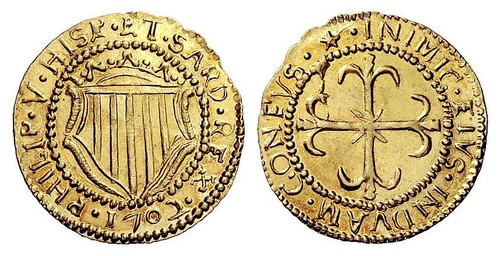
Scudo (Philip V)
c. 1701–1708
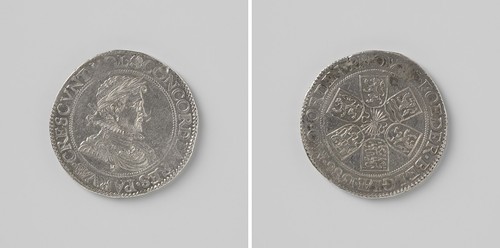
Rijksdaalder van Leicester
1580s-1590s
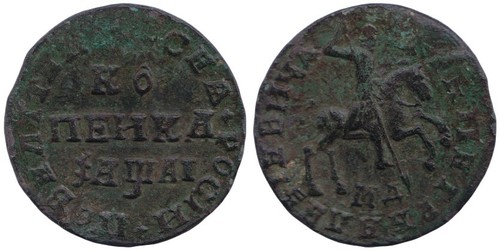
Kopek (Peter I)
c. 1704–1718 (observed 1711)
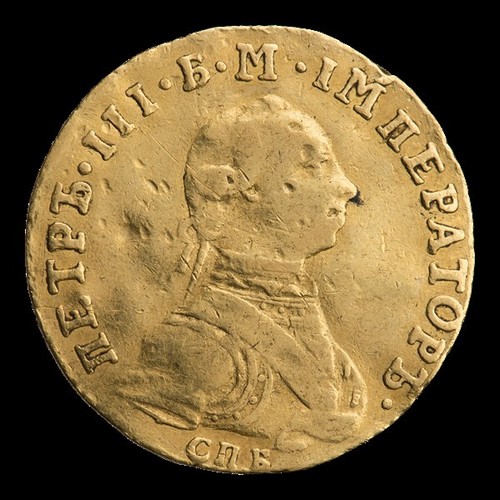
Imperial Chervonets
1762
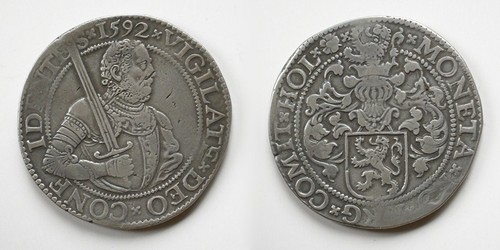
Prinsendaalder (Rijksdaalder)
1592
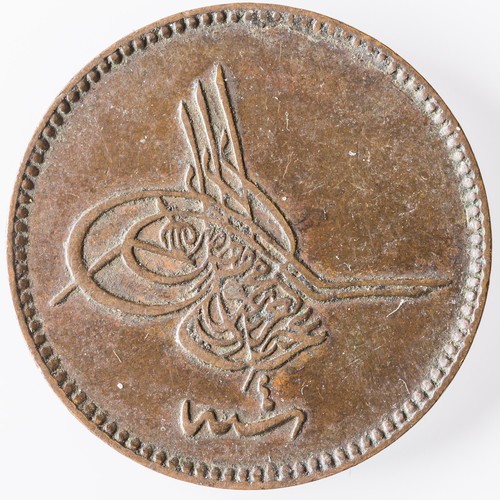
10 Para
AH 1280 (1863-1864 CE)
Halve Rijksdaalder van Leicester
1580s-1590s
Escudo (Joanna and Charles V, contemporary copy)
1516-1558
Duit (VOC)
1790
4 Escudos
1780s
Tymf
1663
Speciedaler
1628