
Escudo (Joanna and Charles V, contemporary copy)
A contemporary gilded copper-alloy copy imitating a Spanish gold escudo of Joanna and Charles V, made to pass as the real Habsburg gold coin.
- Country
- Spain
- Denomination
- Escudo
- Metal
- Gilded Copper-Alloy
Got a coin like this?
Identify any coin from a photo, free.
Overview
This object is a contemporary copy, essentially a period counterfeit, of a Spanish gold escudo issued in the joint names of Joanna (Juana) and her son Charles V. The photographed example is struck or cast in a base copper-alloy and then gilded so that its surface mimics genuine gold, and it is shown here in a museum display alongside a scale for size reference. It is not a modern replica made for collectors but an early imitation intended to deceive people at the time it was made.
The genuine escudo it copies was one of the foundational gold coins of the early modern Spanish monetary system. A convincing forgery of such a piece speaks to how widely trusted and circulated the type was, and how attractive a target it made for counterfeiters who could pocket the difference between cheap gilt copper and real gold.
Recorded as a significant find (FindID 983783), the piece is valued more as historical and numismatic evidence than as bullion. It documents fraud, trade, and the movement of Habsburg coinage, making it a study object rather than a precious-metal coin.
History & Background
Joanna of Castile and her son Charles (Charles I of Spain, later the Holy Roman Emperor Charles V) reigned jointly in the Spanish kingdoms during the first half of the sixteenth century, and their names appear together on coinage struck between roughly 1516 and 1558. The gold escudo was introduced in Spain in the 1530s as part of a wider reform aligning Spanish gold with a European standard, and it and its multiples became a mainstay of Spanish and colonial commerce, funded in part by gold and silver arriving from the Americas.
Because genuine escudos carried real value and were accepted across borders, they were routinely imitated. Contemporary counterfeiters produced copies in cheaper metal, gilding copper-alloy blanks to pass them off as solid gold. Such forgeries circulated alongside legitimate coins until they were detected by weight, by damage that exposed the base core, or by a suspicious buyer.
This copy survives as a byproduct of that fraud. Rather than being an official mint product, it is testimony to the black-market economy that shadowed one of the most important coinages of the age, and it was later recovered and recorded as an archaeological find.
How to Identify
The piece imitates the standard escudo design: a shield-form coat of arms as the dominant motif, reflecting the Habsburg and Spanish heraldry of Joanna and Charles. The photographed reverse shows this elaborate coat of arms, the same kind of quartered arms that appears on genuine escudos of the period. Legends would name the joint monarchs in abbreviated Latin.
The decisive identifier is the fabric of the coin. It is not gold but a copper-alloy that has been gilded, so under wear, edge damage, or corrosion the reddish or brownish base metal shows through the thin gold-colored surface. A genuine escudo would be solid gold throughout and would carry the correct weight; a gilt copy is lighter than gold of the same size and may feel or ring differently.
The museum display includes a scale bar, underlining that size and weight are part of how the object is assessed. In identification terms the key cues are: escudo-style arms and legends naming Joanna and Charles, combined with clear evidence of base metal beneath a gold-toned skin. That contradiction, gold-imitating design on non-gold metal, is what marks it as a contemporary copy rather than an authentic issue.
Value & Collectibility
As a base-metal forgery, this piece has essentially no bullion value; it contains no meaningful gold beyond a thin gilding layer. Its worth is historical and numismatic rather than intrinsic. Contemporary counterfeits of important coin types are collected and studied in their own right, and a well-documented example with a recorded find reference can carry interest disproportionate to its metal.
Values for such objects vary widely and are difficult to generalize. Much depends on how clearly the piece is attributed, how much of the gilding and design survives, and whether it has a documented archaeological context. A recorded significant find (here FindID 983783) adds provenance that many loose examples lack.
Because it is not gold and not an official issue, it should never be valued as a genuine escudo. Any figure quoted for a real Joanna-and-Charles gold escudo does not apply. Treat this piece as a historical artifact of period fraud, and rely on specialist assessment rather than fixed price guides.
Frequently asked questions
Is this coin made of gold?
No. It is a copper-alloy that has been gilded to look like gold. Only a thin gold-colored surface layer is present, and the base metal shows through where the gilding is worn or damaged.
Is it a genuine escudo?
No. It is a contemporary copy, essentially a period counterfeit, made to imitate a genuine gold escudo of Joanna and Charles V so it could pass as the real coin at the time.
Who were Joanna and Charles V?
Joanna of Castile and her son Charles (Charles I of Spain and later Holy Roman Emperor Charles V) reigned jointly over the Spanish kingdoms in the early sixteenth century, and their names appear together on the coinage this piece copies.
What is on the design?
It imitates the escudo type, dominated by an elaborate coat of arms reflecting Spanish and Habsburg heraldry, with legends naming the joint monarchs in abbreviated Latin.
Why is a fake coin significant?
Contemporary counterfeits document the fraud, trade, and trust surrounding an important coinage. Recorded as a significant find (FindID 983783), it is valued as historical evidence rather than for any metal content.
Escudo (Joanna and Charles V, contemporary copy) guides
In-depth guides for identifying, valuing, and collecting Escudo (Joanna and Charles V, contemporary copy).
Other coins you may enjoy
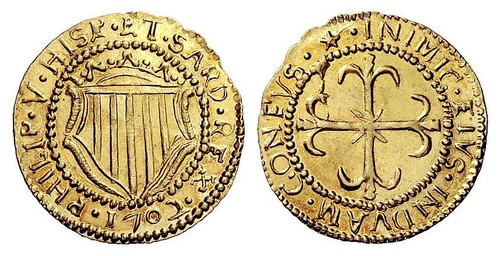
Scudo (Philip V)
c. 1701–1708
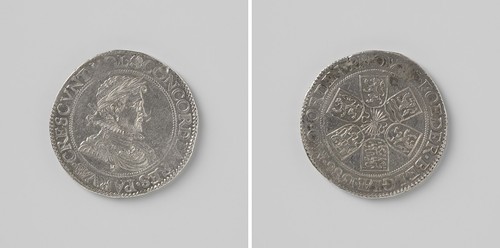
Rijksdaalder van Leicester
1580s-1590s
Kopek (Peter I)
c. 1704–1718 (observed 1711)
Imperial Chervonets
1762
Prinsendaalder (Rijksdaalder)
1592
10 Para
AH 1280 (1863-1864 CE)
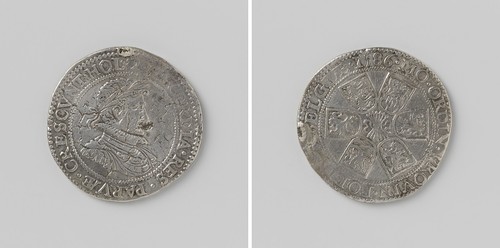
Halve Rijksdaalder van Leicester
1580s-1590s
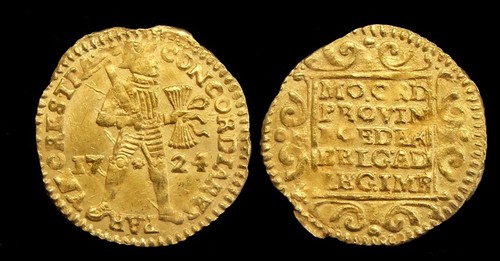
Gouden Dukaat
1724
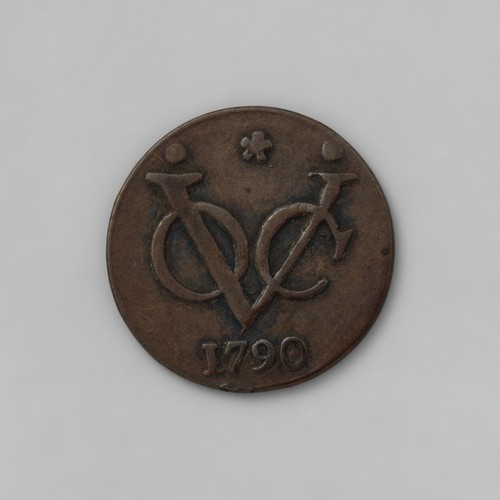
Duit (VOC)
1790
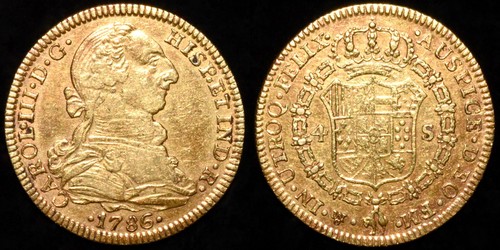
4 Escudos
1780s
Tymf
1663
Speciedaler
1628