
Prinsendaalder (Rijksdaalder)
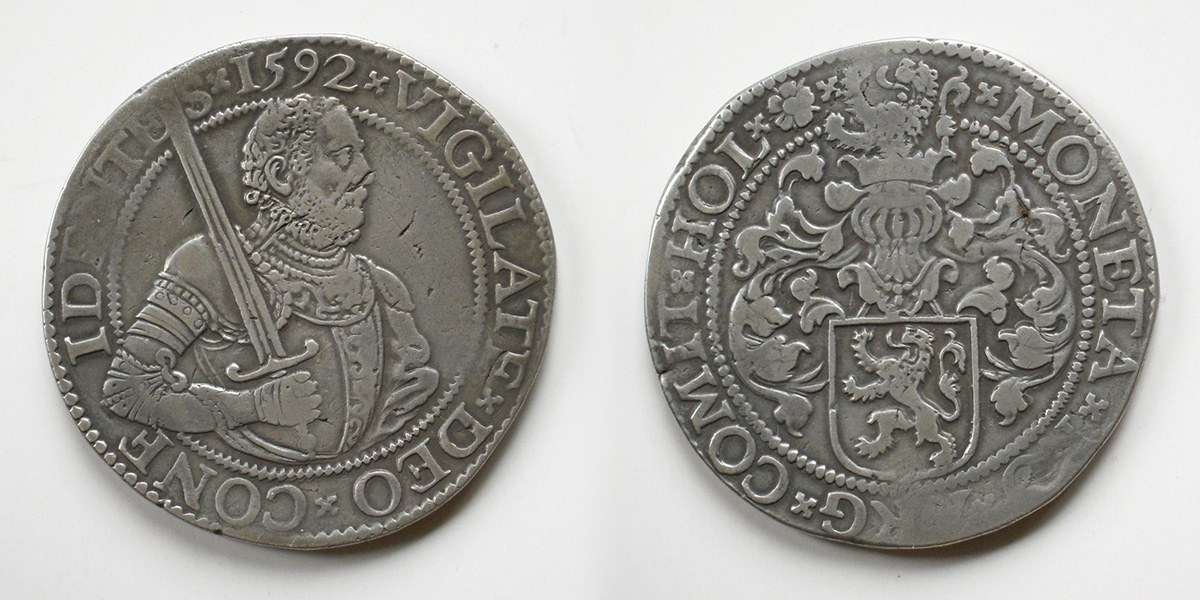
A large silver rijksdaalder of the Dutch Republic showing an armored bust with sword, popularly named the Prinsendaalder after the Prince of Orange.
- Country
- Netherlands
- Denomination
- Rijksdaalder
- Metal
- Silver
Got a coin like this?
Identify any coin from a photo, free.
Overview
The Prinsendaalder is a crown-sized silver rijksdaalder struck in the Dutch Republic in the late sixteenth century, of which this example is dated 1592. It takes its popular name, the "Prince Daalder," from its armored bust, which was associated with the Prince of Orange, leader of the Dutch revolt against Spanish rule.
The coin pairs a half-length helmeted and armored figure holding a sword on the obverse with a heraldic shield of several quartered compartments on the reverse. It is a substantial silver trade coin, part of the rijksdaalder family that circulated widely across the Low Countries and beyond during the era of the Eighty Years' War.
As an early product of the newly independent northern provinces, the Prinsendaalder is collected today both as a historic silver crown and as a tangible artifact of the Dutch struggle for independence.
History & Background
In the later sixteenth century the northern provinces of the Low Countries were in open revolt against Spanish Habsburg rule, a conflict later known as the Eighty Years' War (1568–1648). The emerging Dutch Republic and its provincial mints issued their own silver coinage to fund the war and support trade, breaking from the coinage of the Spanish crown.
The rijksdaalder was a large silver denomination modeled on the broad German and imperial thaler standard, intended for international commerce. The Prinsendaalder variant, carrying an armored military bust linked to the Prince of Orange, projected the authority and cause of the rebel provinces on a coin meant to pass at home and in foreign markets.
Coins of this type, including the 1592 issue, belong to the formative decades of Dutch independent coinage. They preceded the long era in which the Dutch rijksdaalder and related silver became a staple of world trade through the Republic's commercial and colonial reach.
How to Identify
The obverse shows a half-length armored bust facing right, wearing a helmet and a decorative collar and holding a sword, the martial figure that gives the coin its "Prince" nickname. A surrounding Latin legend and the date 1592 accompany the figure. The armored, sword-bearing bust is the single most recognizable feature of the Prinsendaalder.
The reverse is dominated by a heraldic shield divided into multiple compartments, filled with lions and other charges representing the provinces or territories, typically enclosed by a Latin legend. The quartered, multi-part shield rather than a single simple arms is a key marker of this type.
This is a large silver crown, broadly in the range of 40 mm in diameter and roughly 29 grams, so it feels heavy and substantial. The high silver content gives it weight and a clear ring. The combination of the helmeted armored bust with sword, the date 1592, and the multi-compartment lion shield together identify the piece.
Value & Collectibility
As a genuine large silver coin more than four centuries old, the Prinsendaalder carries meaningful collector value driven by its history, size, and silver content. Prices depend heavily on condition, strike quality, and provincial variety, so figures should be treated as broad ranges rather than fixed quotes.
Well-worn but honest examples of early Dutch rijksdaalders typically trade in the low-to-mid hundreds of dollars, while sharply struck, well-centered, and high-grade pieces can command substantially more. Because these coins were struck by hand on somewhat irregular flans, centering, roundness, and evenness of strike affect desirability as much as raw wear.
Cleaning, corrosion, mount marks, and old damage reduce value markedly, and outright counterfeits exist. Attractive original surfaces and clear legends command premiums. For higher-value examples, condition and authenticity should be confirmed before assigning a firm price.
Frequently asked questions
Why is it called a Prinsendaalder?
The name, meaning "Prince Daalder," comes from its armored military bust, which was associated with the Prince of Orange, the leader of the Dutch revolt. It distinguishes this rijksdaalder from other daalder types.
Is the Prinsendaalder real silver?
Yes. It is a large, high-fineness silver rijksdaalder, which is why it is heavy and substantial for its size. The silver content contributes to its collector value.
What do the lions on the reverse mean?
The reverse shield is divided into several compartments containing lions and other heraldic charges representing the provinces or territories. The quartered, multi-part arms are characteristic of this coinage.
How old is a 1592 Prinsendaalder?
It dates to 1592, during the Eighty Years' War, making it more than four centuries old and part of the early independent coinage of the Dutch Republic.
Is it valuable?
It is a desirable historic silver crown. Worn examples are affordable to mid-priced, while sharp, high-grade pieces bring notable premiums. Value depends on condition, strike, variety, and authenticity.
Prinsendaalder (Rijksdaalder) guides
In-depth guides for identifying, valuing, and collecting Prinsendaalder (Rijksdaalder).
Other coins you may enjoy
Scudo (Philip V)
c. 1701–1708
Rijksdaalder van Leicester
1580s-1590s
Kopek (Peter I)
c. 1704–1718 (observed 1711)
Imperial Chervonets
1762
10 Para
AH 1280 (1863-1864 CE)
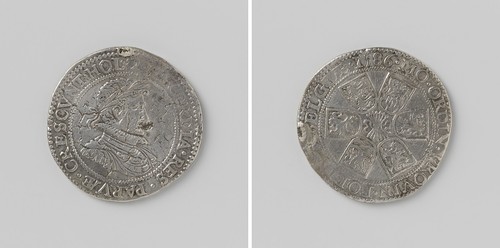
Halve Rijksdaalder van Leicester
1580s-1590s
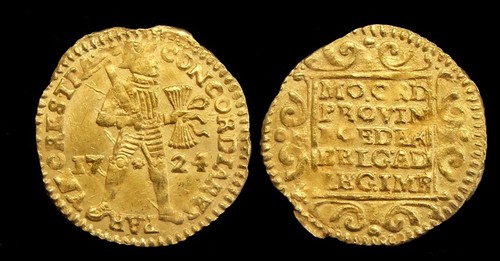
Gouden Dukaat
1724
Escudo (Joanna and Charles V, contemporary copy)
1516-1558
Duit (VOC)
1790
4 Escudos
1780s
Tymf
1663
Speciedaler
1628