
How to Identify the Prinsendaalder (Rijksdaalder)
A collector's guide to recognizing the Dutch Prinsendaalder by its armored sword-bearing bust, multi-compartment lion shield, and large silver format.
Read the full Prinsendaalder (Rijksdaalder) encyclopedia entry →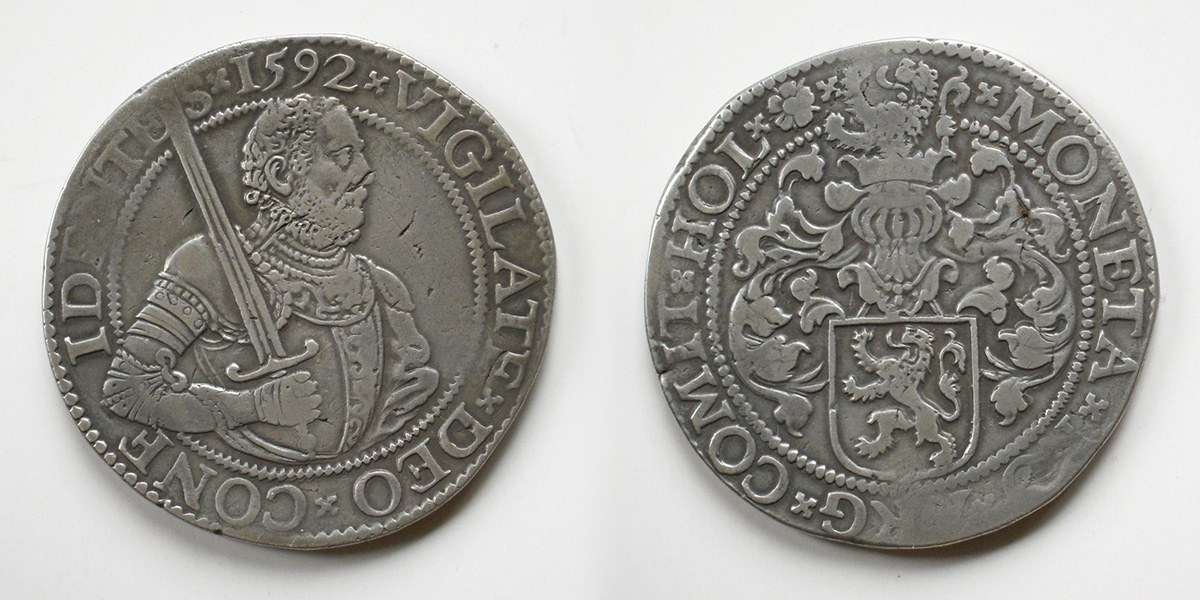
Read the Obverse Bust First
The defining feature is the obverse: a half-length armored figure facing right, wearing a helmet and a decorative collar and holding a sword. This martial, sword-bearing bust, tied to the Prince of Orange, is what earns the coin its "Prince Daalder" nickname. A plain profile head, a crowned monarch, or a standing full-length knight indicates a different daalder type rather than a Prinsendaalder.
Confirm the Reverse Shield
Turn to the reverse and look for a heraldic shield divided into multiple compartments, filled with lions and other charges. This quartered, multi-part arms, not a single simple shield, is a core identifier. A surrounding Latin legend frames the design. If the reverse shows a single crowned shield, a cross, or a full coat of arms of a foreign ruler, you are likely looking at a different issue.
Check Size, Weight, and Metal
Expect a large silver crown broadly around 40 mm in diameter and roughly 29 grams. It should feel dense and heavy and ring when struck, consistent with high-fineness silver. Because these were struck by hand, the flan is often slightly irregular or off-round, and the strike can be uneven; that is normal for the period and not by itself a sign of a fake. A thin, lightweight, or magnetic piece of this design is a warning sign.
Verify the Date and Legends
Locate the date, here 1592, and read the Latin legends around both sides. Genuine coins of this era carry period-appropriate lettering and abbreviations, and mint or provincial marks may appear within the legends. Blundered, modern-looking, or crisply machine-perfect lettering on an otherwise "old" coin is a caution flag. Compare the specific legend and mint marks against trusted references for the exact province and year.
Rule Out Look-Alikes and Fakes
Several Dutch and neighboring silver daalders share a broad crown format, so match all cues together: the armored sword-bearing bust, the multi-compartment lion shield, the silver weight, and the 1592 date. As a historic silver type, the Prinsendaalder attracts cast and struck counterfeits and cleaned or repaired pieces. Weigh and measure the coin, inspect the edge for casting seams, watch for soft mushy detail, and favor original surfaces. For higher-value examples, seek third-party authentication.
Frequently asked questions
What is the fastest way to recognize a Prinsendaalder?
Look for the armored bust facing right with a helmet, decorative collar, and sword on the obverse, paired with a multi-compartment lion shield on the reverse. That combination on a large silver crown is the key signature.
What size and weight should it be?
Expect a large silver crown roughly 40 mm across and about 29 grams. It should feel heavy and dense and be non-magnetic. A thin, light, or magnetic coin of this design is suspect.
Is an irregular, off-round flan a problem?
Not necessarily. These coins were struck by hand, so slightly irregular shapes and uneven strikes are normal for the period. Judge authenticity by weight, metal, style, and detail rather than perfect roundness.
Should I have one authenticated?
For anything beyond a heavily worn example, yes. As a valued historic silver type it is faked and often cleaned, so verifying weight, diameter, and design, or using third-party certification, protects against counterfeits.