
How to Identify the Rijksdaalder van Leicester
A collector's guide to confirming the Leicester rijksdaalder by its ruffed armored half-figure, compartmented arms, large silver format, and Latin legends.
Read the full Rijksdaalder van Leicester encyclopedia entry →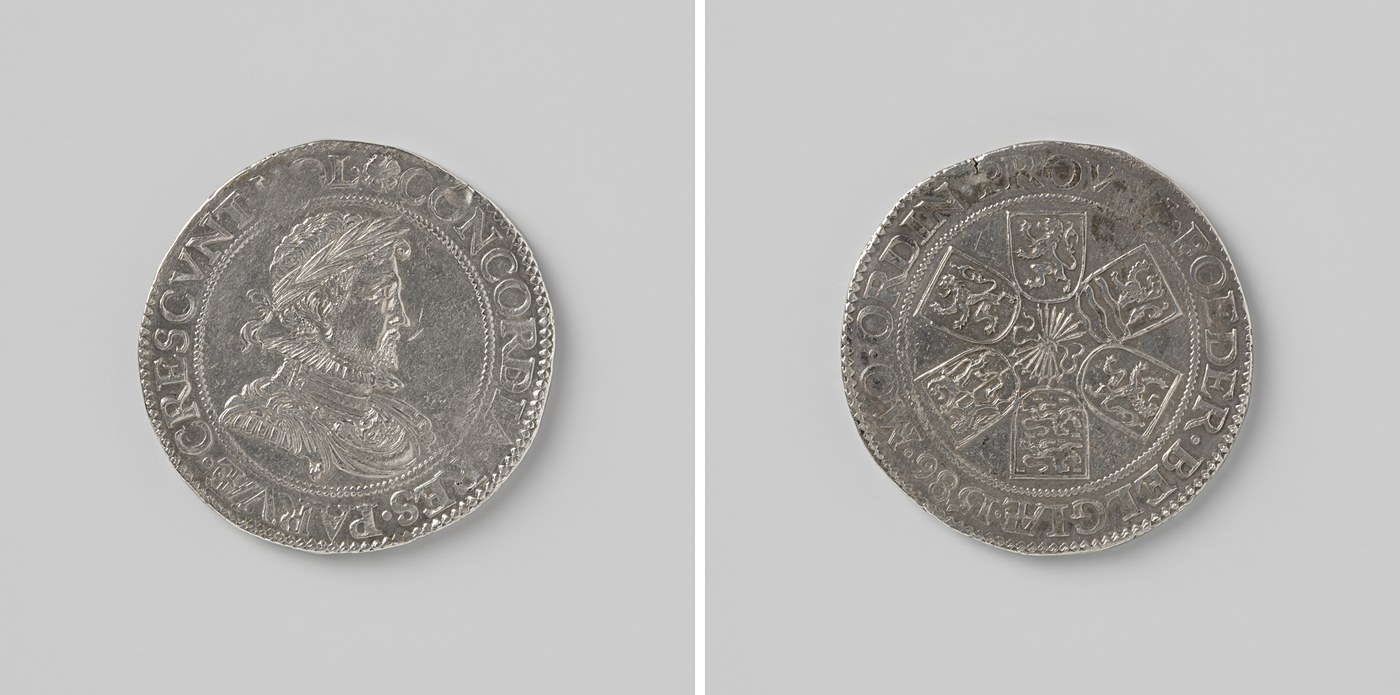
Start With the Obverse Figure
The defining feature is the obverse: a helmeted, armored half-length figure facing right, wearing a distinctive ruff at the neck. This martial bust with its ruffed collar is the visual signature of the Leicester type. If the obverse instead shows a standing lion, a plain portrait, or a full-body knight without the ruff, you are likely looking at a different daalder such as a leeuwendaalder or a later provincial issue.
Confirm the Reverse Arms
Turn the coin over and check for a compartmented heraldic shield, an ornate coat of arms divided into distinct fields, encircled by a Latin legend. The legend usually records titles and often a date in the 1580s or 1590s. The combination of the ruffed armored obverse and the compartmented arms reverse, read together, is what pins down this exact type rather than any single feature alone.
Check Size, Weight, and Metal
This is a crown-class silver coin, broadly on the order of 40 mm in diameter and roughly 29 grams. It should feel dense and substantial and show the bright tone or gray patina of struck silver. Because it was hand-hammered, expect slightly irregular edges, uneven thickness, and off-center strikes; those are normal for the period. A lightweight, thin, perfectly round, or magnetic piece of this design is a warning sign, since genuine coins are high-fineness silver and non-magnetic.
Rule Out Look-Alikes
The late-sixteenth-century Low Countries produced several large silver daalders that can be confused with the Leicester rijksdaalder, including lion daalders and various provincial and city issues. Read the imagery and legends carefully: the ruffed armored half-figure with compartmented arms is specific to this type, while related coins substitute a lion, a different bust, or differently arranged shields. Matching the figure, the arms, the size, and the Latin inscriptions all at once is the reliable way to separate it from its contemporaries.
Authentication Cautions
Because it is a valued historic silver type, this coin attracts cast copies, tooled pieces, and modern replicas. Weigh and measure the coin and compare the figure, ruff, and shield details against trusted reference images, watching for soft mushy detail, seams, casting bubbles, or wrong weight that suggest a fake. Cleaning, holing, and clipping are common and reduce value, so favor coins with original, undisturbed surfaces, and for higher-value examples seek third-party authentication.
Frequently asked questions
What is the single most distinctive feature?
The obverse armored half-figure facing right wearing a ruff. That ruffed martial bust, paired with compartmented arms on the reverse, is the signature of the Leicester rijksdaalder.
What size and weight should it be?
Expect a large silver crown, broadly around 40 mm in diameter and roughly 29 grams. It should feel heavy and dense; a thin, lightweight, or magnetic coin of this design is suspect.
How do I tell it from a lion daalder or other Dutch daalder?
Check the imagery. The Leicester type shows a ruffed armored half-figure and compartmented arms, whereas a leeuwendaalder shows a rampant lion and other issues use different busts or shield layouts.
Is it worth authenticating?
For anything beyond a heavily worn example, yes. As a desirable early Dutch silver type it is copied, so verifying weight, diameter, and design detail, or using third-party certification, guards against casts and altered coins.