
How to Identify the Imperial Chervonets
A collector's guide to recognizing the Peter III gold chervonets by its right-facing bust, crowned double-headed eagle, ducat-like size, and 1762 date.
Read the full Imperial Chervonets encyclopedia entry →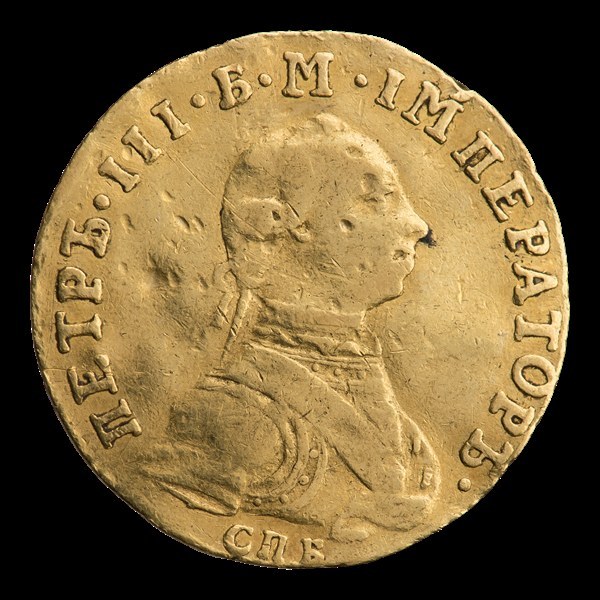
Read the Obverse Legend and Portrait
Start with the bust. A Peter III chervonets shows a bare-headed emperor facing right, wearing armor and an imperial mantle, ringed by a Cyrillic legend that names him emperor and autocrat of all the Russias (ПЕТРЪ ... ИМПЕРАТОРЪ ... САМОДЕРЖЕЦЪ). The direction the bust faces and the ruler's name in the legend are the first things to confirm, since other Russian rulers used the same coin format with their own portraits.
Confirm the Reverse and Date
Turn to the reverse and look for the crowned double-headed imperial eagle with a shield on its breast and the date 1762. There should be no numeric face value anywhere on the coin; the chervonets is defined by its gold content, not a stated denomination. If the reverse shows a value in roubles or kopecks, or a different arms, it is a different coin.
Check Size, Weight, and Metal
This is a small, thin, high-purity gold coin close to the ducat standard, on the order of about 3.4 grams and roughly 20 mm across. It should have a rich gold color and feel appropriately dense for its tiny size. A coin of this design that is oversized, underweight, magnetic, or pale in color is an immediate warning sign.
Watch for Look-Alikes and the Legend Detail
Russia struck chervontsy under several eighteenth-century rulers, and the eagle reverse is broadly similar across reigns, so the obverse portrait and the Cyrillic name are what separate a Peter III piece from an Elizabeth or Catherine issue. Read the legend carefully; spelling and the exact regnal name are diagnostic, and a mismatch between an advertised ruler and the actual legend is a red flag.
Authentication Cautions
Because genuine Peter III gold is rare and valuable, this type is heavily forged, including cast copies, tooled portraits, and coins with altered or added dates. Weigh and measure any candidate, examine the strike and lettering under magnification for the softness and seams typical of casts, and compare against trusted reference images. Given the sums involved, treat third-party authentication and certification as essential before buying or selling.
Frequently asked questions
How do I tell a Peter III chervonets from other Russian gold?
The reverse eagle is similar across reigns, so rely on the obverse: a right-facing bust and a Cyrillic legend naming Peter III as emperor. Read the ruler's name rather than assuming from the eagle.
What size and weight should it be?
Expect a small, thin gold coin near the ducat standard, roughly 3.4 grams and about 20 mm in diameter. Oversized, underweight, or magnetic pieces of this design should be treated as suspect.
Why is there no denomination on the coin?
The chervonets was a gold trade coin valued by its metal content, not a fixed face value, so it carries only the portrait, eagle, and date rather than a stated number of roubles.
Should I have it authenticated?
Yes. As a rare, high-value imperial type it is frequently faked. Verify weight, diameter, and design details and obtain third-party certification before treating any example as genuine.