
Coin Encyclopedia
Search and identify coins from around the world — with country, denomination, metal, mint, history, and how to tell them apart.
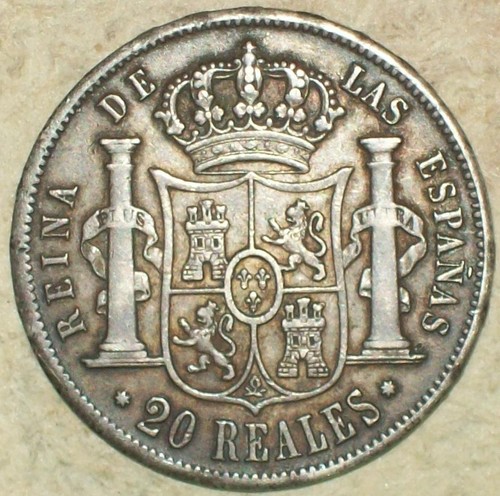
20 Reales (Isabel II)
Crown-sized Spanish silver 20 Reales of Queen Isabel II, with her crowned right-facing profile and a crowned pillared shield, dated 1854.
Modern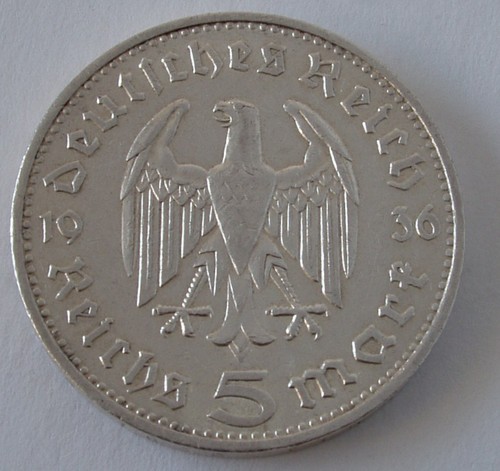
German 5 Reichsmark (Hindenburg)
German silver 5 Reichsmark of the Third Reich, pairing a portrait of Paul von Hindenburg with an eagle-and-swastika reverse; dated 1936.
Circulation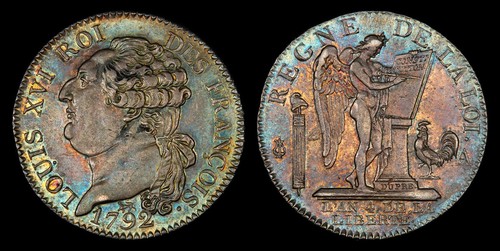
French Half Ecu (Demi-Ecu)
A silver half ecu of Louis XVI dated 1792, with his bust left and a standing winged genius reverse reading L'AN 4 DE LA LIBERTE.
Royal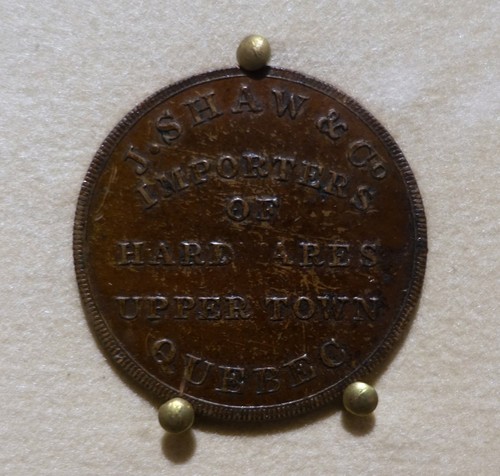
J. Shaw & Co. Hardware Token
Copper halfpenny-sized merchant token advertising J. Shaw & Co., importers of hardware in Upper Town, issued around the 1850s.
Canadian & Provincial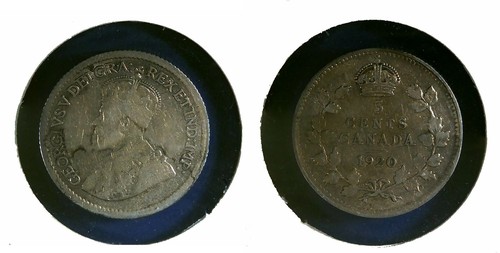
Canadian Five Cents (Nickel)
Canada's five-cent 'nickel,' with G.E. Kruger Gray's beaver reverse. This 1987 example pairs the beaver with an Elizabeth II portrait.
Canadian & Provincial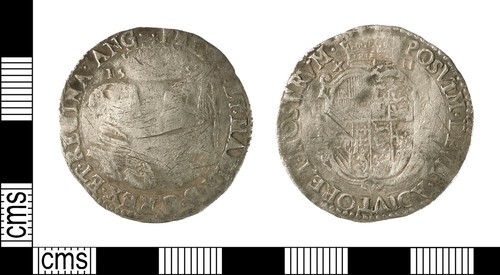
Philip and Mary Shilling
Hammered silver shilling of Philip II of Spain and Mary I (1554-1558), showing their paired royal busts and a crowned quartered shield of arms.
Hammered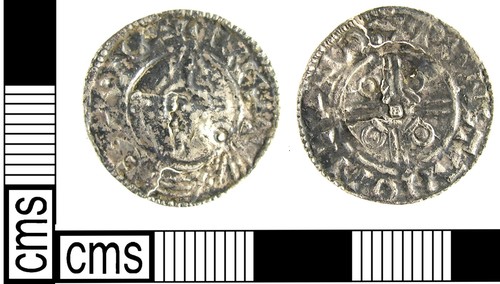
Penny of Cnut
Anglo-Saxon silver penny of King Cnut (Canute), showing a diademed bust facing left with a cross-and-pellets reverse, struck c.1024-1030.
Medieval Coins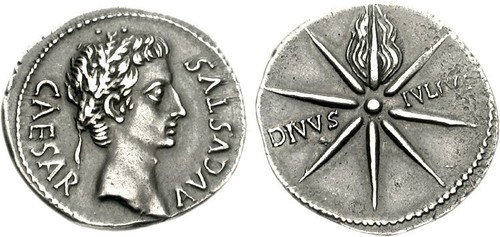
Denarius of Augustus
Silver denarius of Augustus (c. 19-18 BC) with his bare head and a comet-star of the deified Julius Caesar, inscribed DIVVS IVLIVS.
Ancient Coins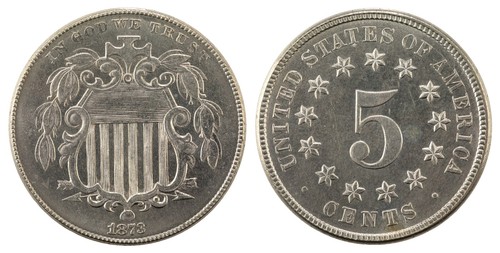
Shield Nickel
The first U.S. five-cent piece struck in copper-nickel, showing a Union shield on the obverse and a large numeral 5 on the reverse, made 1866–1883.
Nickel Five Cent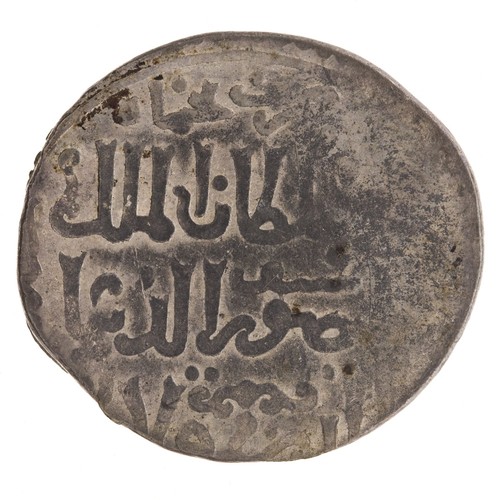
Silver Dirham of Sultan Qalawun
A hand-struck Mamluk silver dirham of Sultan Qalawun of Egypt, covered on both faces with Arabic calligraphy and struck AD 1279–1290.
Islamic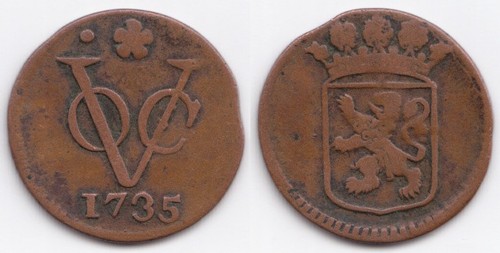
Dutch East Indies Duit
Small copper duit of the Dutch East India Company (VOC), showing the interlaced VOC monogram and a crowned provincial coat of arms, dated 1735.
Southeast Asia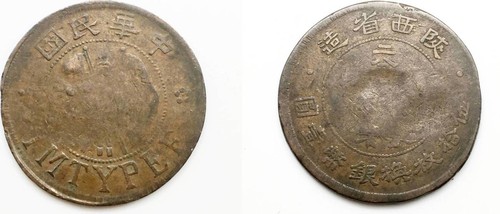
Shanxi 2 Fen
A holed Republic-era Chinese copper 2 Fen struck for Shanxi Province, dated 1931, with a numeral 2 and Chinese legends around a central hole.
Circulation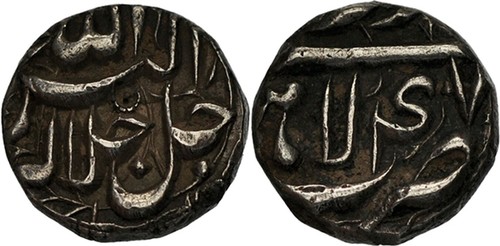
Mughal Quarter-Rupee
A small hammered Mughal silver quarter-rupee inscribed in Persian, struck at the Lahore mint and dated Ilahi 47 (AD 1602-1603).
Historic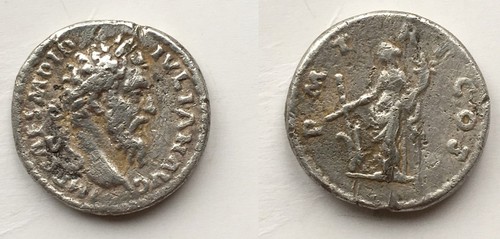
Denarius of Didius Julianus
A silver denarius of Didius Julianus, the short-lived emperor of 193 AD, bearing his laureate portrait and an imperial standing reverse.
Ancient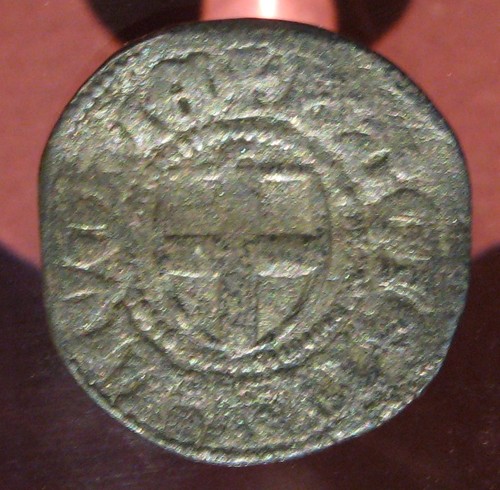
Livonian Order Schilling
A small hammered silver schilling of the medieval Livonian Order, showing heraldic shields and a cross, struck in the Baltic around 1410–1415.
Medieval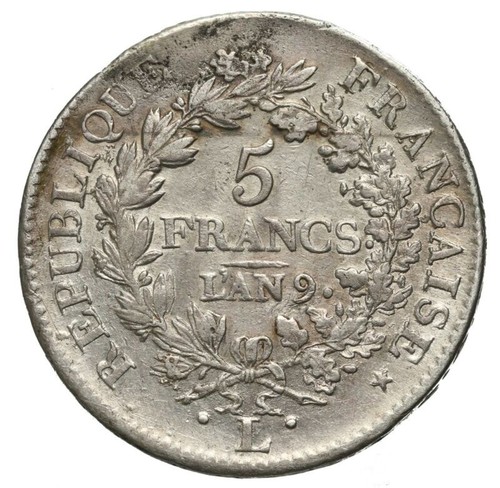
5 Francs (First Republic)
A large silver 5-franc crown of the French First Republic, dated by the revolutionary calendar as L'an 9 (1800–1801), with a right-facing Liberty head.
Circulation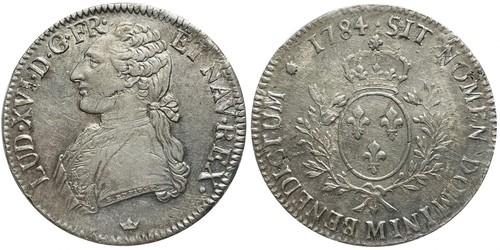
Ecu of Louis XIV
A large silver crown of Louis XIV, the Sun King, showing his laureate or wigged bust facing left and a crowned French shield of fleur-de-lis, dated 1693.
Royal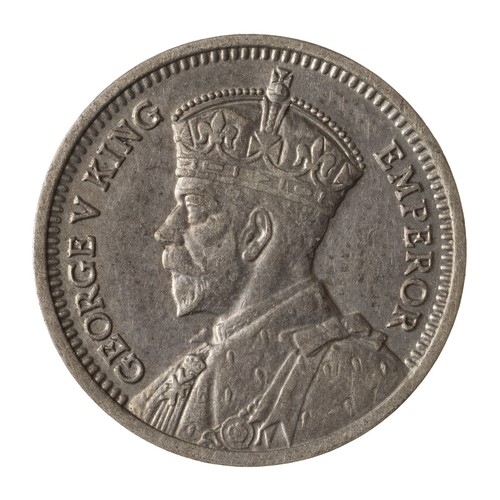
New Zealand Threepence
New Zealand's small silver threepence; this 1933 example carries the crowned bust of King George V with GEORGIVS V and his royal titles.
New Zealand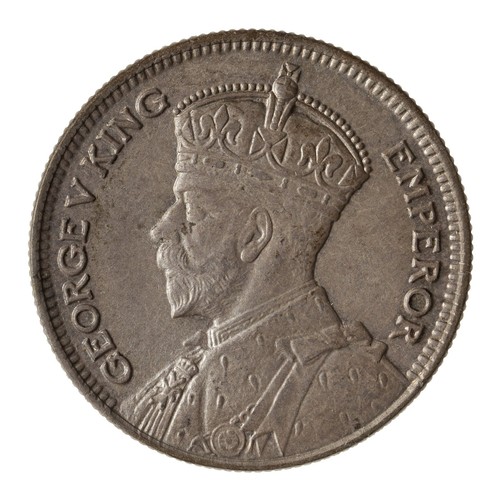
New Zealand Sixpence
New Zealand's small silver sixpence, famed for its native-bird reverse. This 1934 example shows King George V and the bird design with NEW ZEALAND SIXPENCE.
New Zealand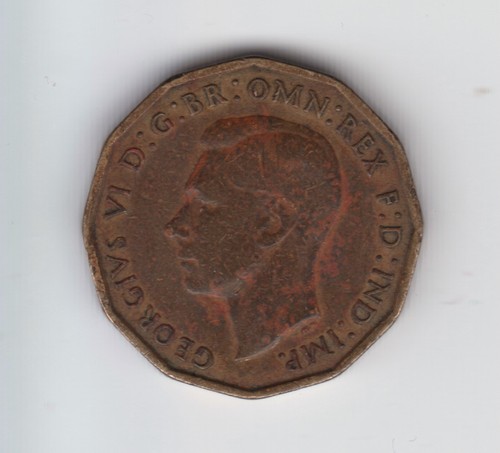
British Brass Threepence
Chunky twelve-sided nickel-brass threepence of George VI, showing his head and a thrift plant reverse; the example shown is dated 1942.
British Isles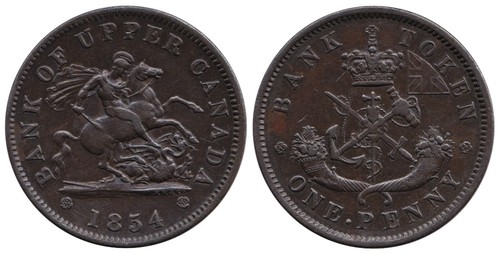
Bank of Upper Canada One Penny Token
Copper penny token of the Bank of Upper Canada showing St. George slaying the dragon, with a crowned royal-arms reverse; this example dated 1854.
Canadian & Provincial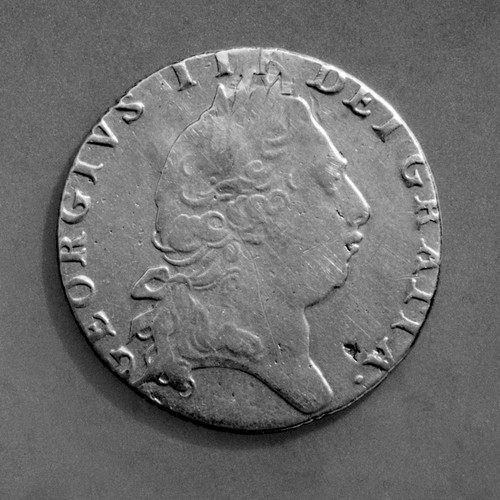
Spade Guinea
A late George III gold guinea named for the distinctive spade-shaped shield on its reverse, struck in England from 1787 into the early 1800s.
Milled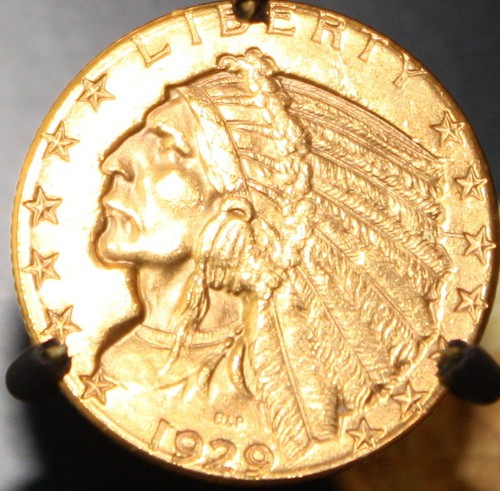
Indian Head Half Eagle
U.S. $5 gold half eagle struck 1908–1929, with an unusual sunken (incuse) design: a headdressed Native American obverse and a standing eagle reverse.
Half Eagle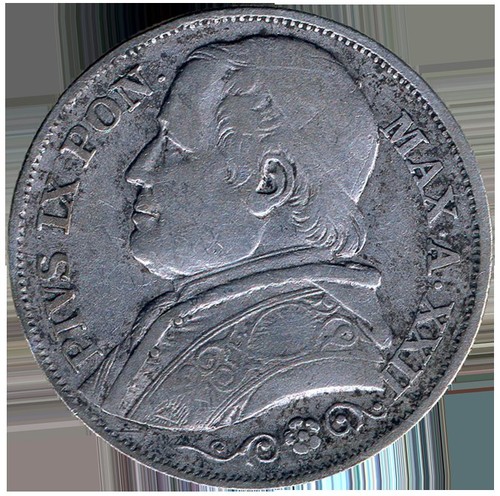
2 Lire
Silver 2 Lire of the Papal States struck under Pope Pius IX, part of the Italian lira system adopted by Rome in the 1860s.
Modern