Shield Nickel
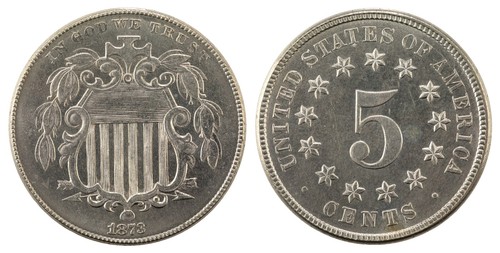
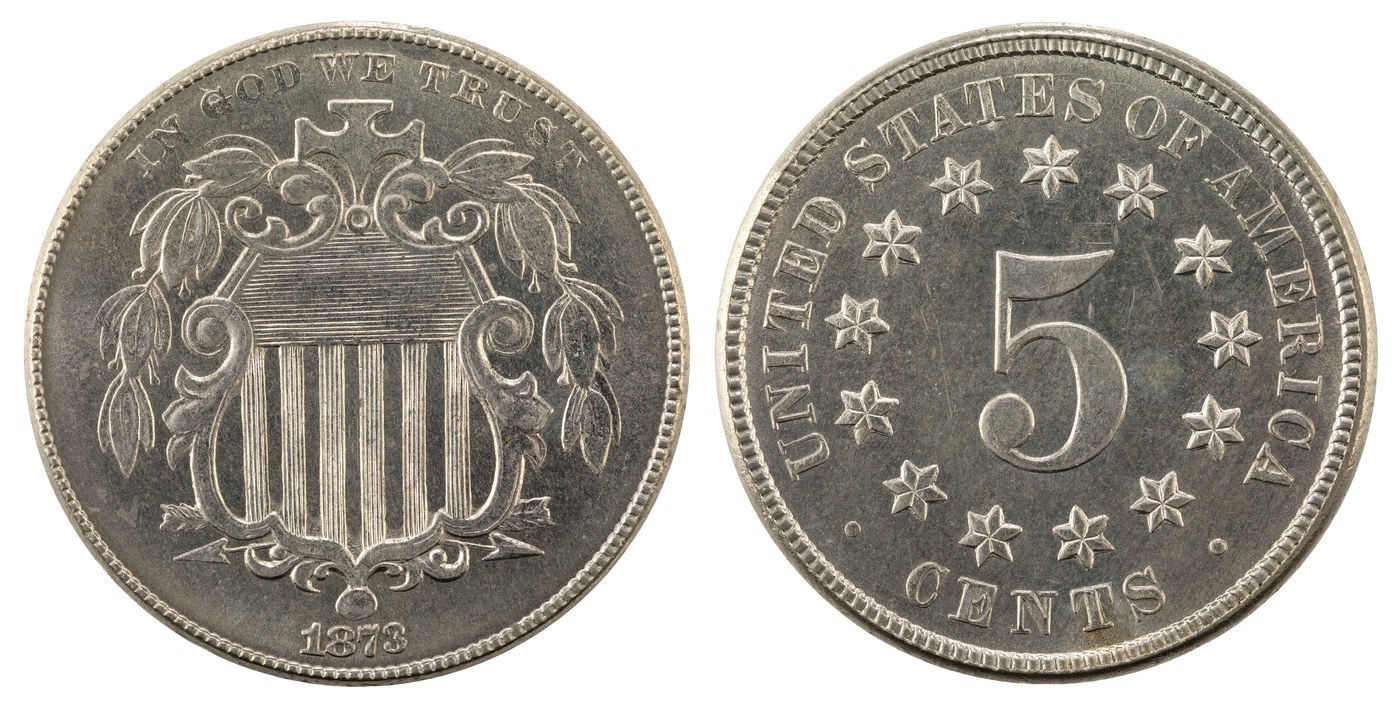
The first U.S. five-cent piece struck in copper-nickel, showing a Union shield on the obverse and a large numeral 5 on the reverse, made 1866–1883.
- Country
- United States
- Denomination
- 5 Cents
- Metal
- Copper-Nickel
Got a coin like this?
Identify any coin from a photo, free.
Overview
The Shield Nickel is the first United States five-cent coin made from copper-nickel rather than silver, introduced in 1866. Its obverse displays a heraldic Union shield topped by a cross, framed by ornamental leaves and scrolls, with the motto IN GOD WE TRUST across the top and the date below. The reverse centers on a large numeral 5 encircled by stars, with UNITED STATES OF AMERICA and CENTS around the rim. The example shown here is dated 1866.
This type launched the term "nickel" for the five-cent piece, a name that has stuck to the denomination ever since. It replaced the small silver half dime in everyday commerce, offering a harder, more durable coin at a time when precious-metal coins were being hoarded.
As a base-metal coin with no silver or gold content, the Shield Nickel is collected for its history and design. Value depends on the date, variety, and condition rather than any bullion worth.
History & Background
The Shield Nickel was authorized in 1866, during the difficult economic aftermath of the Civil War, when silver and gold coins had largely vanished from circulation. To supply small change, the Mint turned to a durable copper-nickel alloy, and industrialist Joseph Wharton, a major nickel supplier, was an influential backer of the new five-cent piece. The design came from Mint engraver James B. Longacre.
The first coins of 1866 and part of 1867 carried rays between the stars on the reverse. The Mint found this busy design hard to strike cleanly, so the rays were removed partway through 1867, creating the two major reverse subtypes collectors recognize. Production continued at the Philadelphia Mint through 1883, when the Liberty Head, or "V," nickel replaced the type.
The Shield Nickel was America's five-cent workhorse for less than two decades, but it established the copper-nickel five-cent format that continues today. Its motto IN GOD WE TRUST was among the earliest regular uses of that phrase on U.S. coinage.
How to Identify
Look first at the obverse: a broad shield capped by a cross, draped with leaves and scrolls, with IN GOD WE TRUST arching across the top and the date at the bottom. The reverse shows a large numeral 5 in the center, ringed by thirteen stars, with UNITED STATES OF AMERICA above and the word CENTS below. The photographed coin is dated 1866.
The coin is copper-nickel, about 20.5 mm across, with a plain (smooth) edge and a weight near 5 grams. It is noticeably thicker and harder than the tiny silver half dime it replaced. There is no mint mark on any Shield Nickel, as all were struck at Philadelphia.
The key detail on early pieces is the reverse: 1866 and some 1867 coins show rays between the stars, while later coins omit them. Confirming the shield obverse, the large 5 reverse, and the copper-nickel composition distinguishes this type from later Liberty Head and Buffalo nickels.
Value & Collectibility
Value is driven mainly by date, reverse variety, and condition. The 1866 "With Rays" coins and other early dates are more sought after, while several later dates in the 1870s and early 1880s were struck in smaller numbers and carry premiums. Because the coin contains no precious metal, none of its value comes from bullion.
Condition matters greatly: well-struck examples with sharp shield lines, full leaves, and clean fields are worth far more than heavily worn or corroded pieces. Copper-nickel is a hard alloy that often struck unevenly, so strong detail and original surfaces command a premium.
Well-worn common dates remain affordable and widely available, but scarce dates, sharp mint-state coins, and recognized die varieties can be significantly more valuable. For higher-value pieces, certification from an established grading service is advisable, since cleaned and altered coins exist.
Frequently asked questions
Is the Shield Nickel made of silver?
No. It is struck in a copper-nickel alloy and contains no silver or gold. It was in fact the coin that replaced the silver half dime, and its value comes from date, variety, and condition.
Why is it called a nickel?
The Shield five-cent piece was the first U.S. five-cent coin made largely of nickel. The nickname "nickel" stuck to the denomination and is still used for the five-cent coin today.
What is the difference between With Rays and No Rays?
Coins from 1866 and part of 1867 show rays between the stars on the reverse. The Mint removed the rays partway through 1867 because they were hard to strike, creating two collectible subtypes.
Does it have a mint mark?
No. Every Shield Nickel was struck at the Philadelphia Mint, which used no mint mark, so a blank spot for one is normal and correct.
When was the Shield Nickel discontinued?
It was made from 1866 through 1883, when it was replaced by the Liberty Head, or "V," nickel. The Shield type ran for about seventeen years.
Shield Nickel guides
In-depth guides for identifying, valuing, and collecting Shield Nickel.